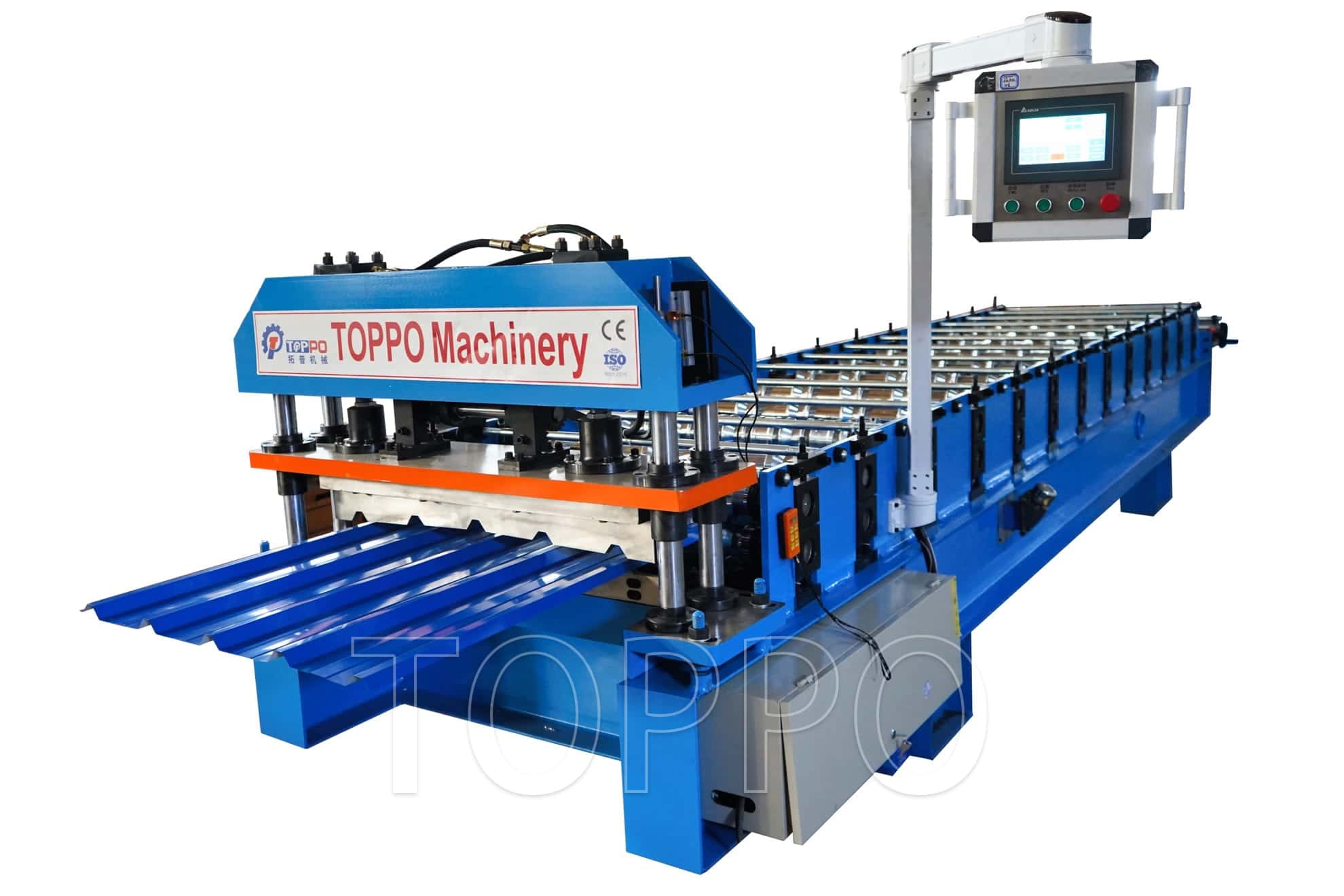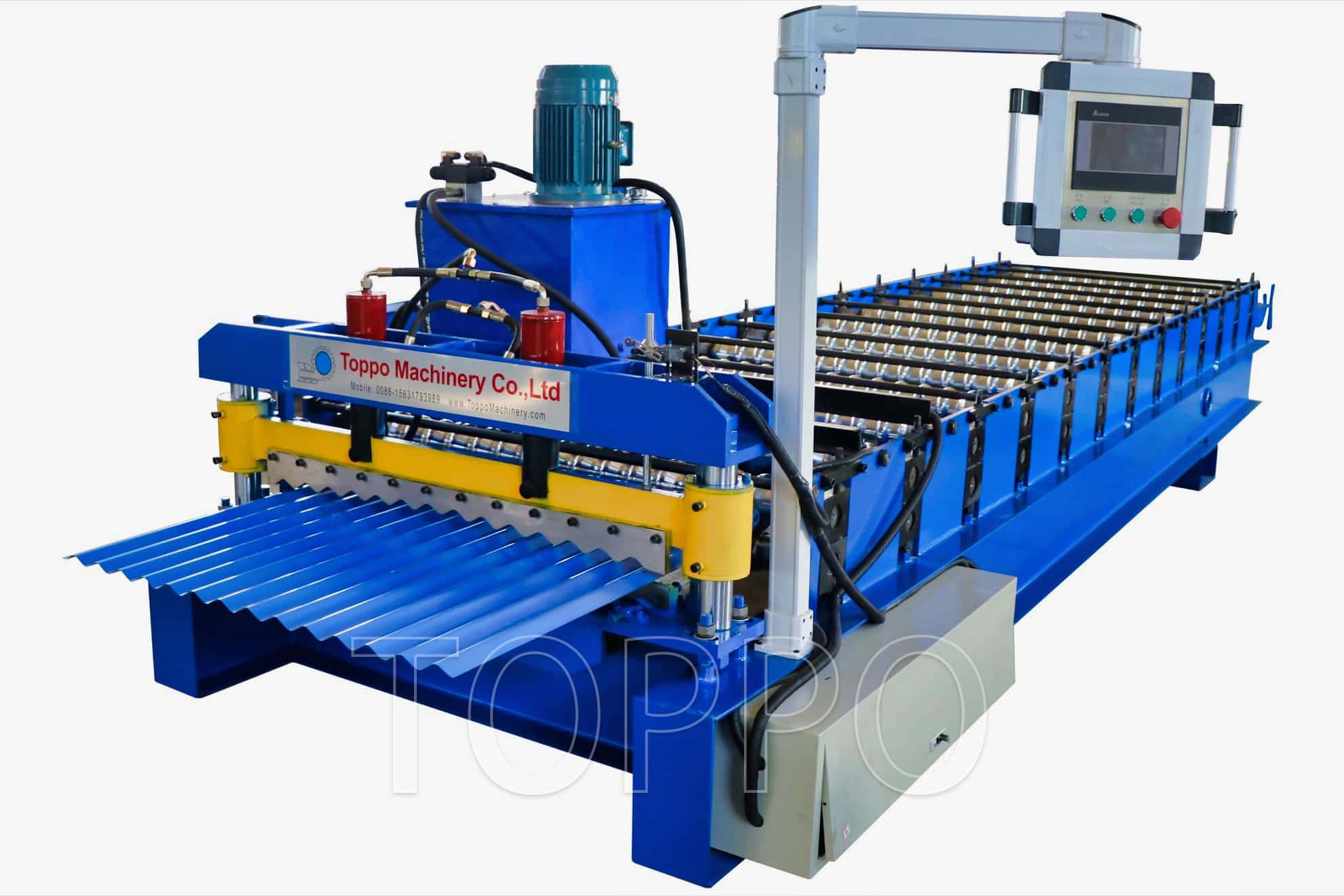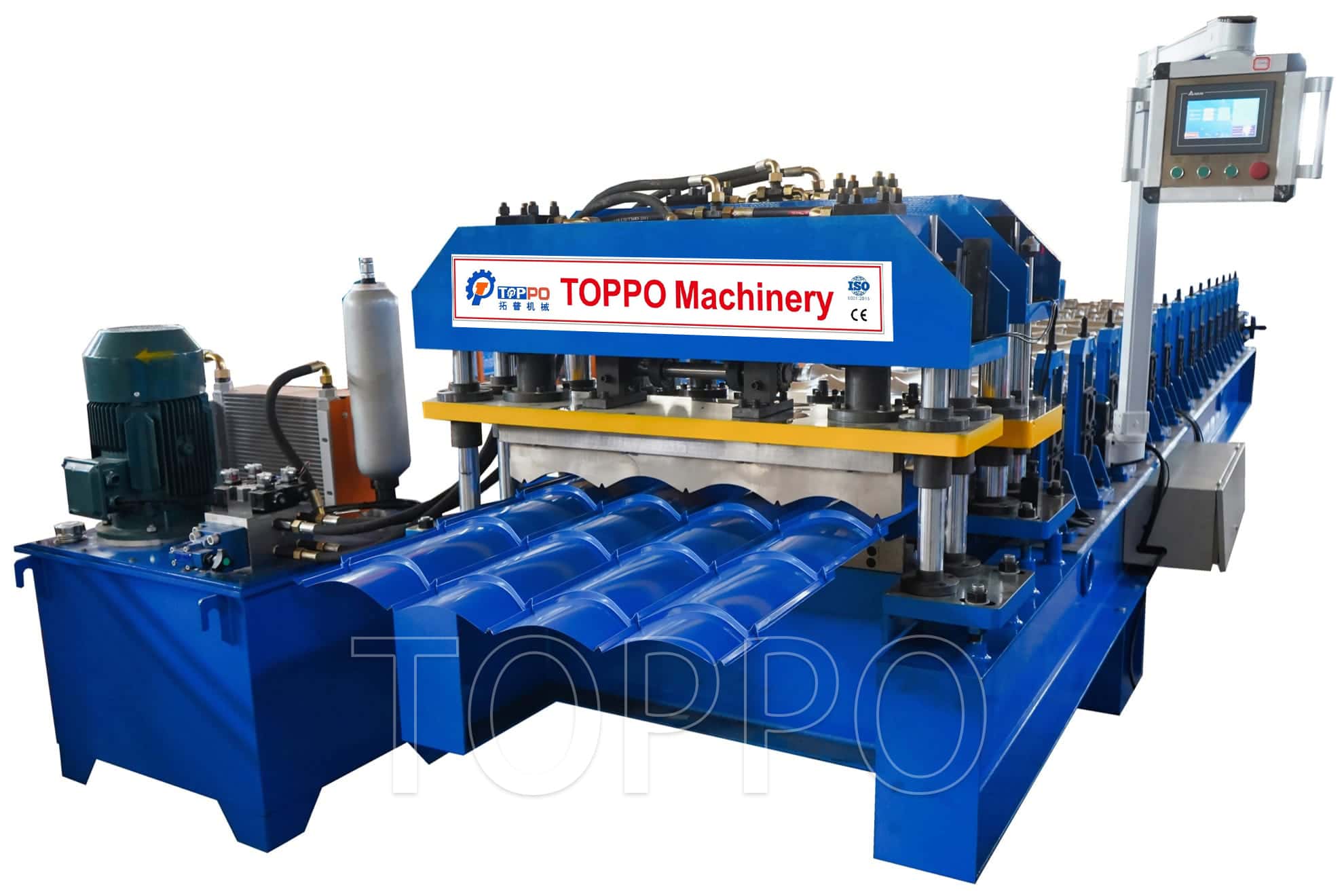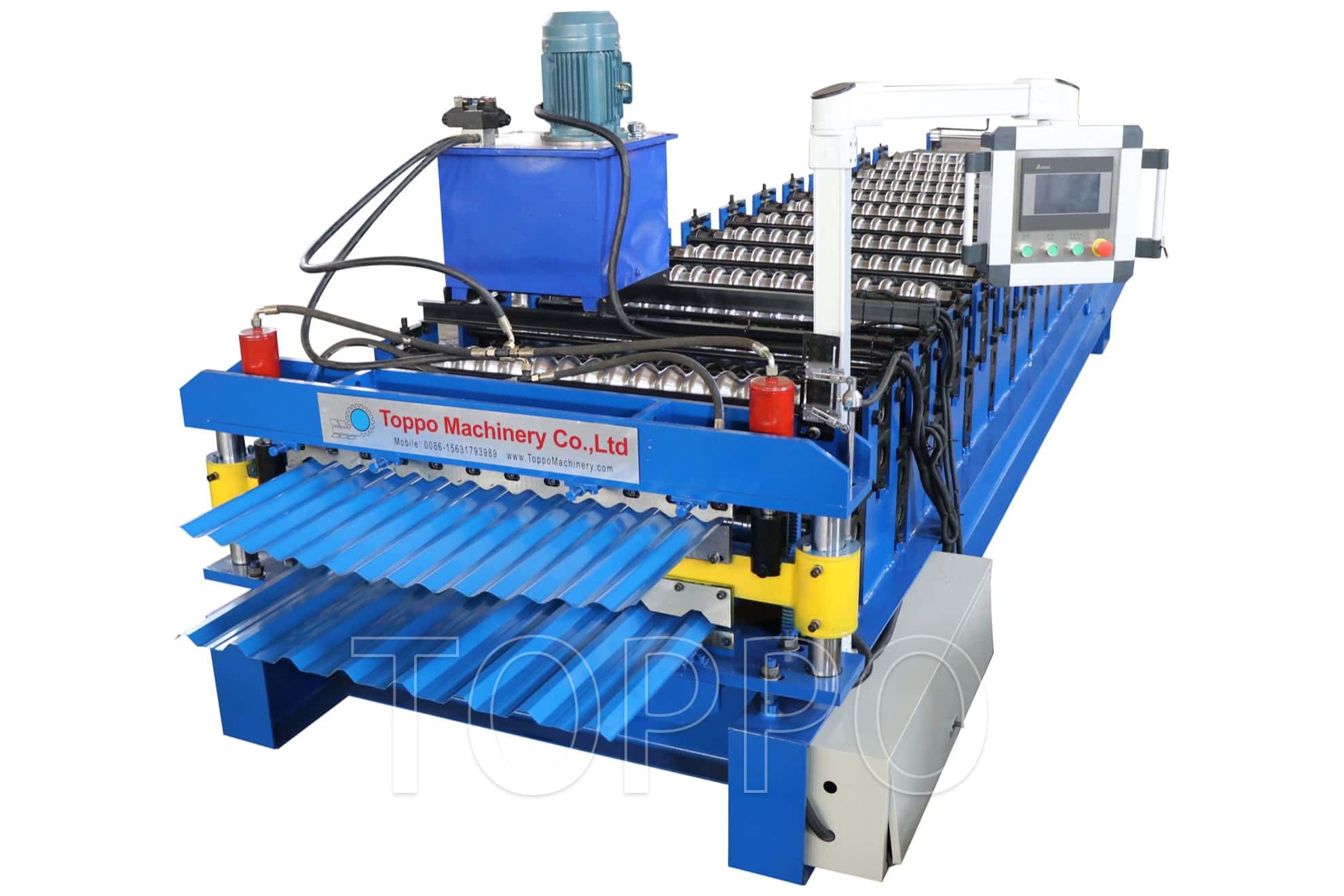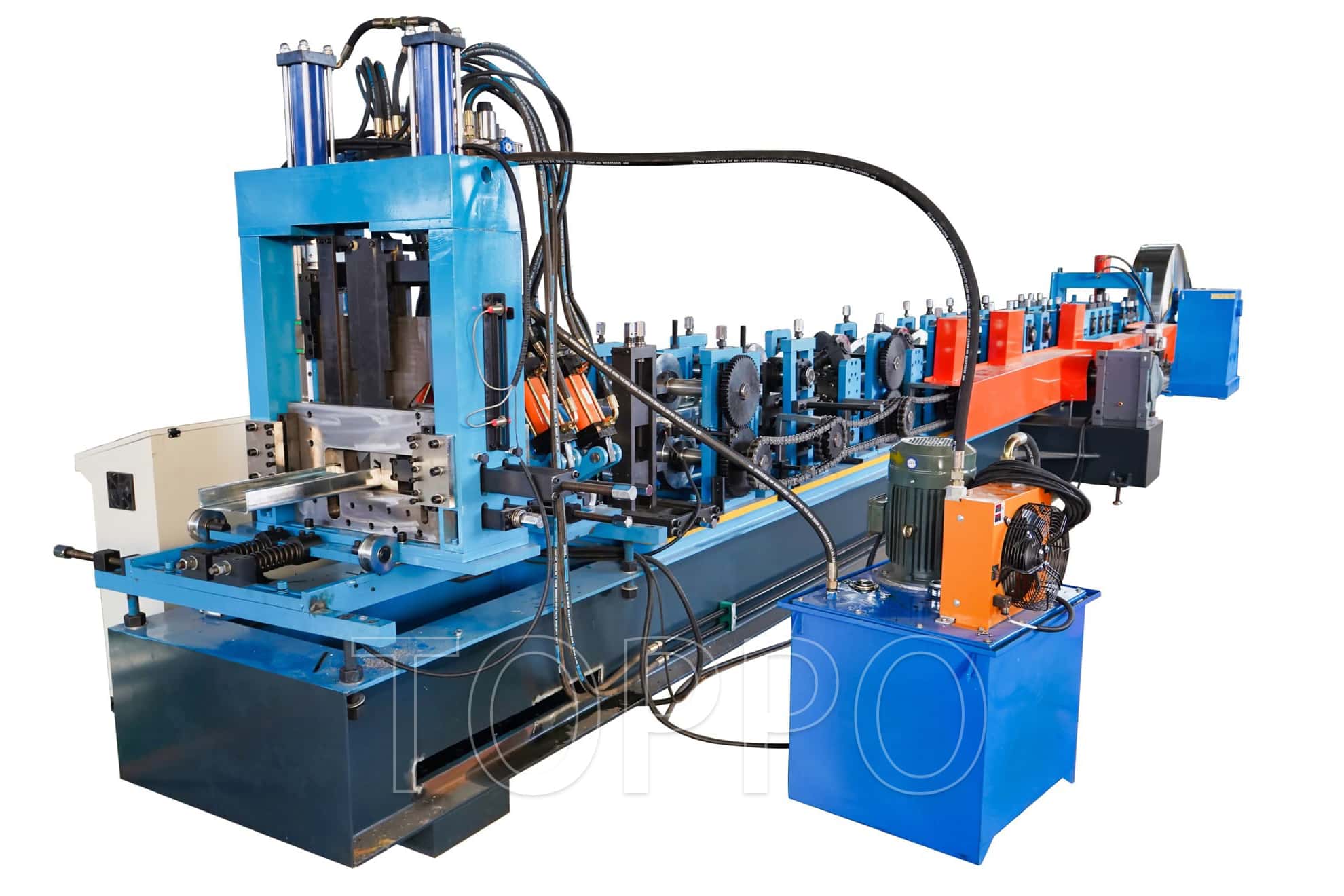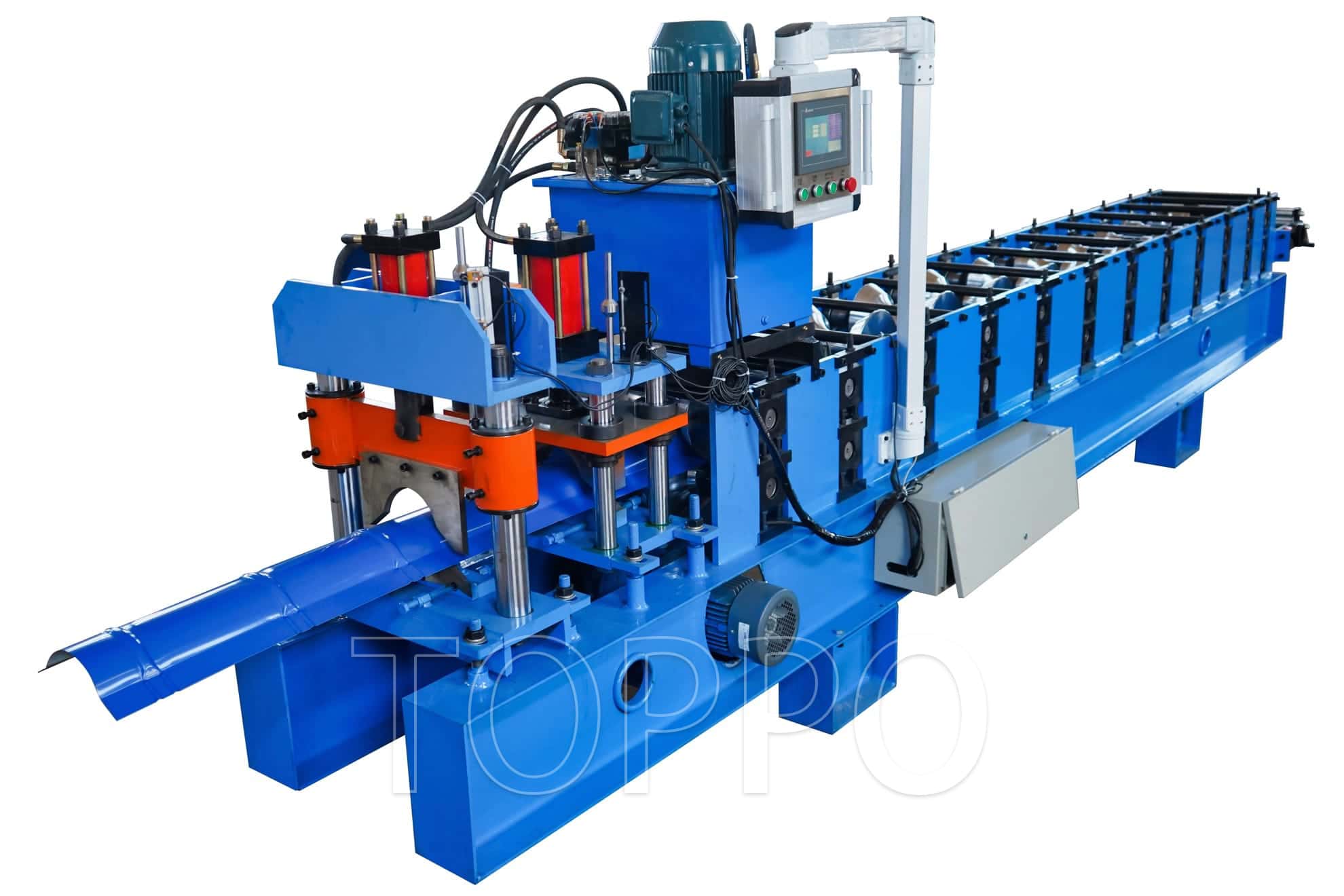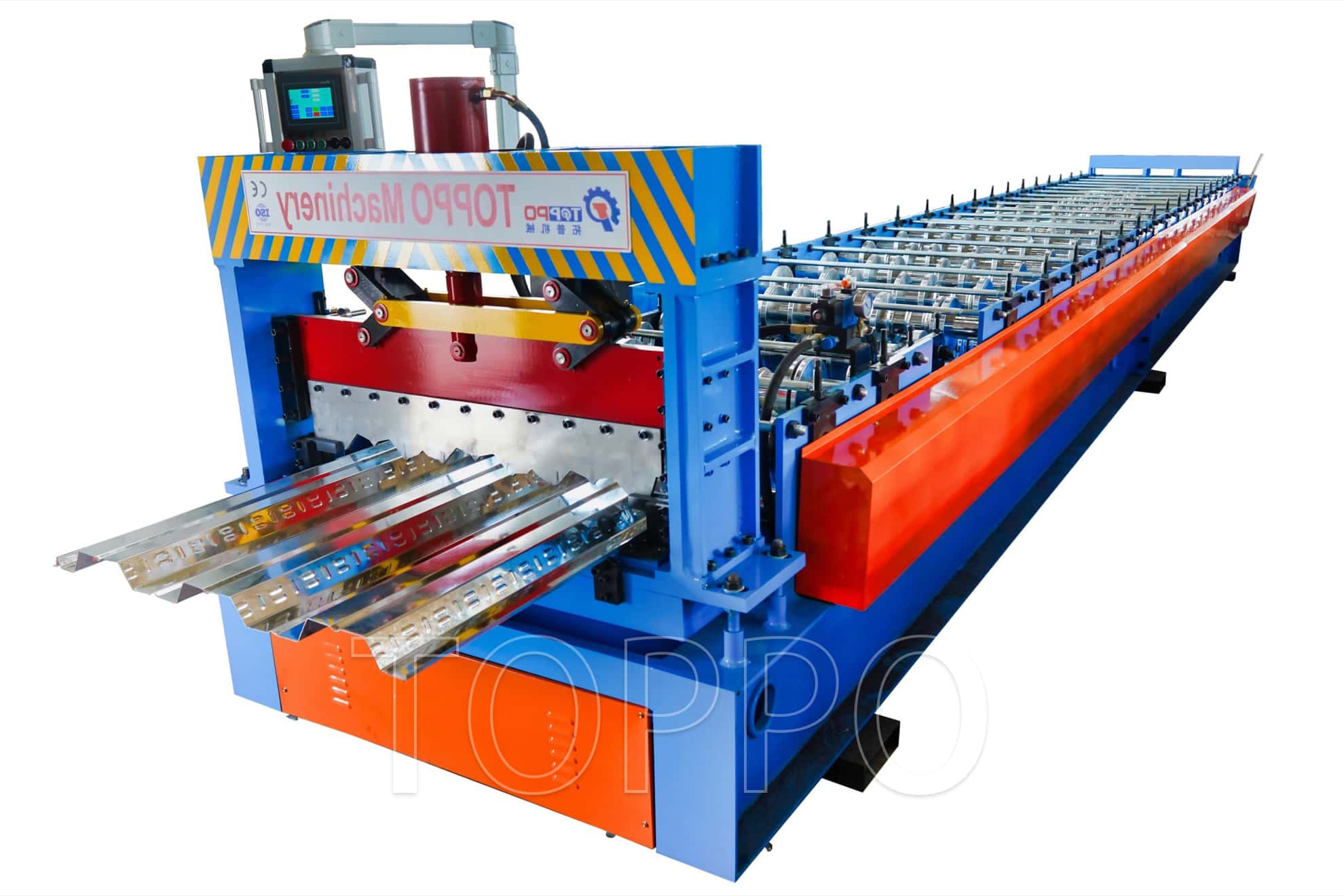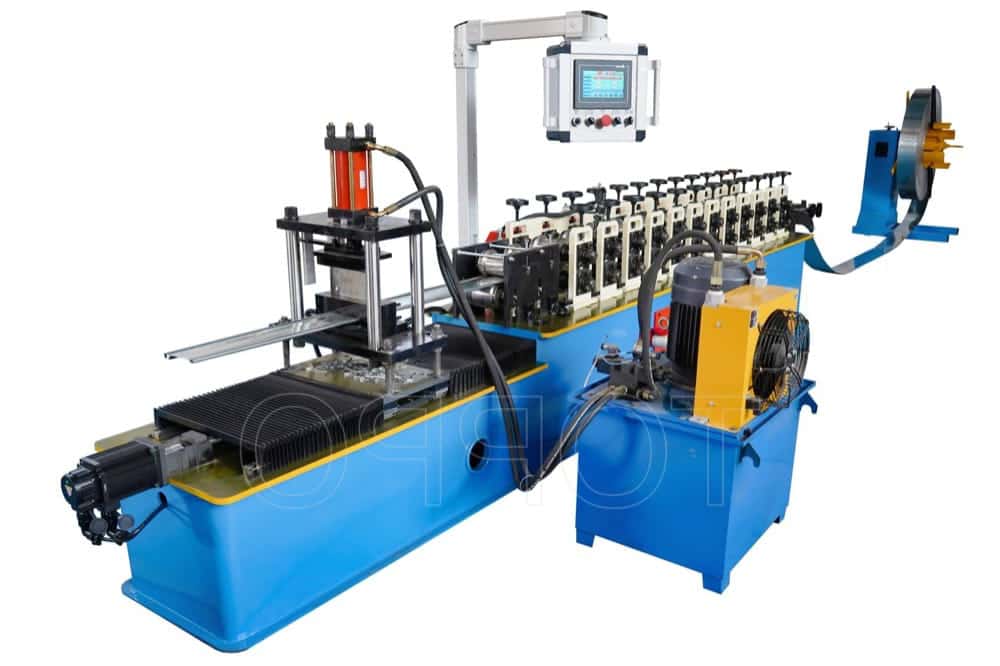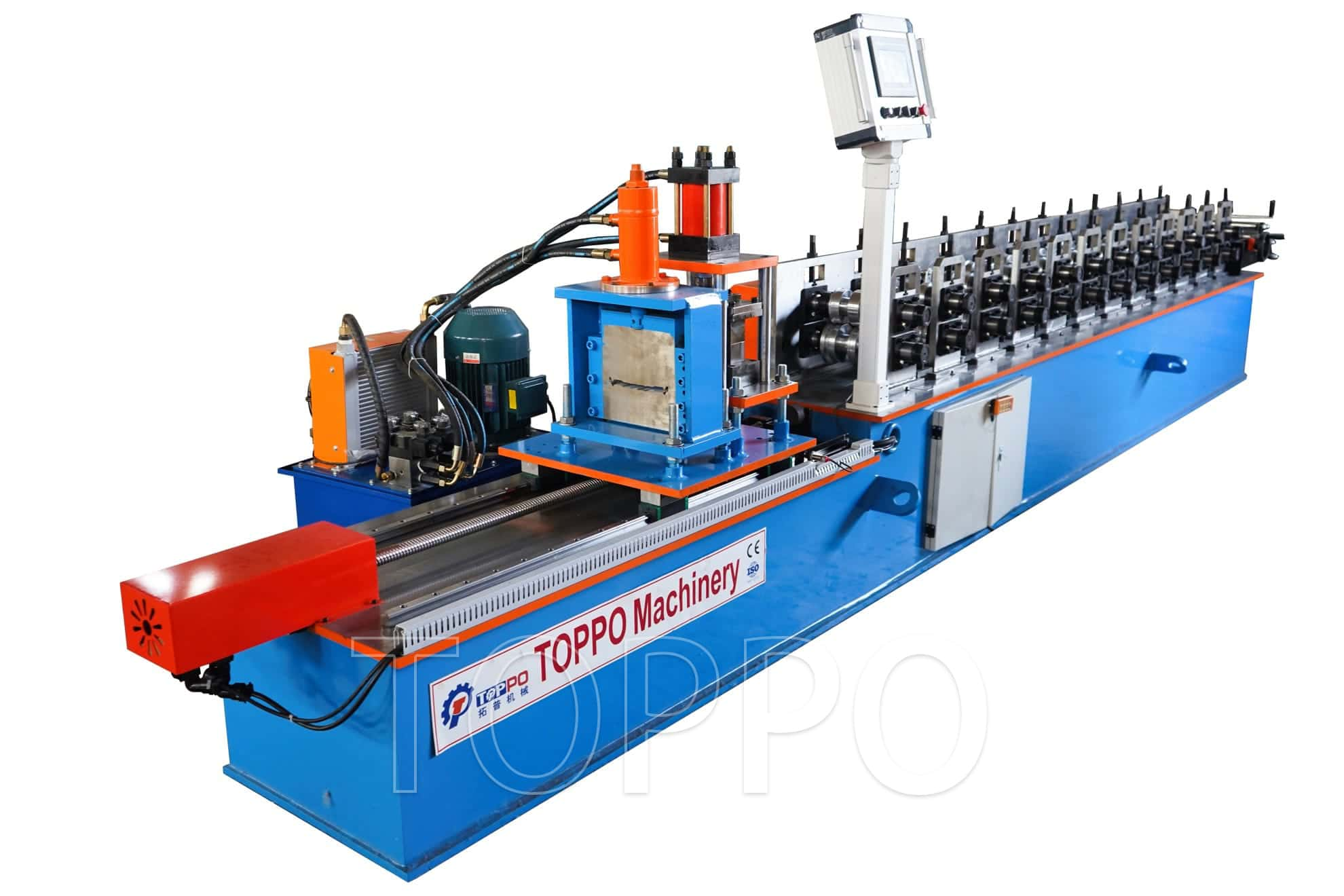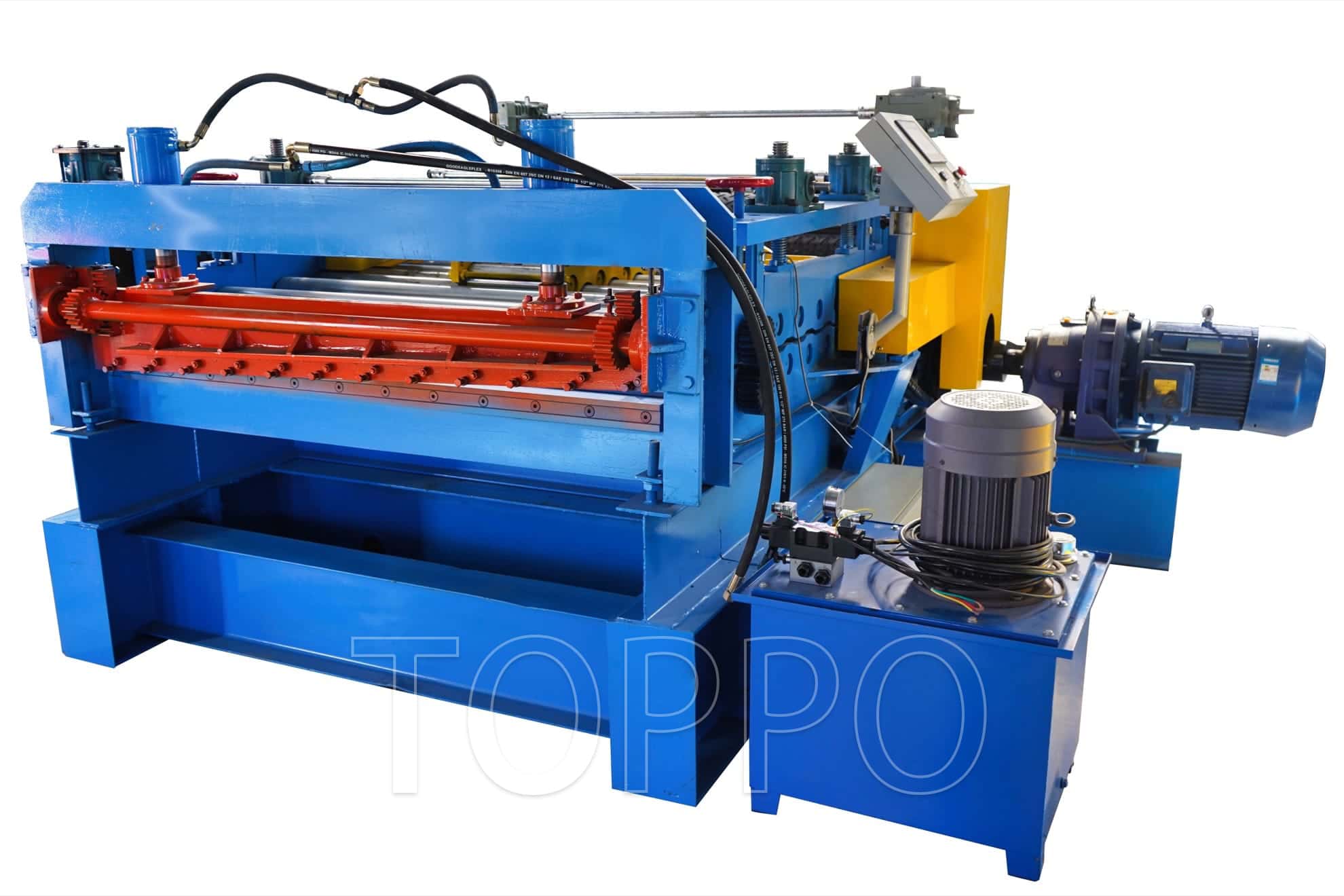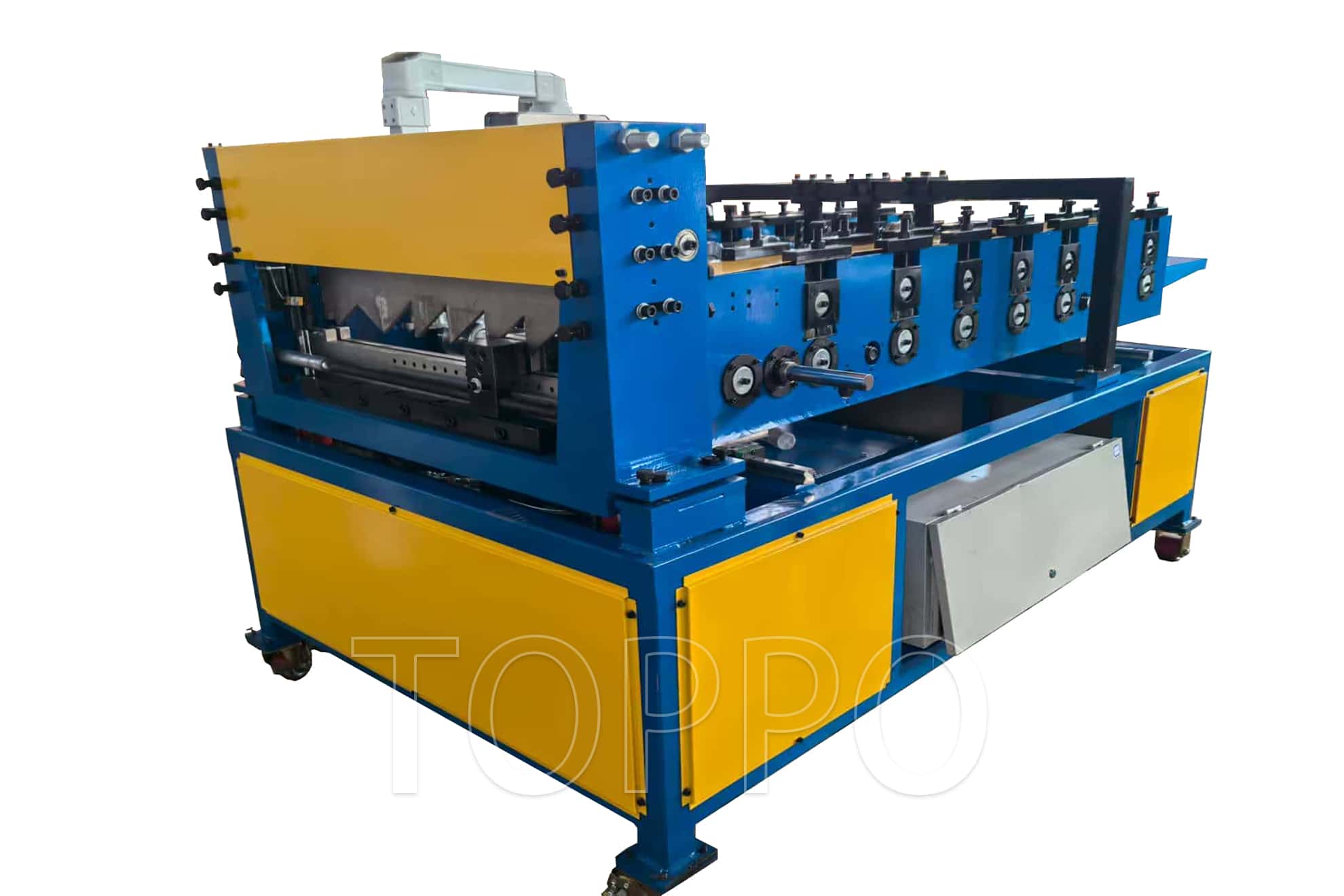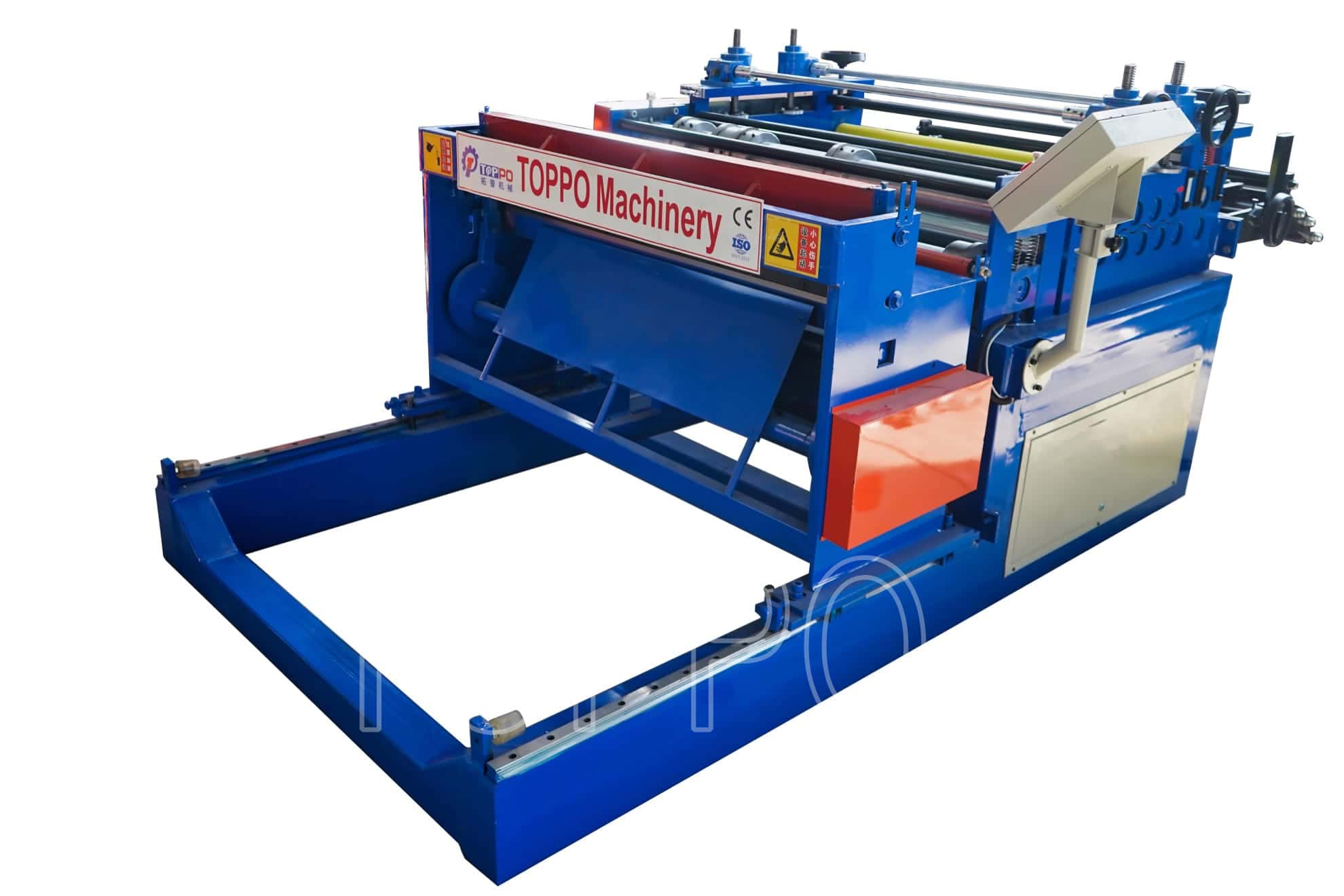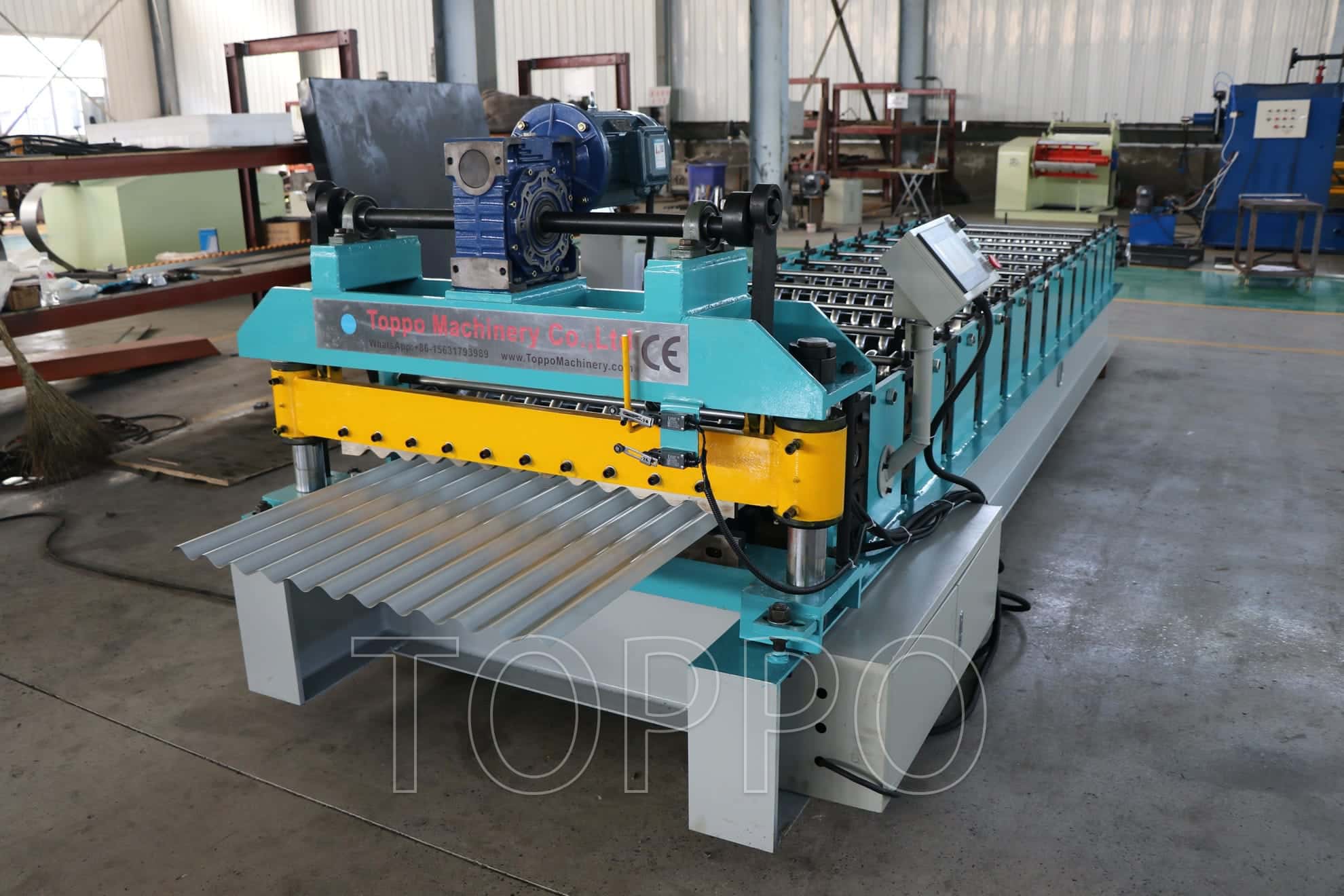
Maximizing production output while minimizing material waste is a key objective in modern roofing sheet manufacturing. Achieving this balance requires careful optimization of the roll forming process and the use of advanced machinery. In this article, we will explore the role of the high-speed hydraulic roof sheet panel 1000mm glazed tile roll forming machine, along with best practices to enhance production efficiency.
1. The Role of the High-Speed Hydraulic Roof Sheet Panel 1000mm Glazed Tile Roll Forming Machine
The high-speed hydraulic roof sheet panel 1000mm glazed tile roll forming machine is an essential tool for producing high-quality roof panels. To maximize production output and reduce waste, it’s important to set the machine parameters accurately. The speed, pressure, and roller configuration should be fine-tuned to suit the type of roofing material being produced.
Operators should ensure that the machine is running at optimal speed without compromising the precision of the roof panel production. A machine that operates at a higher speed can produce more panels in less time, but it's crucial to ensure that the product's quality remains consistent throughout.
2. Adjusting Production Settings for Optimal Efficiency
One of the most effective ways to maximize production output is by adjusting the settings of the roof panel making machine. Key settings such as roller pressure, cutting speed, and material feeding rate should be regularly reviewed to ensure they are set at optimal levels. Incorrect settings can cause production delays, defects, and excess material waste.
When using a glazed tile roll forming machine, operators should ensure that the material is fed evenly and without gaps. Gaps or misalignments in the material can lead to excess scrap and production inefficiencies.
3. Quality Control to Minimize Rework
Implementing strict quality control measures throughout the production process is critical to reducing waste. By inspecting the roofing panels at various stages, manufacturers can catch defects early and prevent them from moving forward to the next production phase. This minimizes rework and reduces the need to scrap defective panels.
Quality control checks should focus on critical aspects such as panel dimensions, coating thickness, and surface quality. Using automated inspection tools can help identify potential defects that may not be visible to the naked eye, improving overall production efficiency.
4. Efficient Use of Raw Materials with the Glazed Tile Making Machine
Another essential step in maximizing output while minimizing waste is the efficient use of raw materials. By using the right materials for the job, manufacturers can avoid unnecessary waste. For instance, when working with a glazed tile making machine, it’s crucial to select the correct thickness and type of metal sheets to ensure smooth and efficient production.
Materials that are too thin may cause issues during the forming process, while materials that are too thick may result in longer production times and more waste. Careful material selection helps ensure that the production process runs smoothly, reducing both time and material waste.
5. Recycling and Reusing Scrap Material
Even with the best practices in place, some material waste is inevitable during the production process. However, instead of discarding scrap material, roofing sheet manufacturers can implement recycling systems that allow them to reuse the scrap metal. By reintroducing scrap into the production process, manufacturers can reduce their reliance on new raw materials and decrease overall production costs.
For example, scrap metal from the glazed tile roll forming machine can be processed and reused in the production of new roofing panels. This not only reduces waste but also improves the overall sustainability of the roofing manufacturing process.
In conclusion, maximizing production output while minimizing material waste in roofing sheet manufacturing requires a combination of optimal machine settings, quality control, efficient use of materials, and recycling scrap. By following these best practices and utilizing advanced equipment like the high-speed hydraulic roof sheet panel 1000mm glazed tile roll forming machine, manufacturers can enhance both their operational efficiency and sustainability.
READ MORE: