- Trapezoidal Machine
- Corrugated Machine
- Glazed Tile Machine
- Double Layer Machine
- CZU Purlin Machine
- Ridge Cap Machine
- Floor Decking Machine
- Rolling Door Machine
- Fence Machine
- Embossing Machine
- Standing Seam Machine
- Cut To Length And Slitting Line
- Guard Rail Machine
- Decoiler And Stacker
- Stud And Track Machine
- Gutter And DownPipe
- Curving Machine
- Cladding Panel Machine
- Corollary Equipment
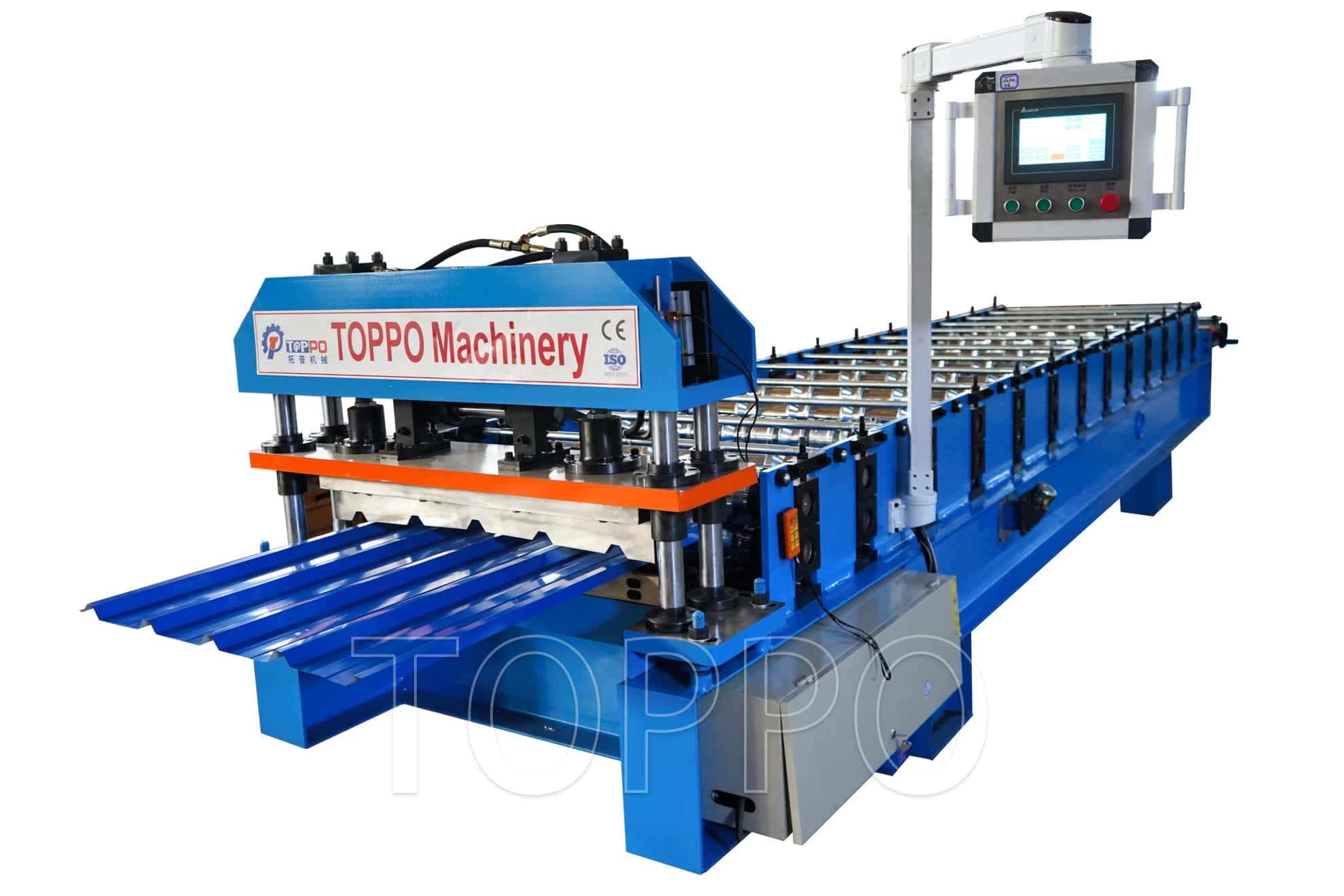
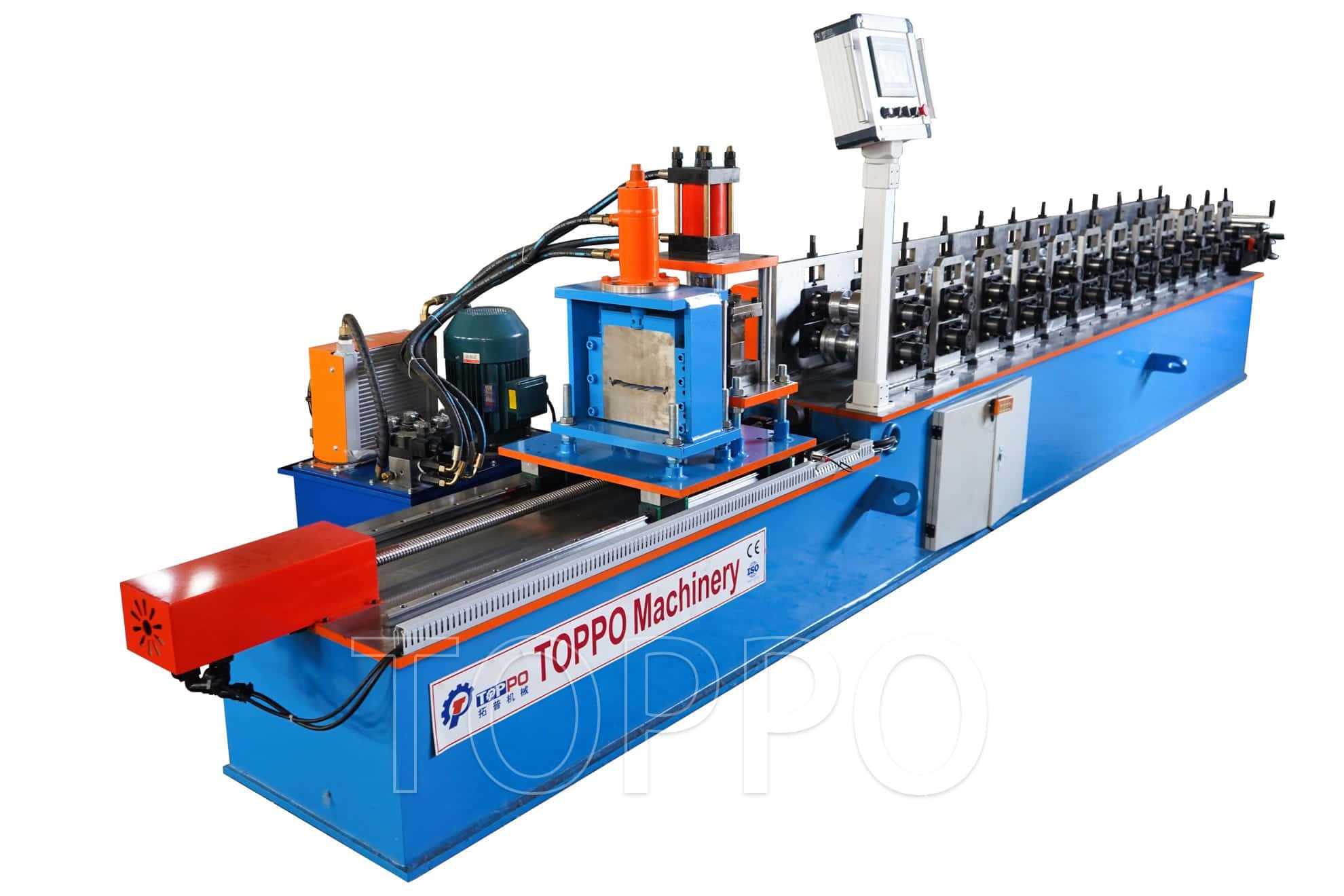
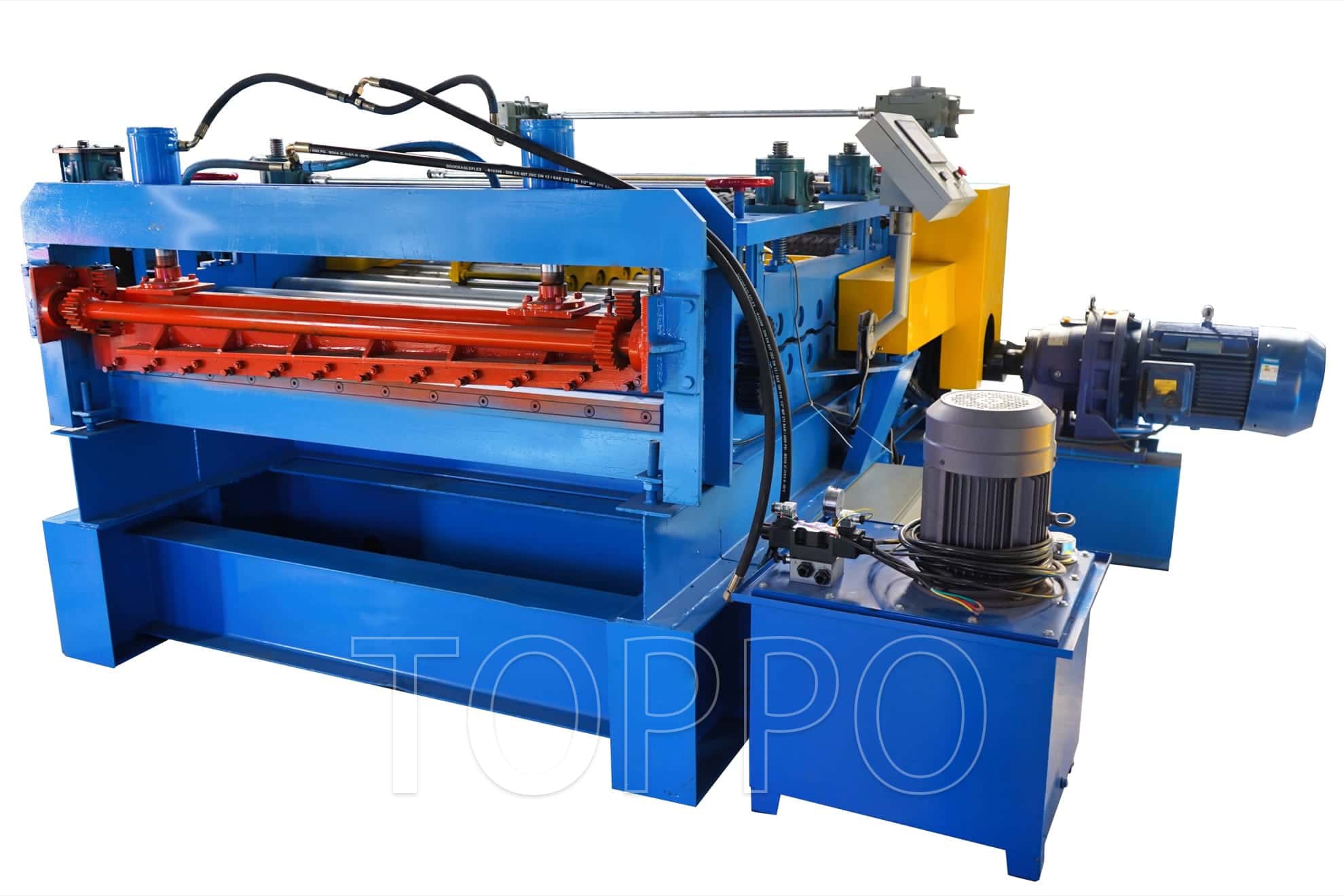
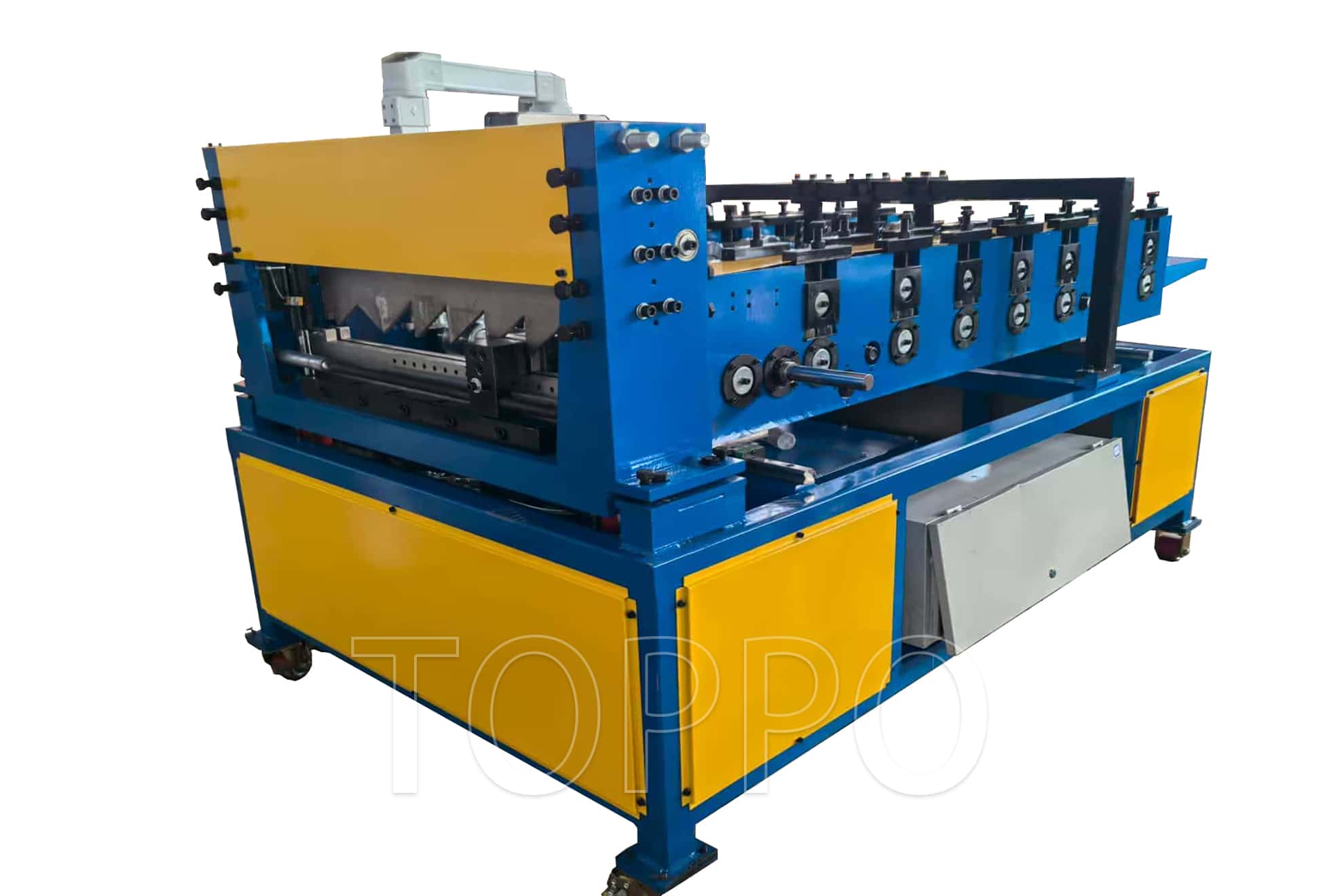
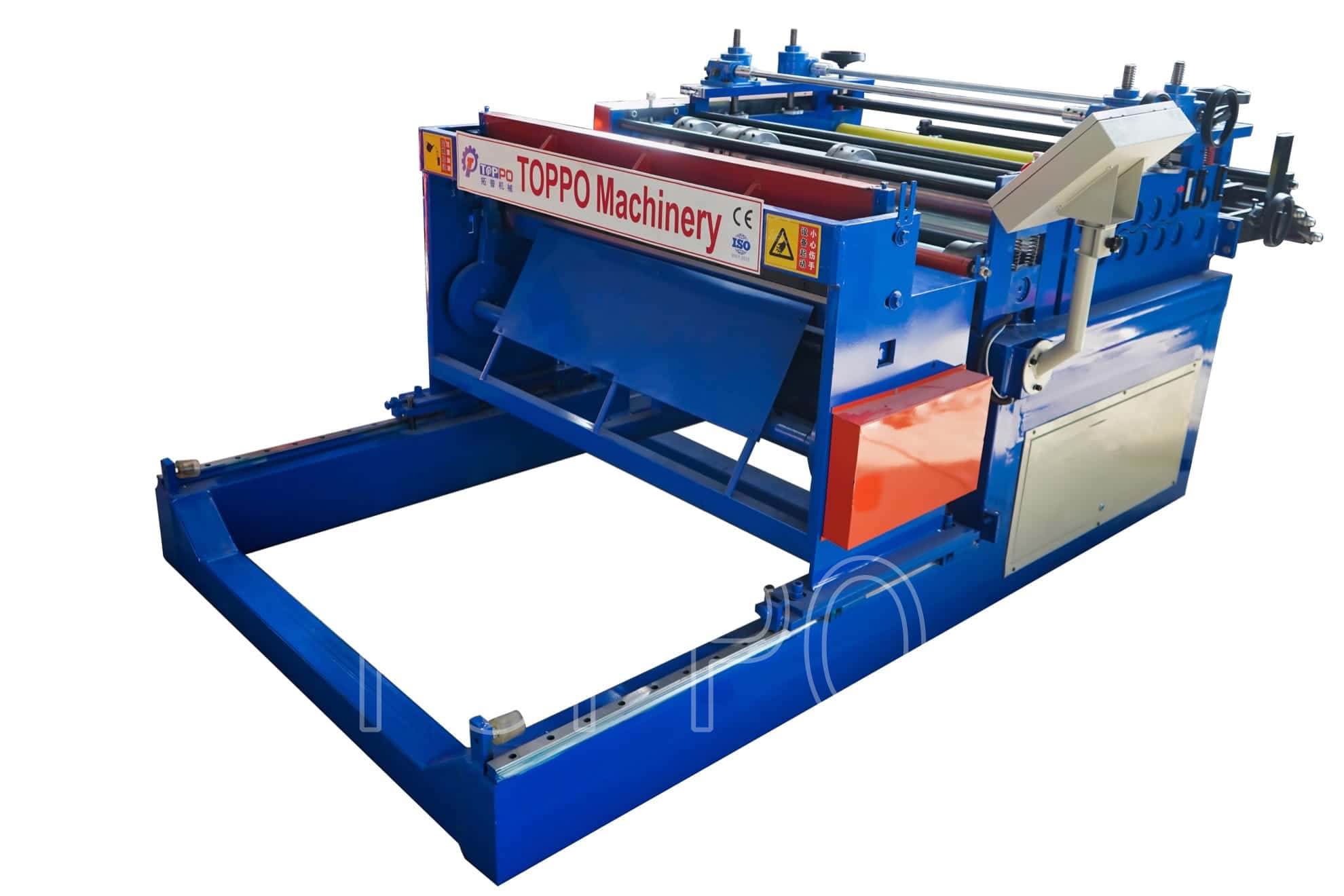



- Trapezoidal Machine
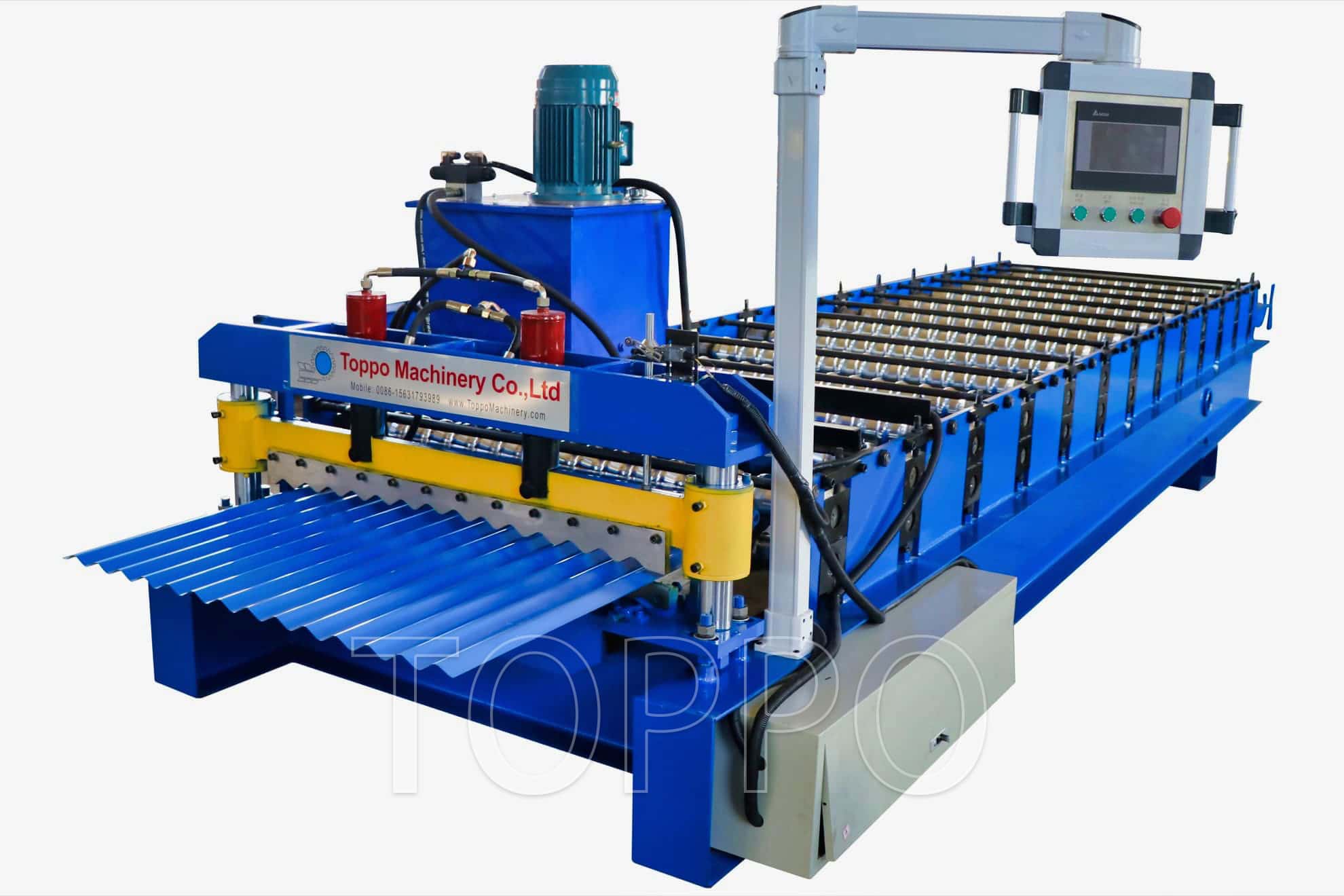
- Corrugated Machine
- Glazed Tile Machine
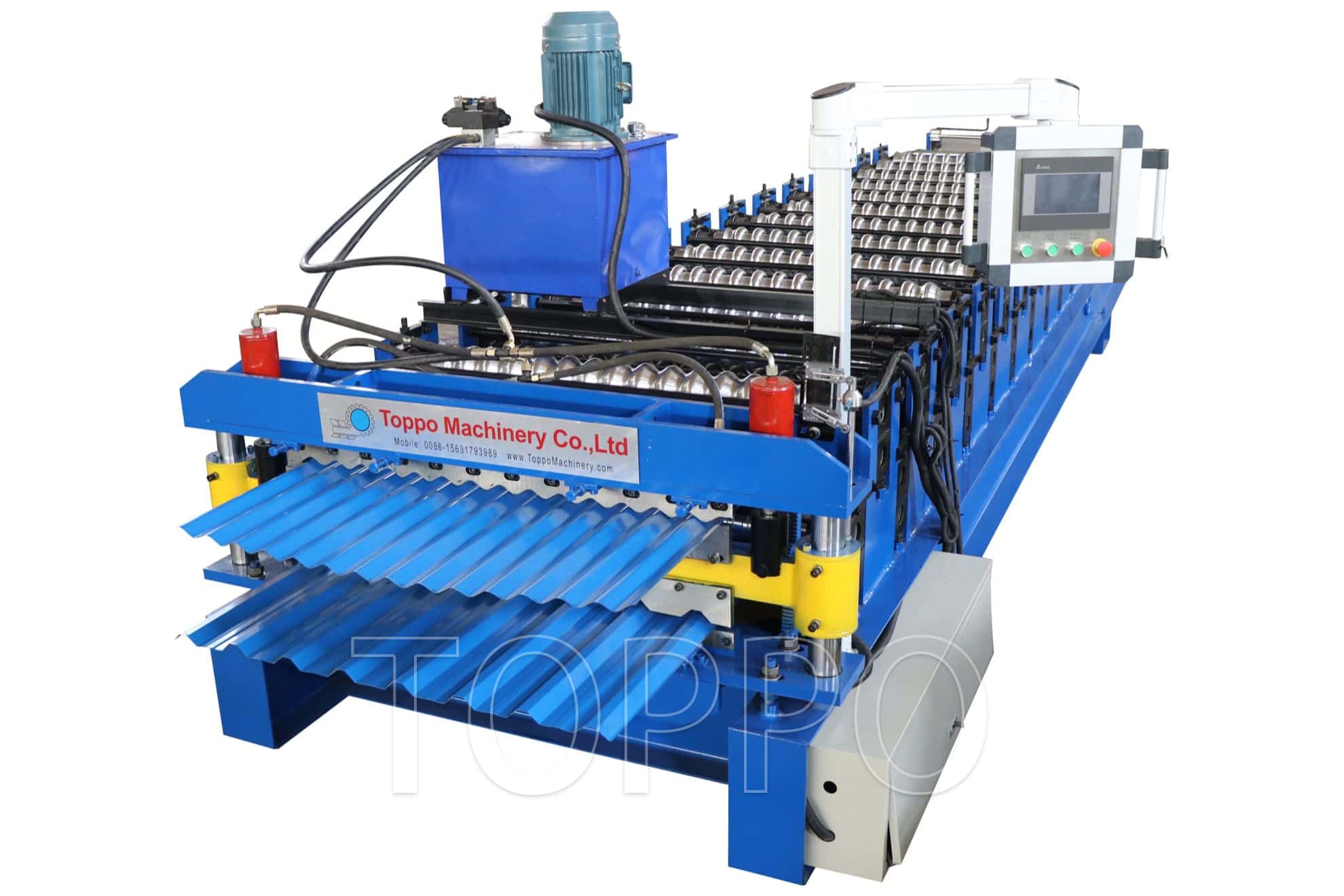
- Double Layer Machine
- CZU Purlin Machine
- Ridge Cap Machine
- Floor Decking Machine
- Rolling Shutter Door Machine
- Palisade Fence Machine
- Embossing Machine
- Standing Seam Machine
- Cut To Length And Slitting Line
- Guard Rail Machine
- Decoiler And Stacker
- Stud And Track Machine
- Gutter And DownPipe
- Curving Machine
- Cladding Panel Machine
- Corollary Equipment
- Other
Heavy-Duty Glazed Tile Roof Sheet Roll Forming Machine
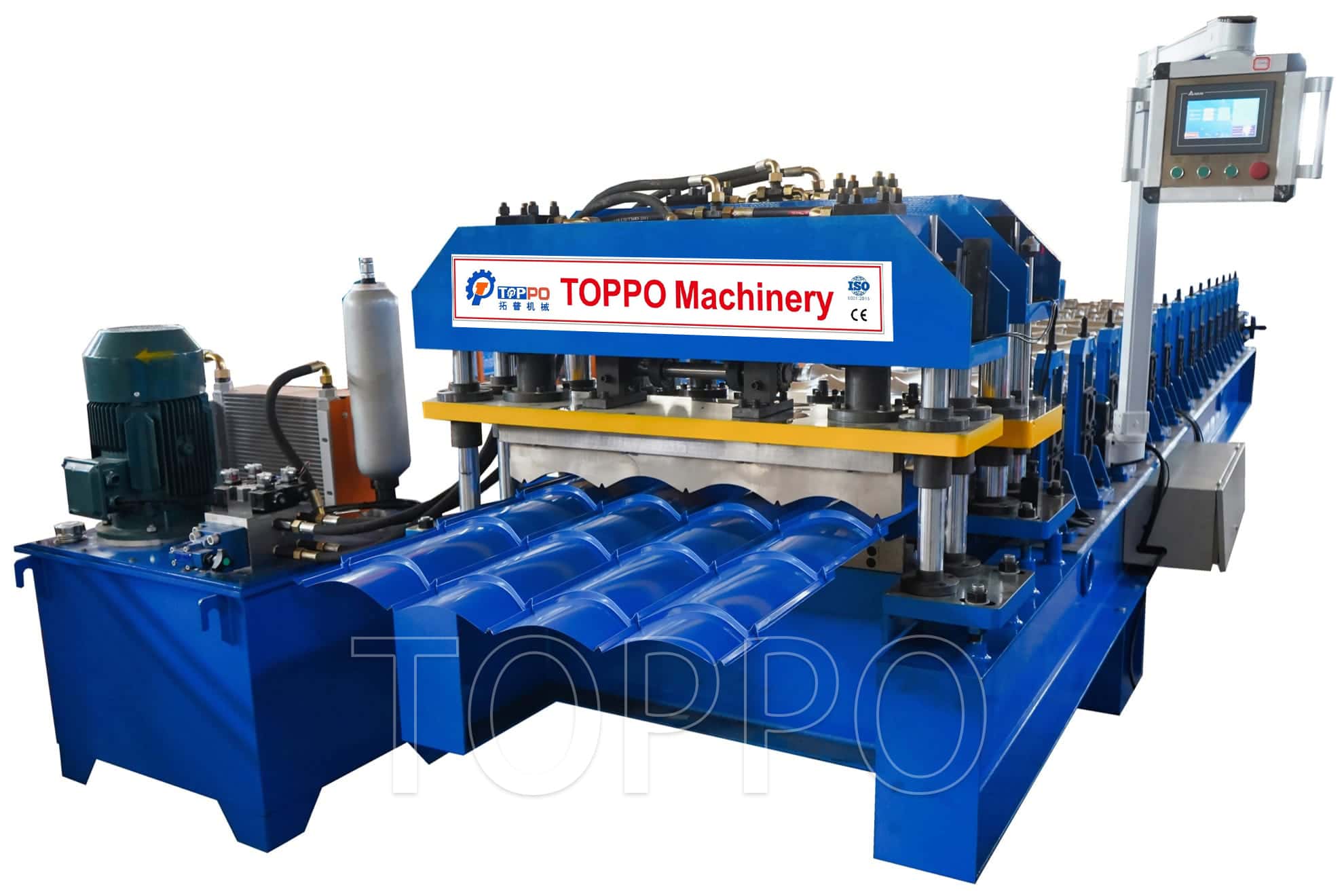
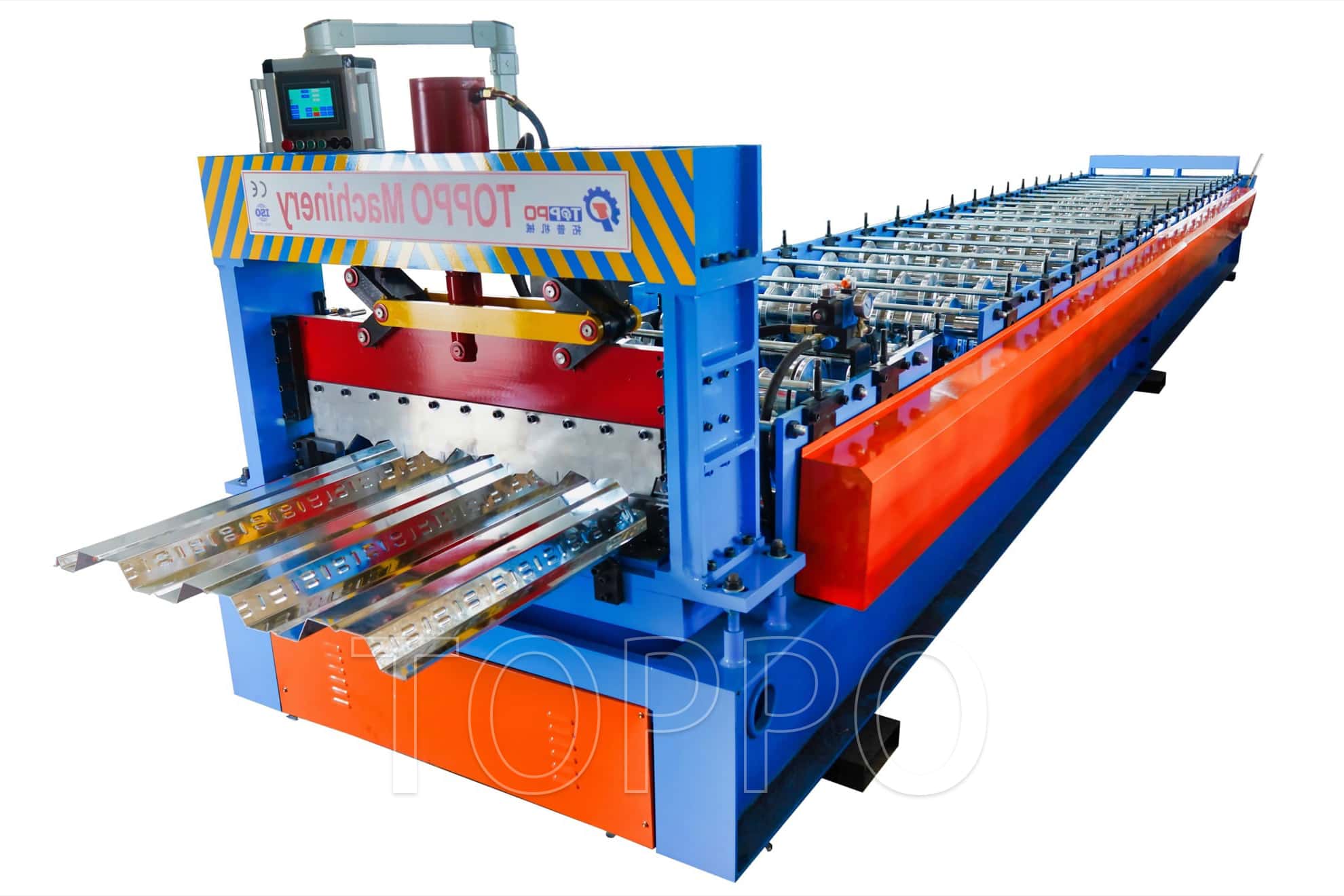
This glazed tile roofing making machine is designed for continuous production of decorative metal roof panels with repeated wave profiles and tile-like steps. The equipment gradually forms flat steel coil through multiple roller stations, creates the required glazed-tile pattern with a hydraulic step-forming unit, measures panel length electronically and cuts each finished sheet automatically.
The orange-and-blue industrial frame provides a rigid production platform for the forming and hydraulic sections. The line can be engineered around the customer's approved profile drawing, material type, sheet gauge, effective cover width, tile pitch, electrical standard and factory layout.
Key Production Advantages
Integrated coil feeding, roll forming, tile-step pressing, measuring and cutting process.
Hydraulic step-forming system produces repeatable decorative tile patterns.
PLC-based control supports programmable length, quantity and production settings.
Heavy welded steel frame helps maintain alignment during industrial operation.
Precision-machined forming rollers support stable profile geometry.
Customized profile tooling is available from a drawing or physical sample.
Compatible with common coated and galvanized roofing-sheet materials.
Optional decoiling, receiving and stacking equipment can be matched to the line.
Product Attributes and Configuration Options
| Attribute | Specification / Description |
|---|---|
| 1. Product Name | Glazed Tile Roofing Making Machine |
| 2. Machine Type | Automatic glazed roof tile roll forming line |
| 3. Main Application | Production of decorative stepped metal roofing panels |
| 4. Forming Process | Continuous cold roll forming |
| 5. Finished Product | Glazed metal roof tile sheets |
| 6. Finished Profile Style | Wave-shaped panel with repeated tile steps |
| 7. Suitable Raw Materials | PPGI, color-coated steel, galvanized steel and compatible sheet metal |
| 8. Coil Surface Type | Pre-painted, zinc-coated or protected steel surface |
| 9. Sheet Thickness | Customized according to the approved profile and material strength |
| 10. Coil Feeding Width | Customized according to the customer's roof profile |
| 11. Effective Cover Width | Designed according to the finished-panel drawing |
| 12. Material Yield Strength | Machine configuration matched to the specified coil strength |
| 13. Profile Height | Customized according to roof-panel requirements |
| 14. Tile Step Pitch | Configured and programmed for the selected tile design |
| 15. Tile Step Depth | Determined by the hydraulic step-forming tooling |
| 16. Forming Station Quantity | Selected according to profile complexity and quality requirements |
| 17. Forming Roller Material | High-quality wear-resistant steel |
| 18. Roller Machining | Precision CNC machining |
| 19. Roller Surface Finish | Polished for smooth contact with coated sheet |
| 20. Optional Roller Treatment | Hardening or chrome plating available |
| 21. Main Shaft Material | High-strength machined steel |
| 22. Shaft Diameter | Engineered according to sheet width and forming load |
| 23. Main Frame Material | Welded structural steel |
| 24. Frame Design | Heavy-duty floor-mounted industrial base |
| 25. Frame Finish | Protective industrial paint coating |
| 26. Standard Machine Color | Orange and blue or customized by agreement |
| 27. Drive System | Electric motor-driven forming transmission |
| 28. Transmission Configuration | Selected according to line load and forming-station design |
| 29. Main Motor Power | Specified according to material thickness, width and required speed |
| 30. Production Speed | Customized according to profile geometry and hydraulic step cycle |
| 31. Speed Adjustment | Variable-speed control available by configuration |
| 32. Coil Feeding Mode | Continuous coil-fed operation |
| 33. Entry Guide | Adjustable sheet alignment and guiding device |
| 34. Step Forming Unit | Hydraulic glazed-tile step press |
| 35. Step Forming Action | Automatic synchronized pressing at programmed intervals |
| 36. Cutting System | Integrated hydraulic cutting unit |
| 37. Cutting Method | Automatic cut-to-length operation |
| 38. Cutting Blade Material | Hardened tool steel |
| 39. Length Measurement | Electronic encoder measuring system |
| 40. Length Programming | Digital production-length setting |
| 41. Batch Quantity Setting | Programmable production quantity |
| 42. Piece Counting | Automatic finished-sheet counter |
| 43. Control System | PLC automatic control |
| 44. Operator Interface | HMI touchscreen or digital control panel by configuration |
| 45. Control Language | English; additional language options subject to configuration |
| 46. Working Modes | Automatic, manual and jog modes |
| 47. Emergency Stop | Emergency-stop control for operator safety |
| 48. Electrical Cabinet | Independent enclosed control cabinet |
| 49. Electrical Standard | Configured for the destination market |
| 50. Power Supply | Voltage, phase and frequency customized |
| 51. Hydraulic Station | Independent hydraulic power unit |
| 52. Hydraulic Motor | Sized according to pressing and cutting demand |
| 53. Hydraulic Pressure | Adjusted to tooling and material requirements |
| 54. Hydraulic Cylinders | Industrial cylinders for step forming and cutting functions |
| 55. Hydraulic Oil | Industrial hydraulic oil selected for local operating temperature |
| 56. Decoiler Compatibility | Manual, powered or hydraulic decoiler options |
| 57. Feeding Support | Optional entry support table |
| 58. Receiving Table | Optional run-out table for finished sheets |
| 59. Automatic Stacker | Optional for higher production automation |
| 60. Production Direction | Configured to suit the customer's factory layout |
| 61. Machine Dimensions | Determined by profile, station quantity and auxiliary equipment |
| 62. Machine Weight | Determined by final frame and tooling configuration |
| 63. Installation Method | Floor installation on a level industrial foundation |
| 64. Operator Requirement | Designed for operation by trained production personnel |
| 65. Routine Maintenance | Cleaning, lubrication, fastening checks and hydraulic inspection |
| 66. Lubrication Areas | Bearings, drive components and moving assemblies |
| 67. Profile Customization | Available from drawing, sample or required roof coverage |
| 68. Machine Color Customization | Available according to order requirements |
| 69. Branding Customization | Logo and nameplate options available |
| 70. Factory Testing | Functional inspection and trial forming before shipment |
| 71. Test Material | Customer-specified material can be tested when supplied |
| 72. Packaging | Export-oriented protective packing |
| 73. Loading Method | Container loading plan based on final dimensions |
| 74. Documentation | Operating and maintenance instructions supplied according to contract |
| 75. Technical Support | Remote assistance or arranged on-site service |
| 76. Spare Parts Support | Recommended wear parts available by agreement |
How the Production Line Works
The metal coil is placed on the decoiler and guided into the forming section. Multiple roller stations progressively shape the flat strip into the required roof profile while minimizing unnecessary stress on the coating. The hydraulic forming unit then presses the decorative tile steps at programmed intervals. An encoder measures the sheet length, and the cutting unit separates each panel when the preset length is reached.
Finished Roof Panel Characteristics
Decorative tile-like appearance for architectural roofing.
Lightweight sheet construction for convenient handling and installation.
Long-panel production can reduce the number of roof joints.
Compatible with a wide selection of coated-steel colors.
Consistent profile geometry supports orderly overlapping and installation.
Typical Use Scenarios
Finished glazed metal tiles can be used for villas, residences, hotels, resorts, pavilions, commercial buildings, warehouses, workshops, prefabricated houses, light-steel structures and renovation projects. The production line is suitable for roofing manufacturers serving residential, industrial and architectural markets.
Quality and Maintenance Guidance
Stable forming quality depends on using material within the approved thickness, width and yield-strength range. Before production, the operator should verify the sheet guide, panel length, quantity and tile-step settings. Forming rollers should be kept clean to protect coated surfaces, while drive parts, bearings, hydraulic components and fasteners should be inspected regularly.
Information Required for Custom Engineering
Please provide the finished roof-profile drawing, raw-material type, sheet thickness, coil width, effective cover width, tile-step pitch, desired production speed, destination voltage, plant layout and preferred decoiler or receiving system. These details allow the forming stations, shaft design, motor power, hydraulic system and overall line arrangement to be matched to the project.
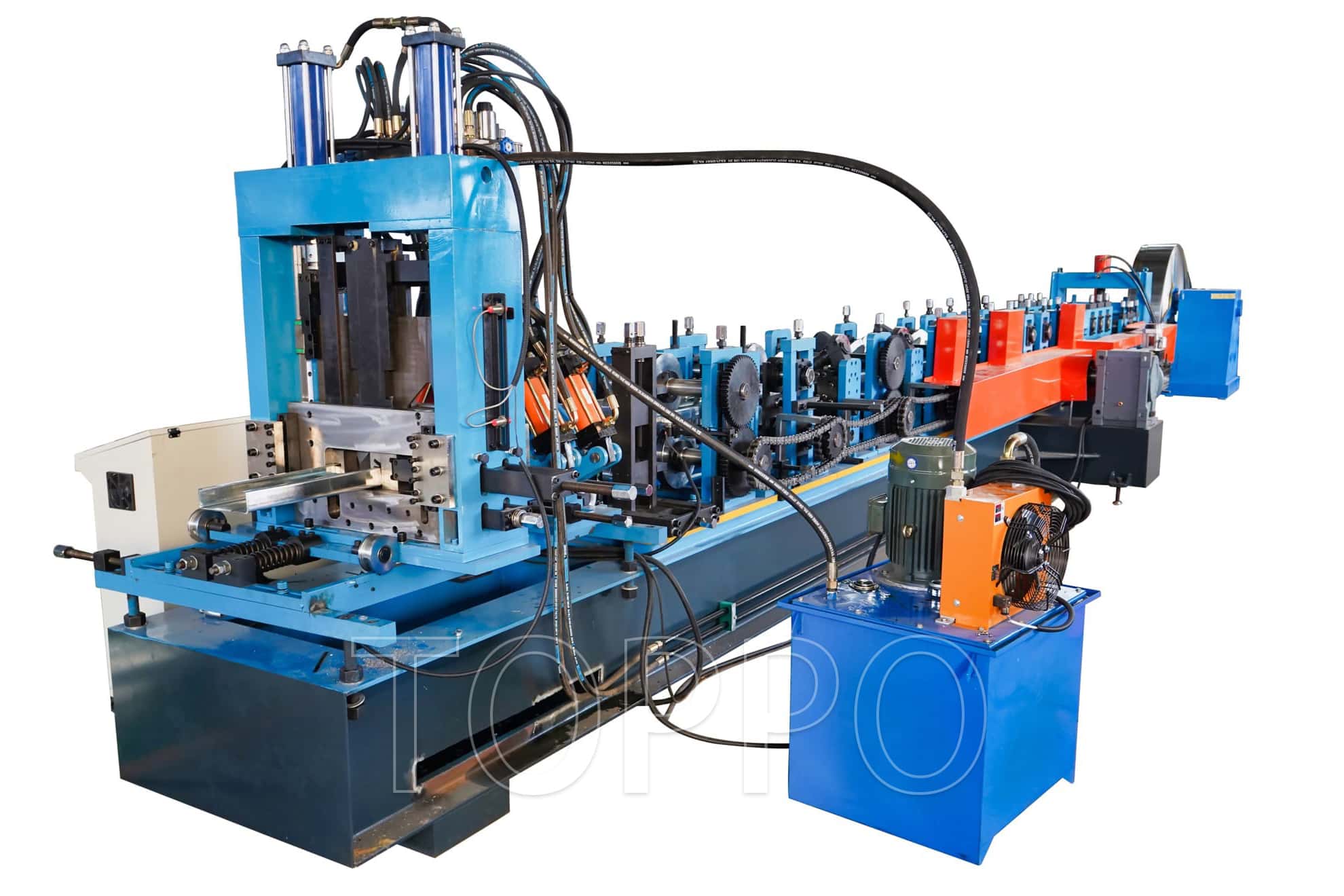
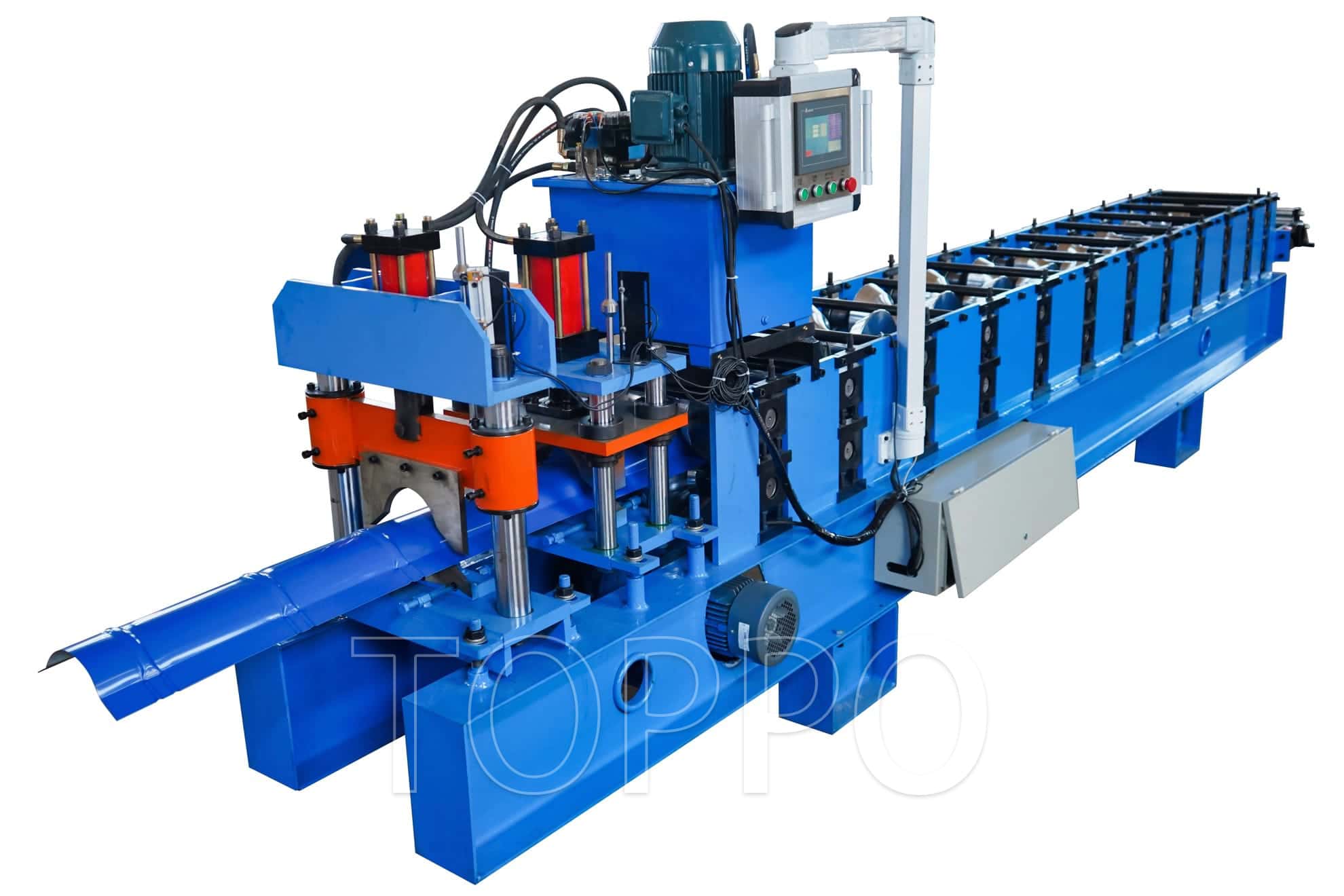
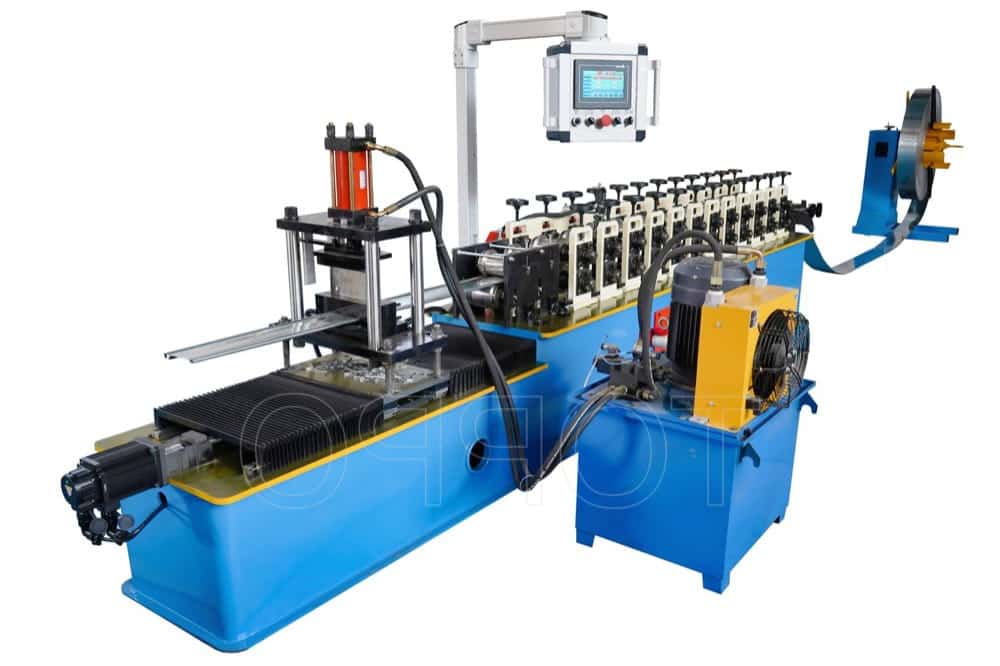
Note: Final technical specifications are confirmed according to the customer's approved profile and production requirements. The image shows a representative glazed tile roofing making machine configuration and may differ from the final customized equipment.
- User name Member Level Quantity Specification Purchase Date
- Satisfaction :
-