- Trapezoidal Machine
- Corrugated Machine
- Glazed Tile Machine
- Double Layer Machine
- CZU Purlin Machine
- Ridge Cap Machine
- Floor Decking Machine
- Rolling Door Machine
- Fence Machine
- Embossing Machine
- Standing Seam Machine
- Cut To Length And Slitting Line
- Guard Rail Machine
- Decoiler And Stacker
- Stud And Track Machine
- Gutter And DownPipe
- Curving Machine
- Cladding Panel Machine
- Corollary Equipment


Introduction
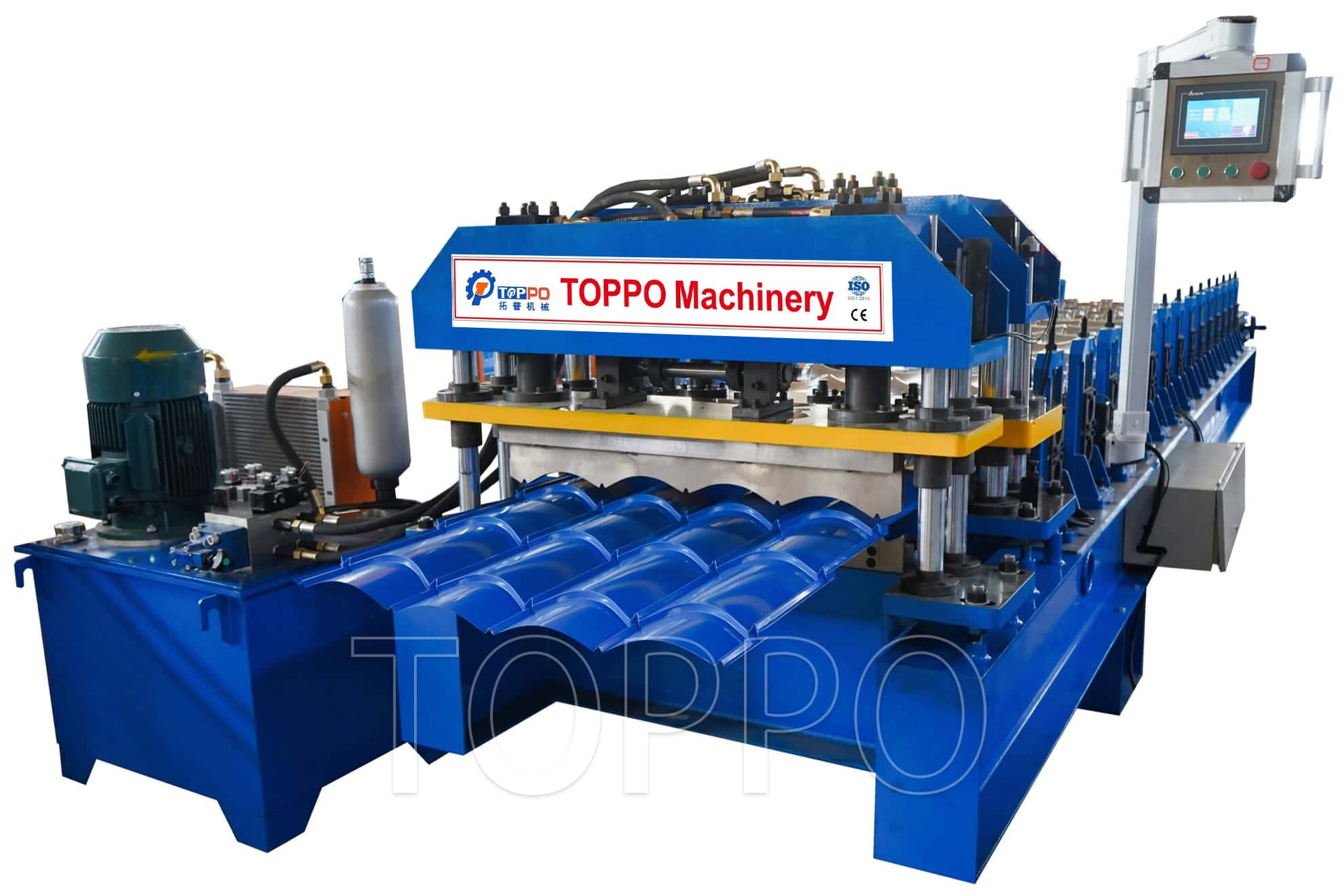
When planning to manufacture metal glazed roofing sheets, one of the first questions buyers ask is: How much does a metal glazed roof tile roll forming machine cost?
The answer depends on several factors, including the required tile profile, raw material specifications, machine configuration, production speed, automation level, and shipping arrangements. Two machines that look similar may have different technical specifications and prices.
Understanding these factors helps buyers compare quotations more effectively and choose equipment that matches their production requirements.
TOPPO Machinery provides roll forming equipment for metal roofing and building material production. In this guide, we explain the main factors that affect the price of a metal glazed roof tile roll forming machine and the information buyers should prepare before requesting a quotation.
1. Tile Profile Design and Customization
The required roofing profile is one of the most important factors affecting machine design.
Different metal glazed tile profiles may have different dimensions, shapes, forming requirements, and cutting arrangements. The roller system must be designed to produce the specified profile accurately.
Standard profiles may be easier to configure than highly customized designs. Special requirements may involve additional engineering, roller modifications, or changes to the cutting system.
Before requesting a quotation, buyers should provide a profile drawing or a clear sample with the relevant dimensions.
This allows the manufacturer to evaluate the forming requirements and recommend an appropriate machine configuration.
2. Raw Material Type and Thickness
The material specifications directly influence the design and operating range of a roll forming machine.
Depending on the machine configuration, suitable materials may include pre-painted galvanized steel (PPGI), galvanized steel (GI), and other compatible metal sheets.
When discussing a project, buyers should confirm:
Material type and grade
Minimum and maximum material thickness
Raw material coil width
Relevant material properties
Surface coating requirements
A machine designed for thinner roofing sheets may not be suitable for thicker materials without an appropriate design. The forming rollers, shafts, drive system, and other components must be selected according to the intended operating conditions.
Providing accurate material specifications helps the manufacturer prepare a more appropriate quotation.
3. Machine Configuration and Main Components
The configuration of the production line is another major pricing factor.
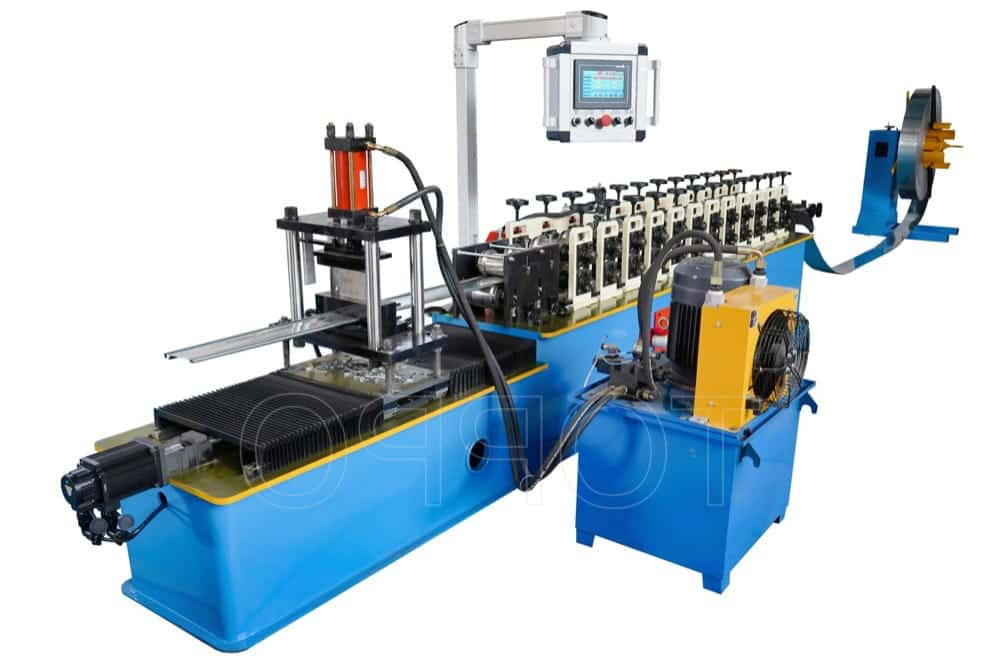
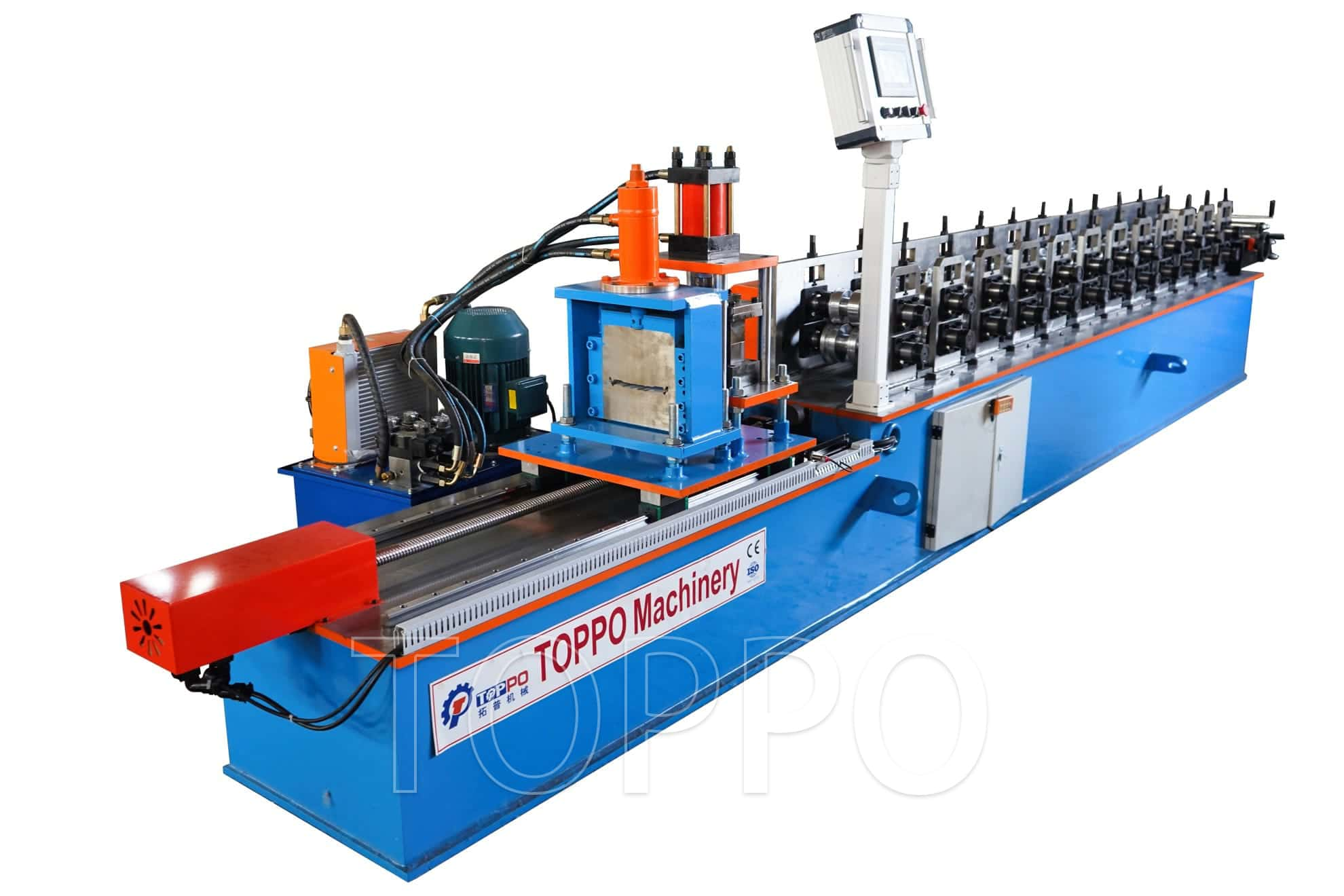
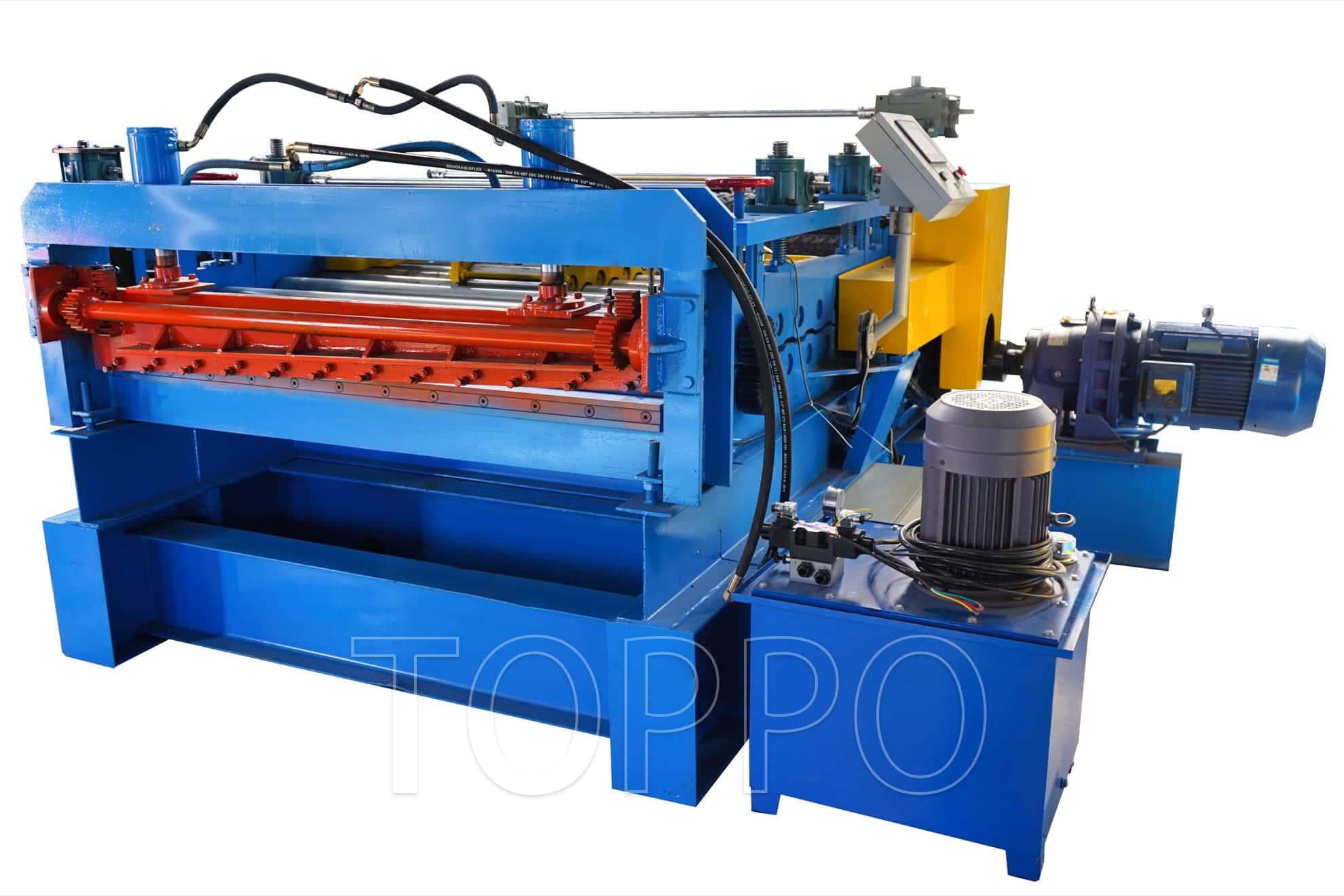
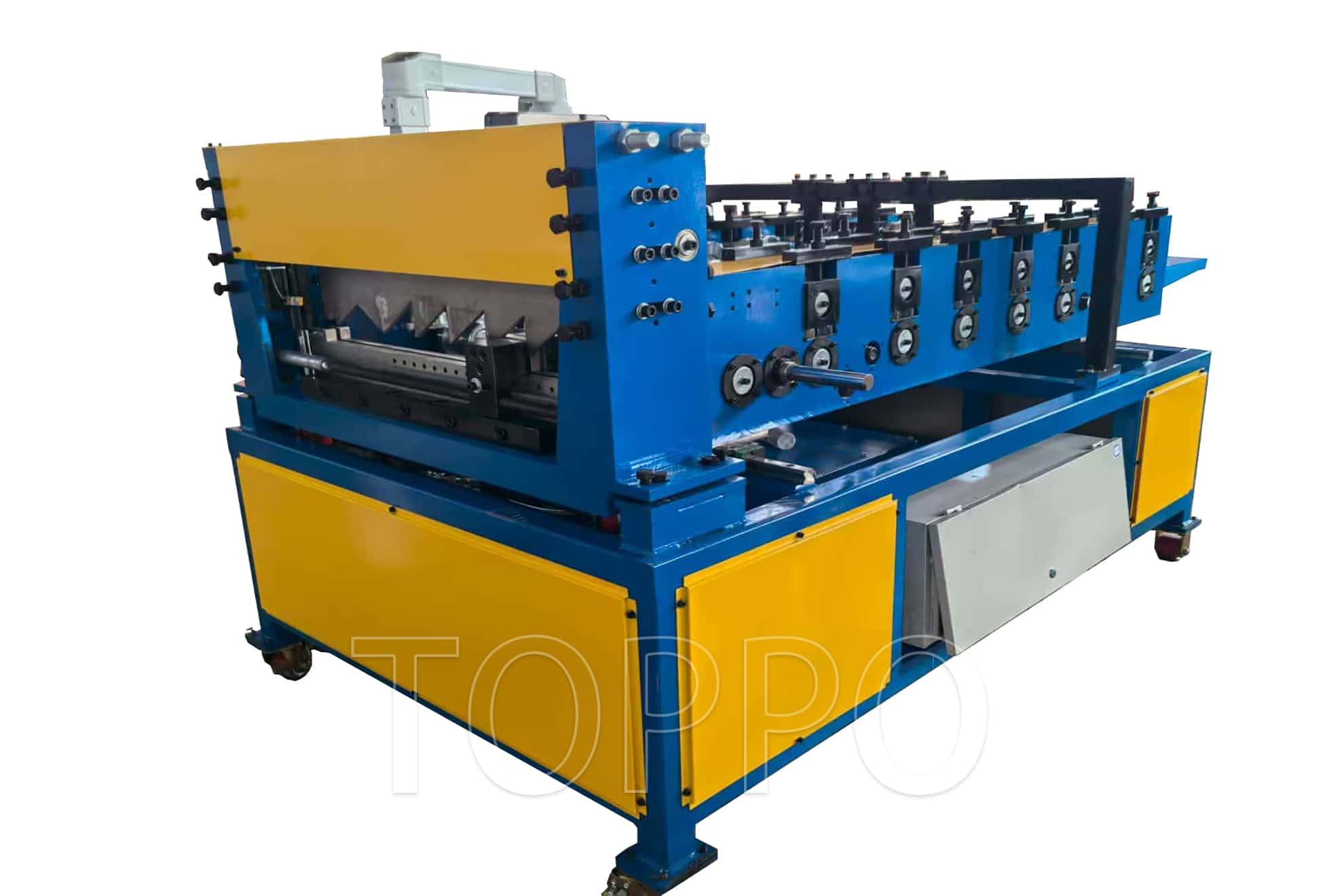
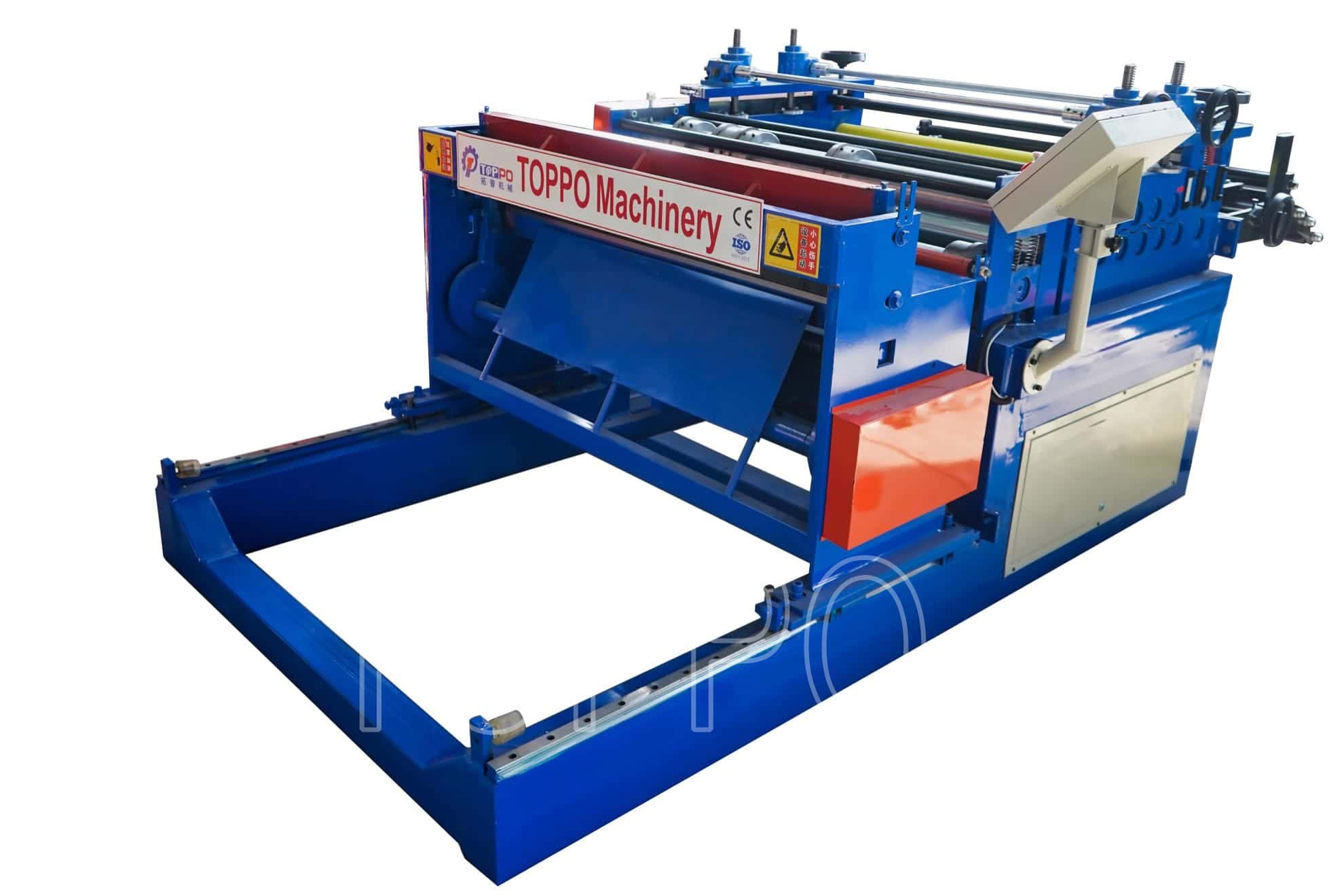
A typical metal glazed roof tile roll forming line may include the following components.
Decoiler
The decoiler supports and feeds the raw material coil. Its loading capacity should match the required coil weight and dimensions.
Feeding and Guiding System
The feeding system guides the material into the forming section. Depending on the design, additional guiding or leveling functions may be included.
Roll Forming System
The forming system contains multiple roller stations that gradually shape the metal sheet into the required tile profile. The roller design and overall machine structure depend on the profile and material specifications.
Hydraulic Cutting System
The cutting system separates the formed sheet according to the specified length. Its design must be compatible with the roofing profile and supported material range.
PLC Control System
A PLC control system manages supported production functions, which may include length setting, production counting, and cutting control.
Auxiliary Equipment
Additional equipment, such as an automatic stacking system, may increase the initial investment but can help reduce manual handling when suitable for the production workflow.
When comparing quotations, check which components are included and which are optional.
4. Production Speed and Automation Level
Production speed can affect the overall machine configuration and investment.
A basic production line may be suitable for a factory with moderate output requirements, while a higher-capacity line may require additional engineering or auxiliary equipment.
However, the highest advertised speed is not always the best choice.
Buyers should consider the actual production target, sheet length, material specifications, cutting cycle, and finished product handling process.
It is also important to clarify whether the quoted speed refers to forming speed or the practical output of the complete production line.
Selecting a machine based on realistic production requirements helps avoid unnecessary investment.
5. Electrical Components and Control Configuration
Electrical components and control systems can also influence machine pricing.
Different configurations may use different PLCs, touch screens, inverters, encoders, contactors, and other electrical components.
When comparing quotations, ask the manufacturer to specify the main electrical component brands and the functions included in the control system.
You should also confirm the electrical requirements of your factory, including voltage, frequency, and phase.
For example, a machine intended for installation in a market with a 60 Hz power supply should be configured and confirmed accordingly before production.
Clear technical confirmation helps avoid electrical compatibility problems after delivery.
6. Shipping, Packaging, and Installation Requirements
The machine purchase price is not necessarily the total cost of obtaining and operating the equipment.
Depending on the quotation and delivery terms, buyers may also need to consider:
Export packaging
Inland transportation
Port handling charges
International ocean freight
Marine insurance, where applicable
Import duties and local taxes
Installation and commissioning expenses
The division of costs and responsibilities depends on the agreed Incoterms.
For example, an FOB quotation generally covers the seller's responsibilities up to loading the goods on board the vessel at the named port, subject to the applicable Incoterms rules and contract terms. It does not mean that all international shipping and destination costs are included.
Before comparing quotations, confirm the named port, delivery terms, included services, and any additional charges.
7. Warranty, Spare Parts, and Technical Support
The initial purchase price is only one part of the total cost of ownership.
Buyers should also consider the availability of spare parts, warranty coverage, technical documentation, and after-sales support.
Before placing an order, clarify:
Warranty period and coverage
Included spare parts
Availability of replacement components
Installation guidance
Operation and maintenance manuals
Remote technical support arrangements
A clear support plan can help reduce uncertainty during installation and daily operation.
The most suitable machine is not necessarily the cheapest one. It is the machine whose technical configuration, expected performance, and support arrangements match the buyer's actual needs and budget.
How to Get an Accurate Metal Glazed Roof Tile Roll Forming Machine Quotation
To prepare a quotation that reflects your requirements, provide the manufacturer with as much relevant technical information as possible.
The following checklist is a useful starting point:
Required metal glazed roof tile profile drawing
Material type and thickness range
Raw material coil width
Required finished sheet lengths
Target production capacity
Factory voltage, frequency, and phase
Preferred machine configuration
Destination country and port
Required delivery terms
If some details are not yet confirmed, you can begin with the profile drawing and material specifications. The manufacturer can then identify the remaining information needed for technical evaluation.
Why Choose TOPPO Machinery?
TOPPO Machinery specializes in roll forming equipment for metal roofing and building material production.
We understand that each customer may have different requirements for tile profiles, raw materials, production capacity, and machine automation.
Our team can review your project specifications and discuss a suitable machine configuration based on your production goals.
By confirming the technical requirements before manufacturing, buyers can compare quotations more accurately and reduce the risk of selecting equipment that does not meet their expectations.
Frequently Asked Questions
How much does a metal glazed roof tile roll forming machine cost?
The price depends on the tile profile, material thickness, machine configuration, production speed, automation level, and delivery requirements. Providing detailed specifications is the best way to obtain an accurate quotation.
Can I get a quotation without a profile drawing?
Yes, you can start with photos, approximate dimensions, and material specifications. However, a technical drawing or sample is preferable for confirming the forming and cutting requirements.
Does a higher machine speed always mean better value?
No. The appropriate speed depends on your production target, product requirements, cutting cycle, and handling process. A machine should be selected according to practical production needs.
Is shipping included in the machine price?
Shipping depends on the agreed delivery terms. Always confirm whether the quotation is EXW, FOB, CFR, CIF, or another agreed arrangement, along with the named location or port.
What information should I send to the manufacturer?
Provide the tile profile, material type, thickness, coil width, required sheet length, production target, power supply, and destination port. These details help the manufacturer evaluate a suitable configuration.
Conclusion
The price of a metal glazed roof tile roll forming machine depends on more than the machine's appearance or advertised production speed. Profile design, material specifications, forming and cutting systems, automation, electrical components, delivery terms, and technical support all influence the overall investment.
Before purchasing, define your production requirements and compare complete technical quotations rather than focusing only on the lowest initial price.
Looking for a metal glazed roof tile roll forming machine for your factory?
Contact TOPPO Machinery with your profile drawing, material specifications, and production requirements. Our team can help you evaluate a suitable roll forming machine solution for your business.