- Trapezoidal Machine
- Corrugated Machine
- Glazed Tile Machine
- Double Layer Machine
- CZU Purlin Machine
- Ridge Cap Machine
- Floor Decking Machine
- Rolling Door Machine
- Fence Machine
- Embossing Machine
- Standing Seam Machine
- Cut To Length And Slitting Line
- Guard Rail Machine
- Decoiler And Stacker
- Stud And Track Machine
- Gutter And DownPipe
- Curving Machine
- Cladding Panel Machine
- Corollary Equipment
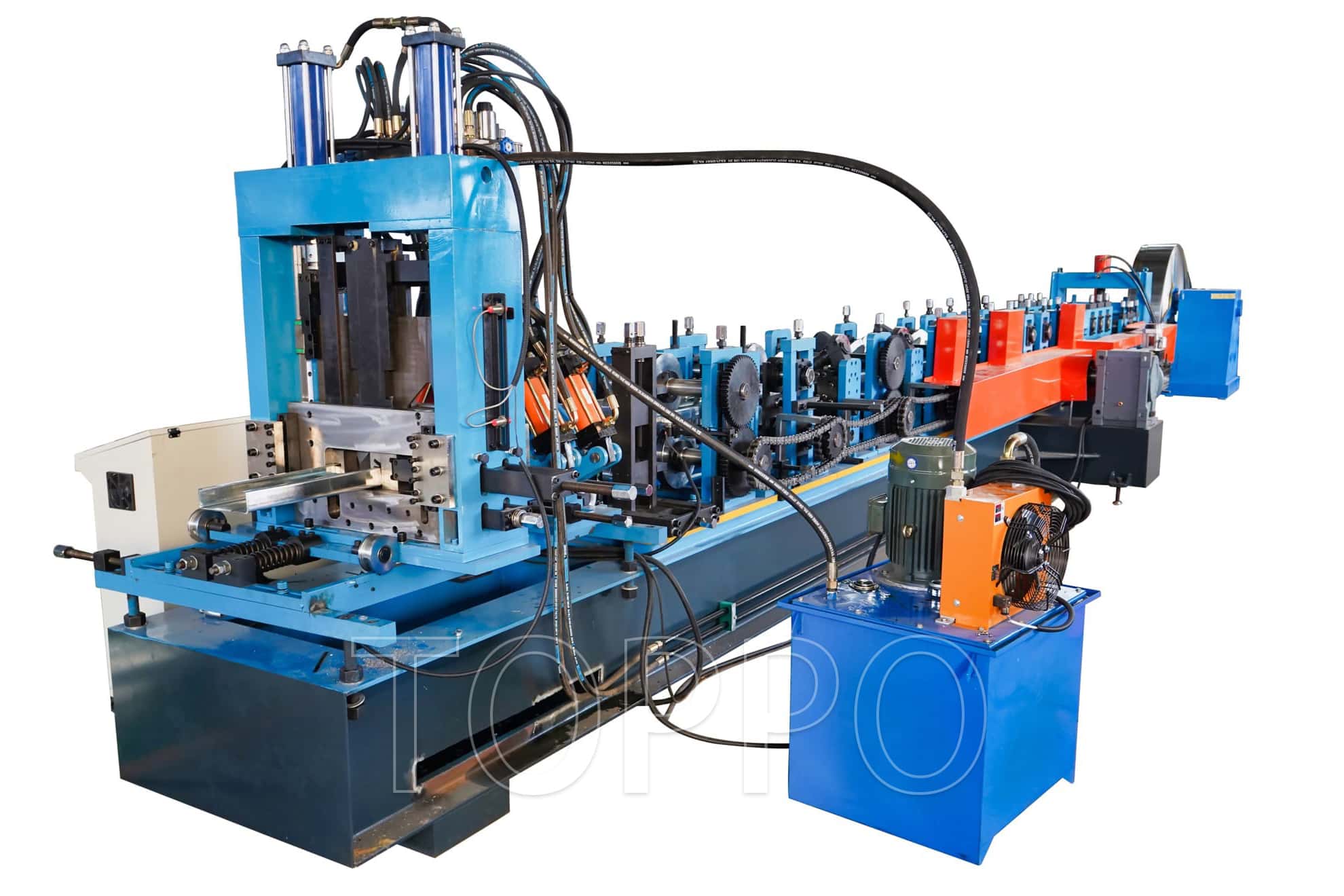



- Trapezoidal Machine
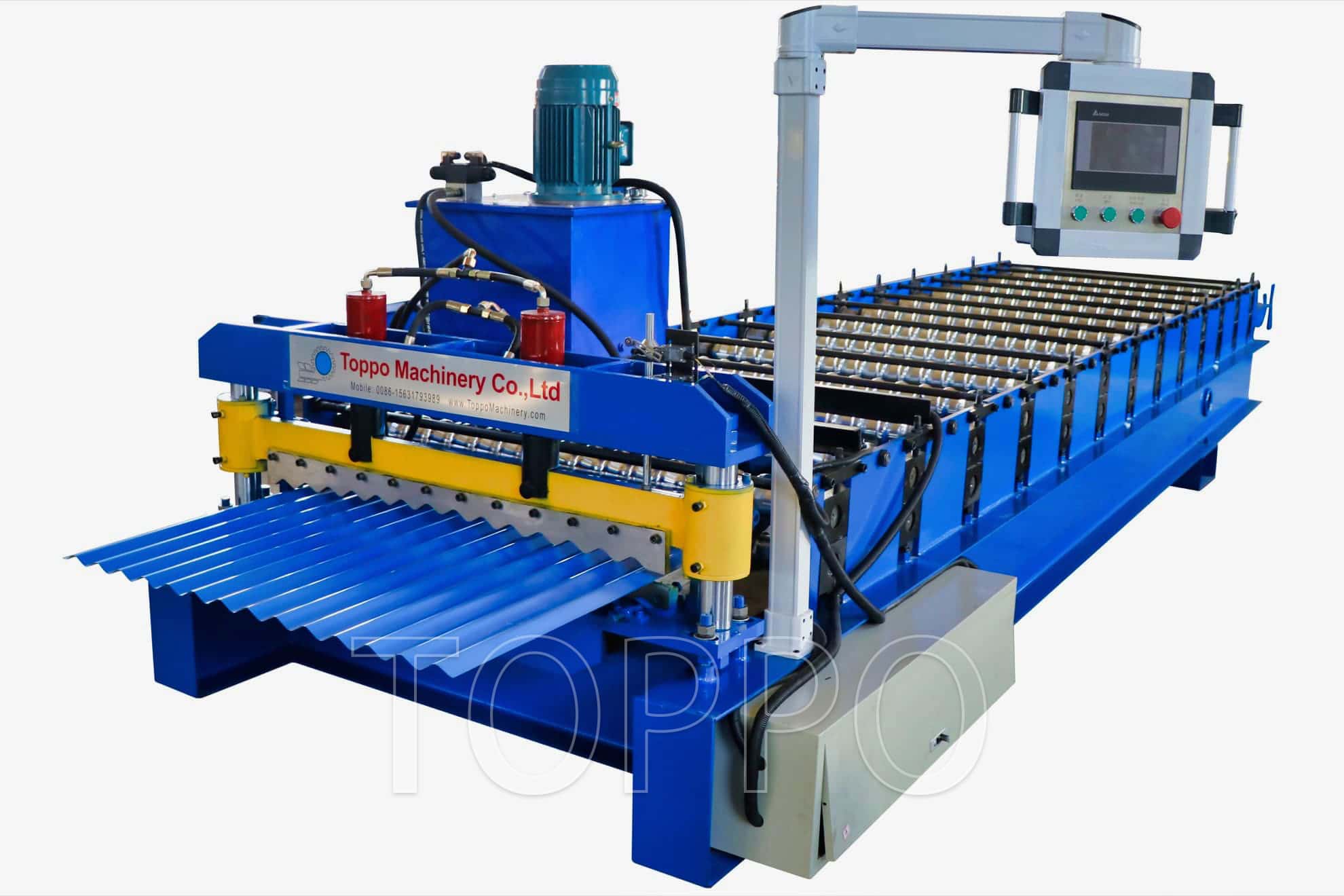
- Corrugated Machine
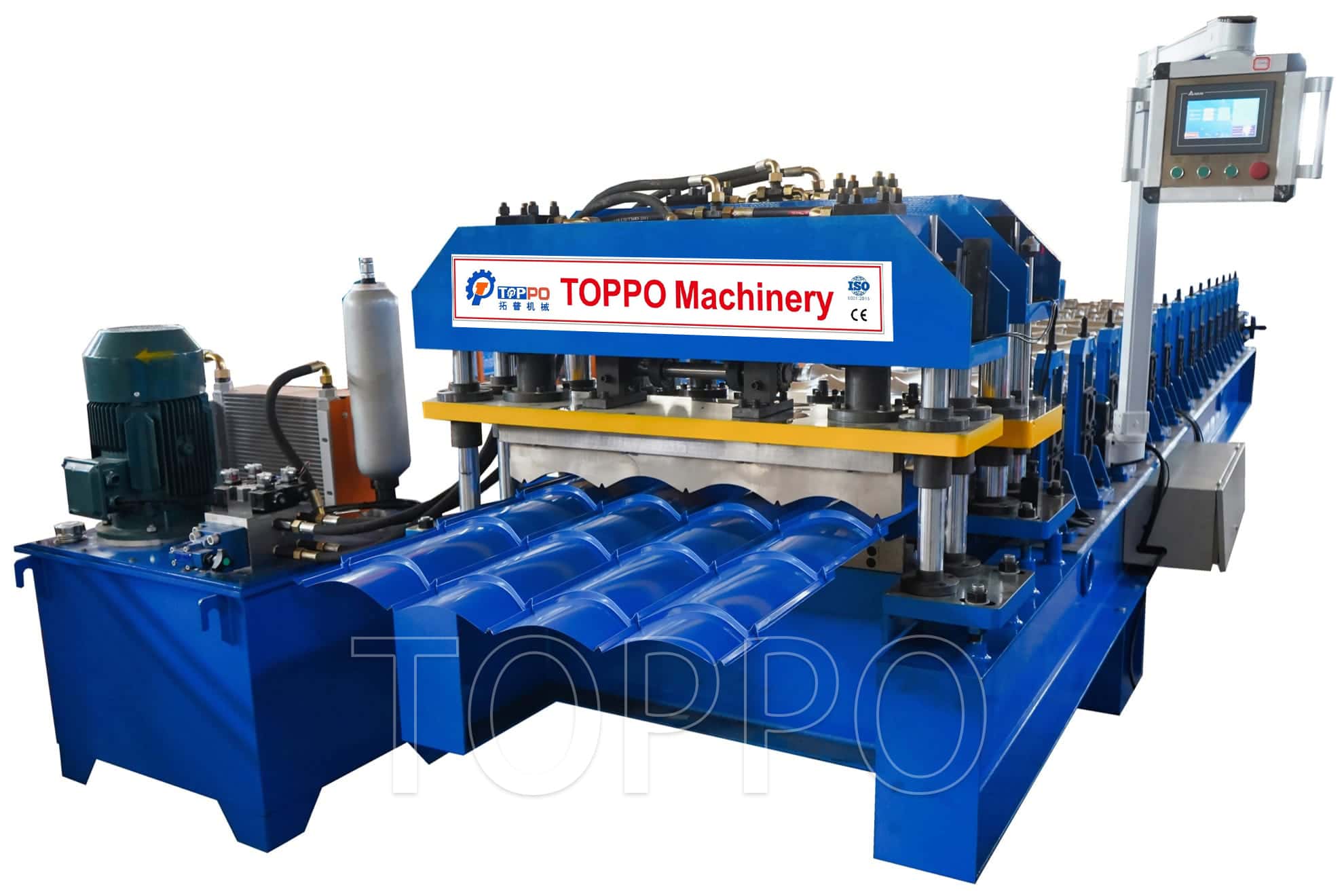
- Glazed Tile Machine
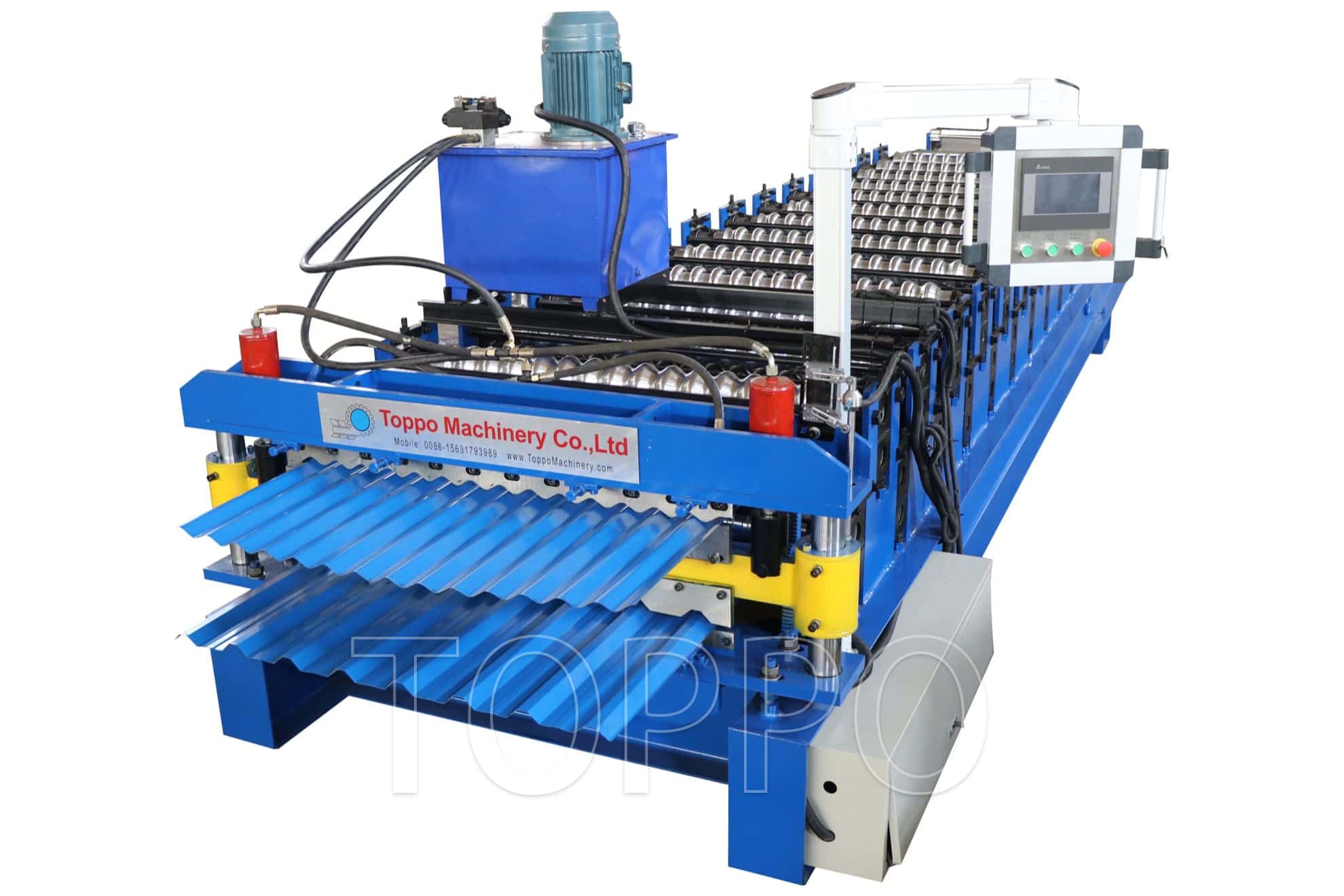
- Double Layer Machine
- CZU Purlin Machine
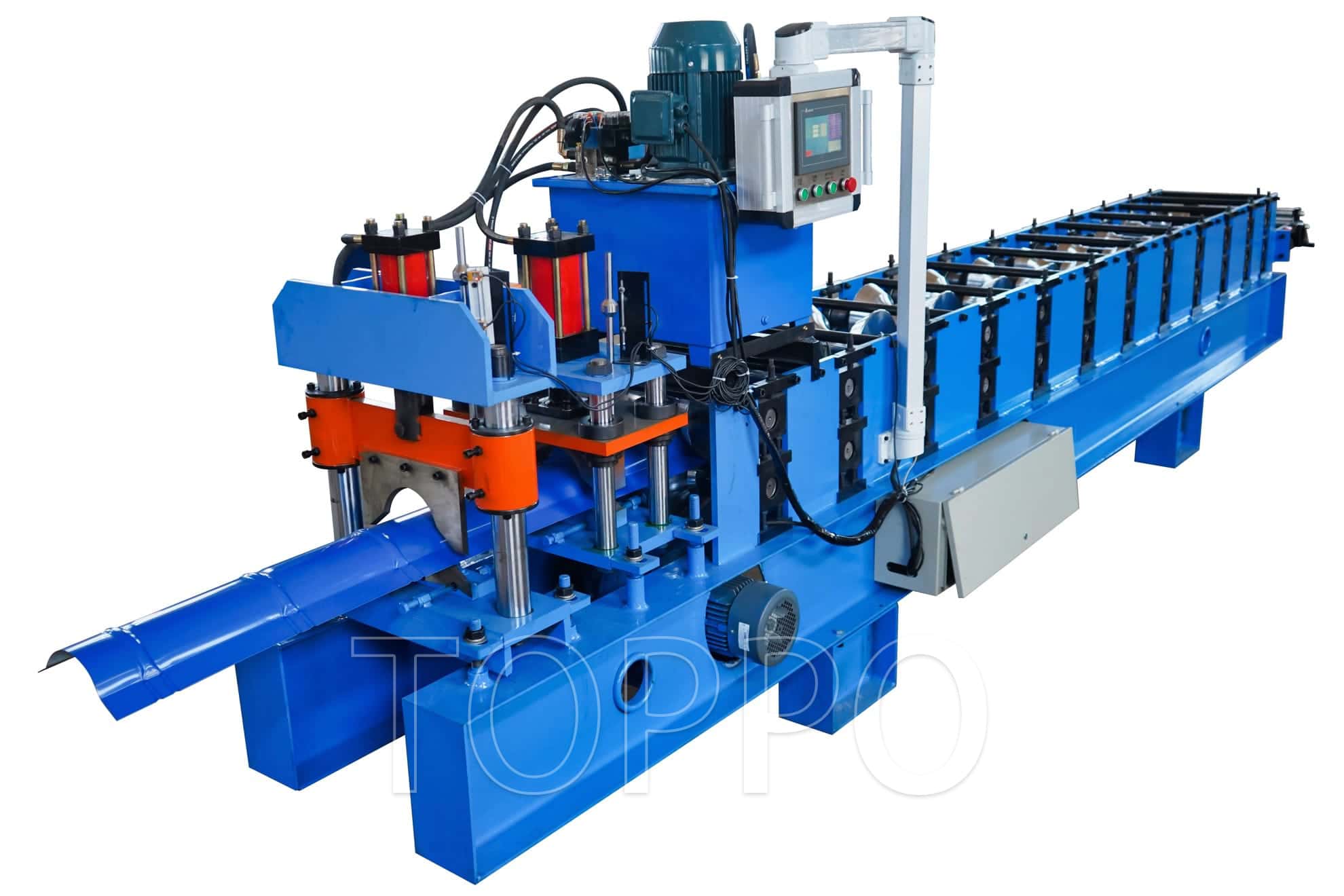
- Ridge Cap Machine
- Floor Decking Machine
- Rolling Shutter Door Machine
- Palisade Fence Machine
- Embossing Machine
- Standing Seam Machine
- Cut To Length And Slitting Line
- Guard Rail Machine
- Decoiler And Stacker
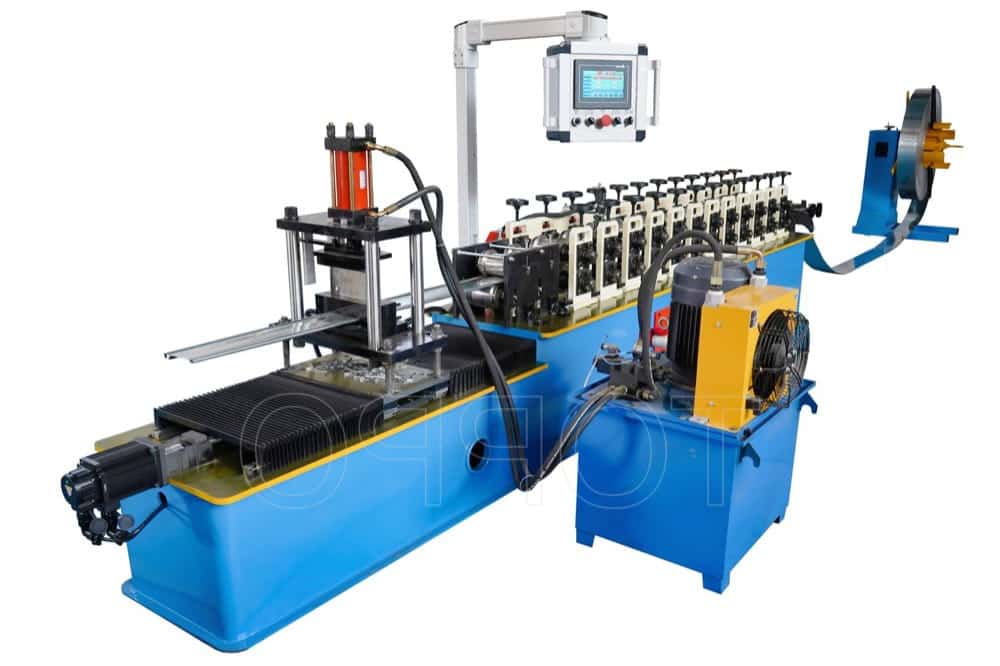
- Stud And Track Machine
- Gutter And DownPipe
- Curving Machine
- Cladding Panel Machine
- Corollary Equipment
- Other
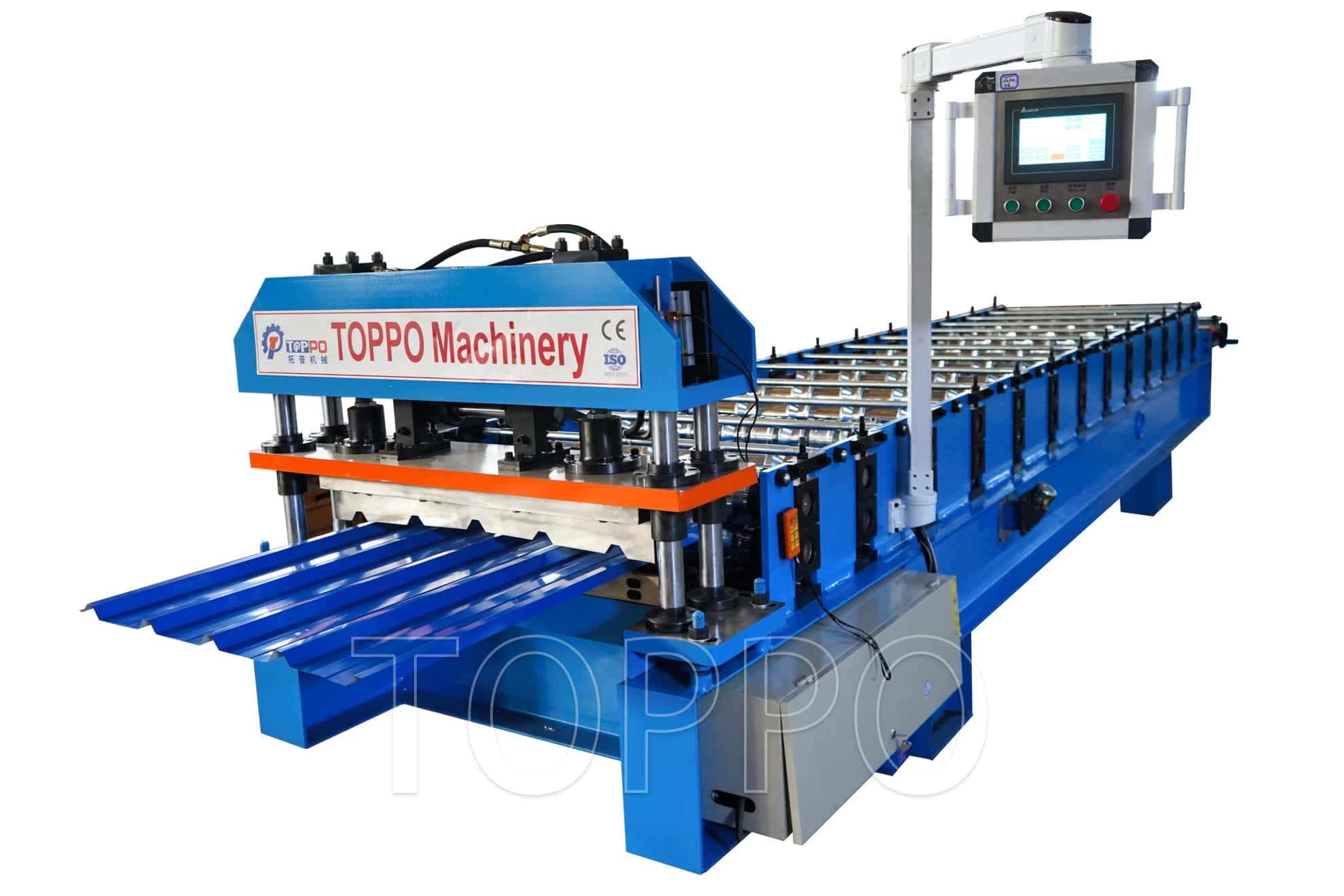
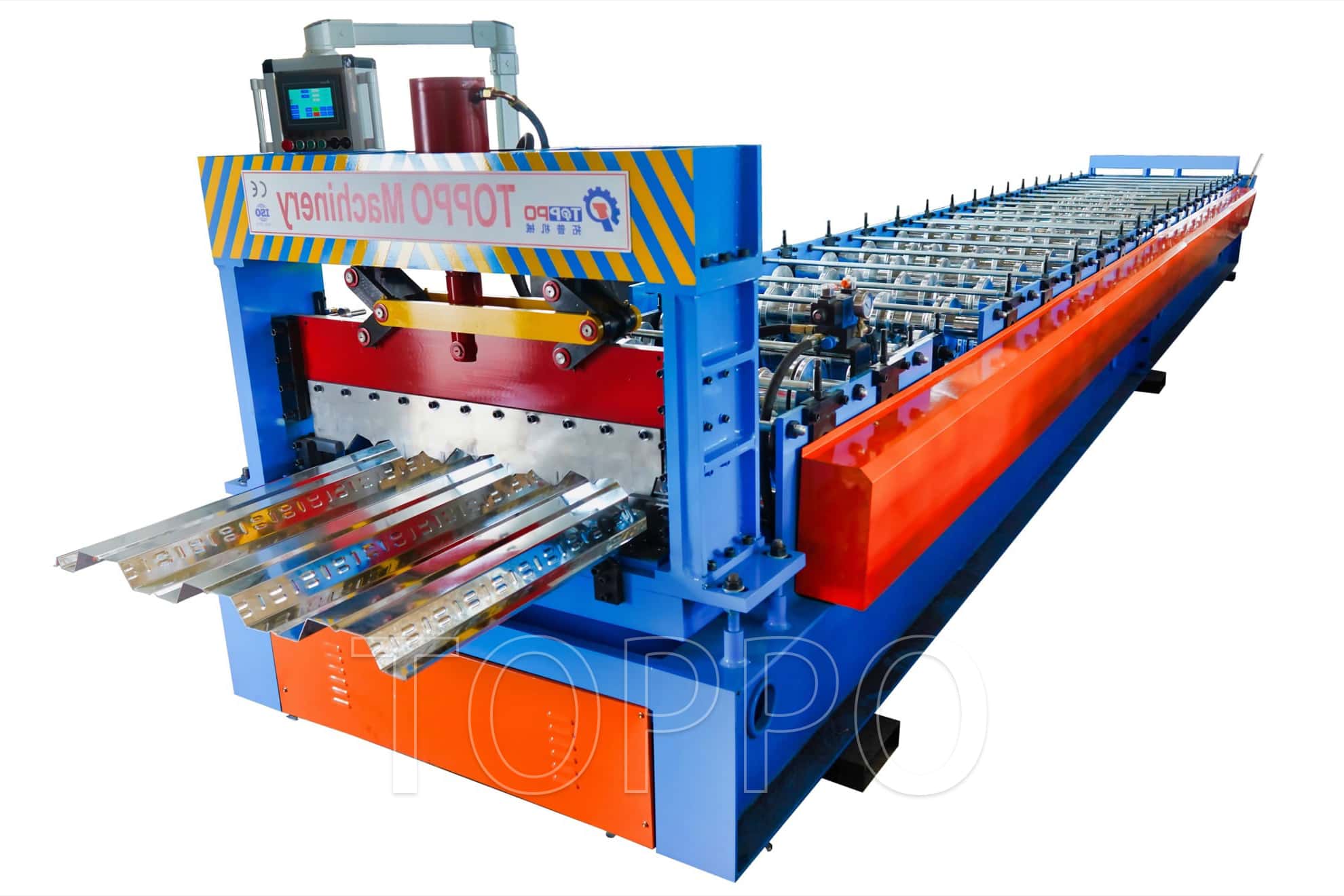
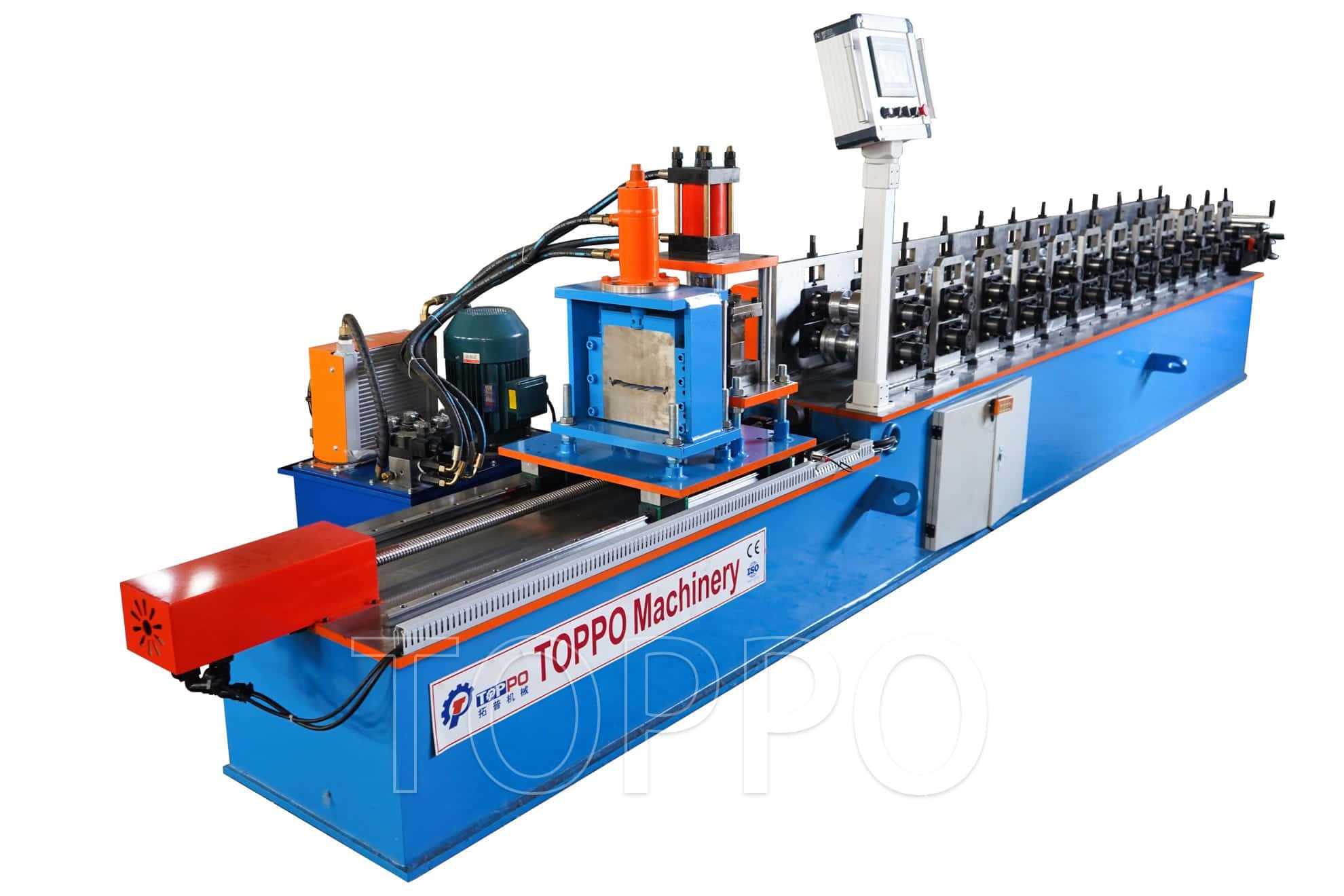
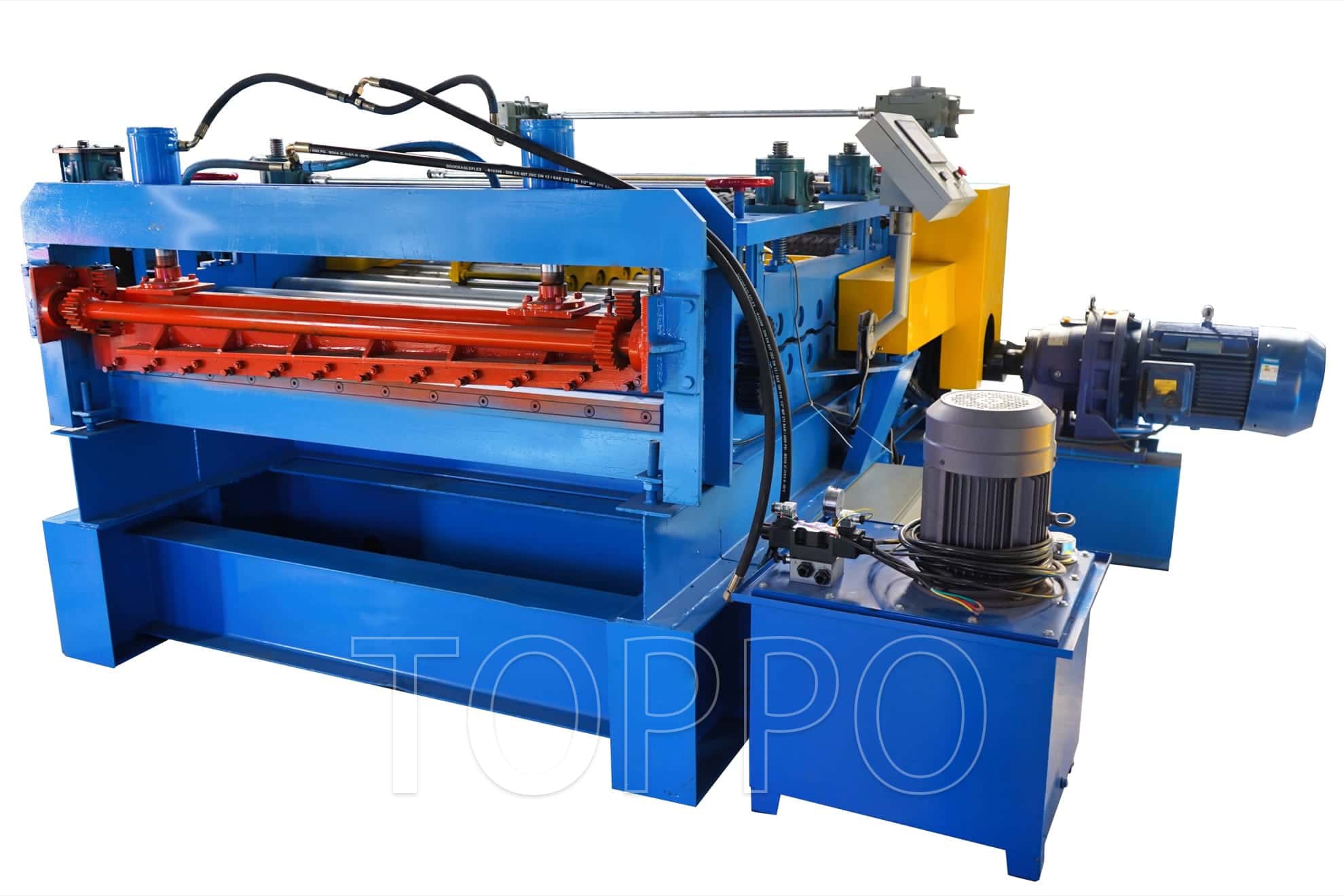
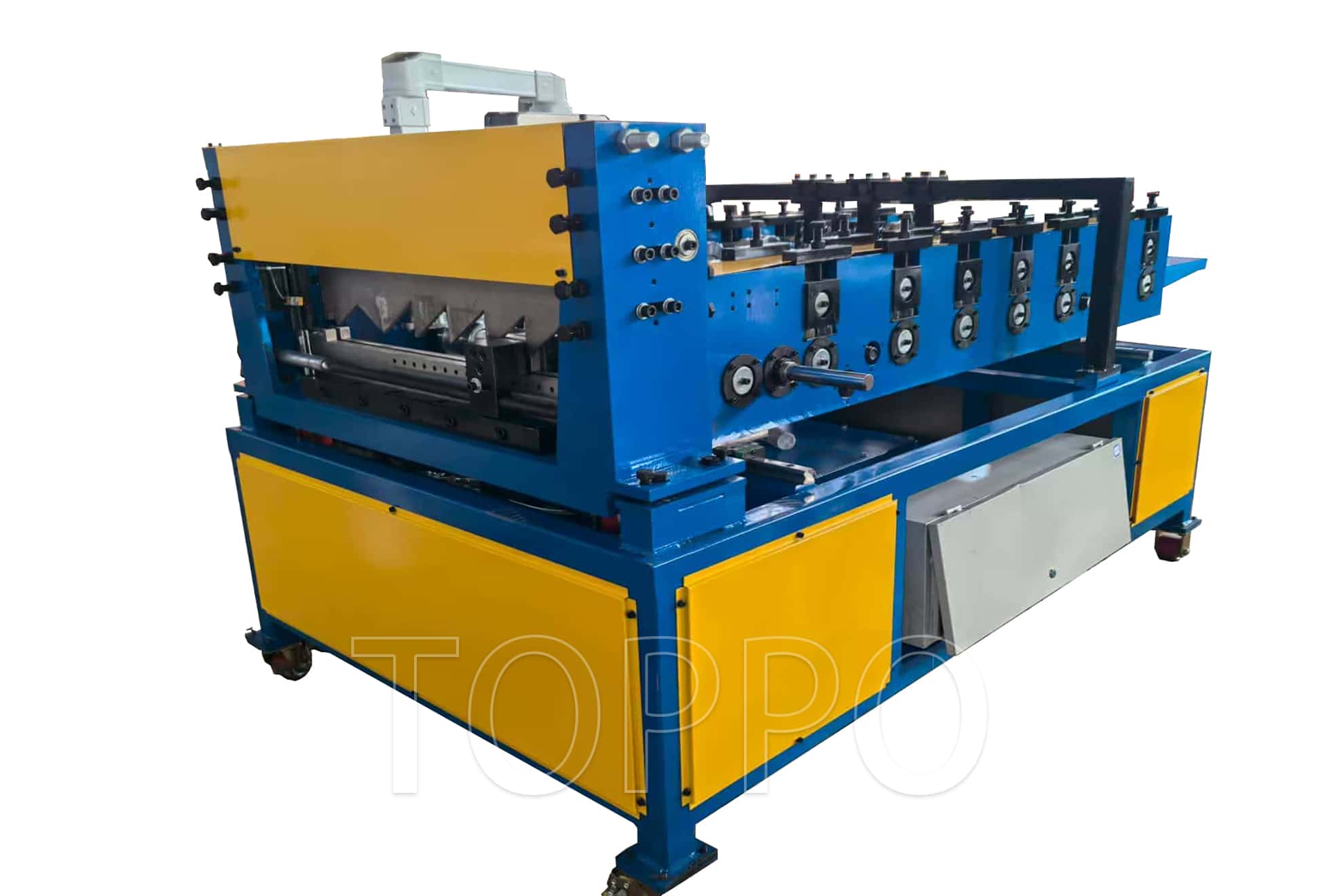
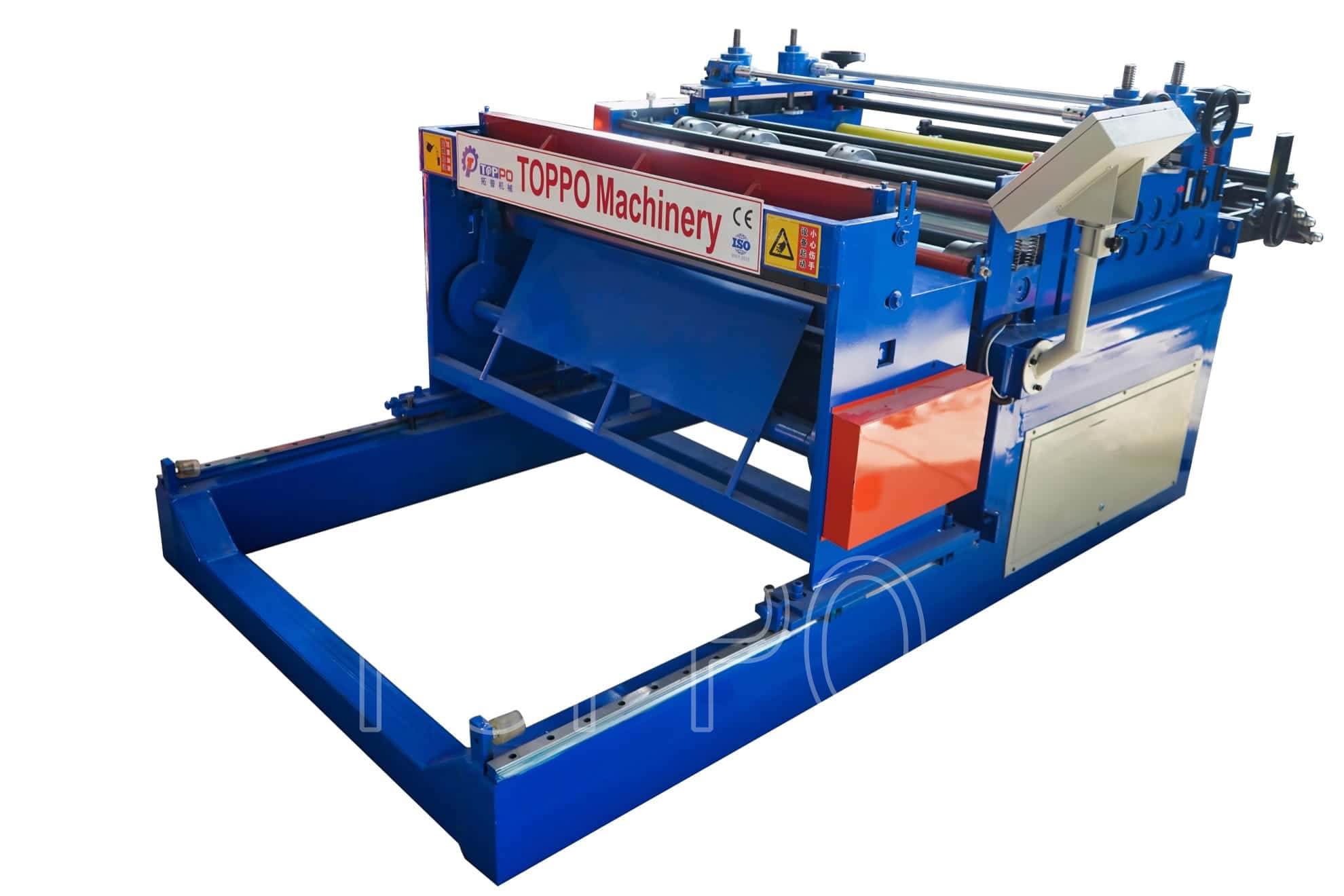
Open-Frame Automatic Trapezoidal Roofing Sheet Roll Forming Machine
This industrial roll forming machine continuously transforms metal coil into trapezoidal roofing and wall cladding panels. The machine shown features an open-frame design with clearly accessible roller stations, rigid side supports, chain-driven transmission and a reinforced welded base. This layout is especially practical for routine inspection, roller cleaning, adjustment and maintenance.
The line can be engineered around the customer’s panel drawing, including effective cover width, overall width, rib height, rib pitch, overlap geometry and sheet length. It is suitable for continuous manufacturing of panels used in factories, warehouses, workshops, agricultural buildings, garages, modular houses and steel structure projects.
Main Advantages
Open forming section provides convenient access for inspection and maintenance.
Automatic coil-fed production improves efficiency and reduces manual handling.
Precision-machined rollers support stable trapezoidal profile geometry.
PLC control allows programmable sheet length, quantity and batch settings.
Rigid welded frame supports reliable long-term industrial operation.
Adjustable entry guides help maintain accurate coil alignment.
Custom roller tooling is available for different regional panel profiles.
Compatible with galvanized, pre-painted, Galvalume and aluminum coils.
Optional hydraulic cutting, punching, film application and stacking systems.
Suitable for both small-batch and continuous production requirements.
Standard Production Process
Coil Loading → Decoiling → Feeding and Guiding → Optional Leveling → Multi-Stage Roll Forming → Length Measuring → Cutting → Panel Receiving or Automatic Stacking
Product Attributes and Customizable Specifications
| Attribute | Typical Configuration / Custom Option |
|---|---|
| 1. Product Name | Automatic trapezoidal roofing sheet roll forming machine |
| 2. Machine Category | Cold roll forming production equipment |
| 3. Finished Product | Trapezoidal roof panel and wall cladding sheet |
| 4. Main Function | Continuous profiling of metal coil into fixed-width panels |
| 5. Production Mode | Coil-fed continuous operation |
| 6. Forming Method | Multi-stage cold roll forming |
| 7. Automation Level | PLC-controlled automatic or semi-automatic line |
| 8. Frame Style | Open-frame structure for easy access |
| 9. Suitable Materials | PPGI, GI, PPGL, Galvalume and aluminum |
| 10. Material Thickness | Customized according to profile and material strength |
| 11. Raw Coil Width | Customized to the required finished panel |
| 12. Effective Cover Width | Produced according to customer profile drawing |
| 13. Overall Panel Width | Customized according to overlap design |
| 14. Rib Height | Customized trapezoidal dimension |
| 15. Rib Pitch | Customized according to panel geometry |
| 16. Side Lap Design | Customized according to roofing system requirements |
| 17. Finished Sheet Length | Programmable when equipped with automatic measuring and cutting |
| 18. Forming Stations | Selected according to profile complexity and sheet thickness |
| 19. Roller Material | High-quality alloy steel or bearing steel |
| 20. Roller Surface Treatment | Polished, hard chrome plated or wear-resistant treated |
| 21. Roller Arrangement | Upper and lower precision profile-forming sets |
| 22. Shaft Material | Heat-treated high-strength steel |
| 23. Shaft Diameter | Engineered according to forming load |
| 24. Bearing Type | Industrial sealed or heavy-duty bearing configuration |
| 25. Main Frame | Heavy-duty welded structural steel |
| 26. Frame Processing | Stress relieved and precision machined |
| 27. Forming Stand Structure | Independent side stands mounted on rigid base |
| 28. Main Drive | Electric motor with reduction gearbox |
| 29. Transmission Type | Chain drive, gear drive or combined transmission |
| 30. Main Motor Power | Configured according to thickness, width and target speed |
| 31. Feeding Guide | Adjustable left-right alignment device |
| 32. Entry Leveling | Optional leveling or straightening unit |
| 33. Forming Speed | Customized according to profile and line configuration |
| 34. Length Measurement | Encoder-based automatic measuring option |
| 35. Length Control | PLC programmable setting |
| 36. Quantity Control | Automatic counting and batch control |
| 37. Cutting Type | Hydraulic profile cutting or customized cutting solution |
| 38. Cutting Position | Post-cut standard; pre-cut optional |
| 39. Cutting Blade Material | Wear-resistant tool steel |
| 40. Hydraulic Station | Independent power unit when hydraulic cutting is selected |
| 41. Control System | Industrial PLC control cabinet |
| 42. Operator Interface | Touch screen or digital HMI |
| 43. Manual Functions | Start, stop, jog, reset and emergency stop |
| 44. Electrical Components | International or customer-specified industrial brands |
| 45. Power Supply | Customized voltage, phase and frequency |
| 46. Line Direction | Left-to-right or right-to-left |
| 47. Decoiler Type | Manual, motorized or hydraulic decoiler |
| 48. Decoiler Capacity | Selected according to coil weight and width |
| 49. Coil Loading Car | Optional hydraulic loading car |
| 50. Receiving Table | Manual run-out table or powered conveyor |
| 51. Automatic Stacker | Optional pneumatic or servo stacking system |
| 52. Protective Film Device | Optional for pre-painted sheet protection |
| 53. Punching Unit | Optional hydraulic or servo punching station |
| 54. Safety System | Emergency stop, overload protection and optional guards |
| 55. Lubrication | Manual lubrication points or centralized system |
| 56. Surface Protection | Polished rollers help reduce coating scratches |
| 57. Product Consistency | Repeatable rib geometry and programmed sheet length |
| 58. Maintenance Access | Open side structure for roller and transmission inspection |
| 59. Machine Color | Standard industrial finish or customized color |
| 60. Machine Footprint | Customized according to profile and factory layout |
| 61. Foundation Requirement | Foundation drawing available before installation |
| 62. Factory Testing | Assembly, adjustment and trial production before shipment |
| 63. Documentation | Operation manual, electrical diagram and maintenance guide |
| 64. Operator Training | Remote or on-site training available |
| 65. Packaging | Export-standard protection for sea transportation |
| 66. Customization Scope | Profile, tooling, speed, voltage, controls and auxiliary equipment |
| 67. Spare Parts Support | Recommended spare and wearing parts available |
| 68. After-Sales Service | Remote troubleshooting and technical guidance |
Typical Applications
Industrial factory roofing sheets
Warehouse and logistics center wall cladding
Workshop roof and siding panels
Agricultural sheds and storage buildings
Prefabricated and modular building envelopes
Garage, canopy and commercial roofing
Steel structure roof and wall systems
Compatible Materials
The machine can be designed for pre-painted galvanized steel, galvanized steel, pre-painted Galvalume, Galvalume and aluminum coil. Final roller design, forming station quantity, drive power and cutting configuration depend on sheet thickness, yield strength, coating type, coil width and the required panel profile.
Optional Line Equipment
Available options include a manual or hydraulic decoiler, coil loading car, entry leveler, servo feeder, protective film laminator, hydraulic punching system, profile cutting unit, safety enclosure, powered conveyor, automatic stacker, inkjet printer and remote support module.
Customization Information Required
For an accurate machine proposal, customers should provide the finished panel drawing, effective cover width, overall width, rib height, rib pitch, side lap geometry, raw coil width, material thickness, material grade, desired production speed, local electrical standard and required auxiliary equipment.
Quality Control and Testing
Before shipment, the machine can be fully assembled and tested with suitable material. Coil feeding, roller alignment, profile geometry, transmission operation, length measurement, cutting functions and control settings are checked to support reliable installation and stable production.
Installation and Service Support
Installation guidance, operating instructions, electrical diagrams, maintenance recommendations, spare parts support and remote troubleshooting are available. On-site commissioning and operator training can be arranged according to project requirements.
- User name Member Level Quantity Specification Purchase Date
- Satisfaction :
-