- Trapezoidal Machine
- Corrugated Machine
- Glazed Tile Machine
- Double Layer Machine
- CZU Purlin Machine
- Ridge Cap Machine
- Floor Decking Machine
- Rolling Door Machine
- Fence Machine
- Embossing Machine
- Standing Seam Machine
- Cut To Length And Slitting Line
- Guard Rail Machine
- Decoiler And Stacker
- Stud And Track Machine
- Gutter And DownPipe
- Curving Machine
- Cladding Panel Machine
- Corollary Equipment



- Trapezoidal Machine
- Corrugated Machine
- Glazed Tile Machine
- Double Layer Machine
- CZU Purlin Machine
- Ridge Cap Machine
- Floor Decking Machine
- Rolling Shutter Door Machine
- Palisade Fence Machine
- Embossing Machine
- Standing Seam Machine
- Cut To Length And Slitting Line
- Guard Rail Machine
- Decoiler And Stacker
- Stud And Track Machine
- Gutter And DownPipe
- Curving Machine
- Cladding Panel Machine
- Corollary Equipment
- Other
PLC Controlled Trapezoidal Roof Sheet Roll Forming Machine
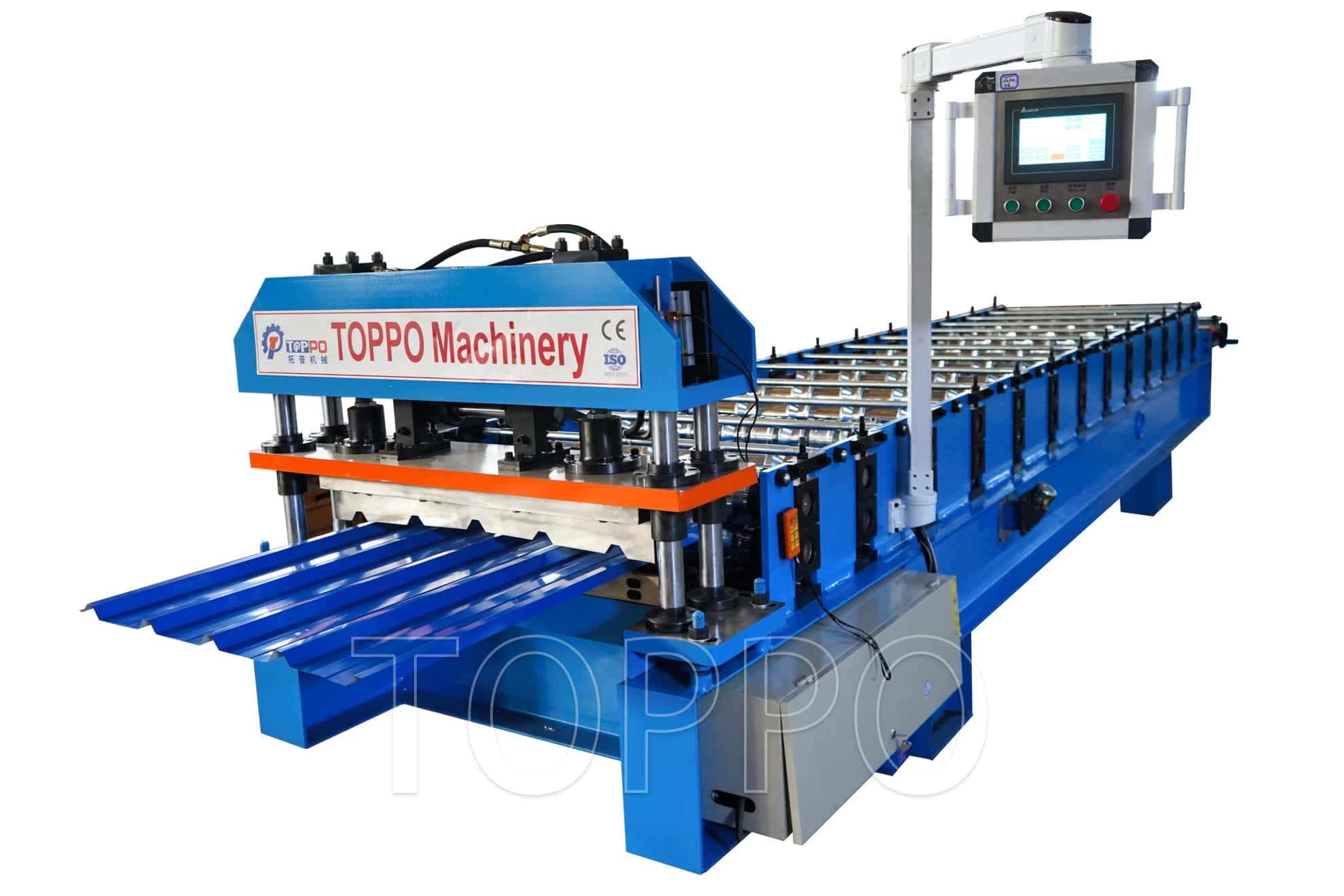
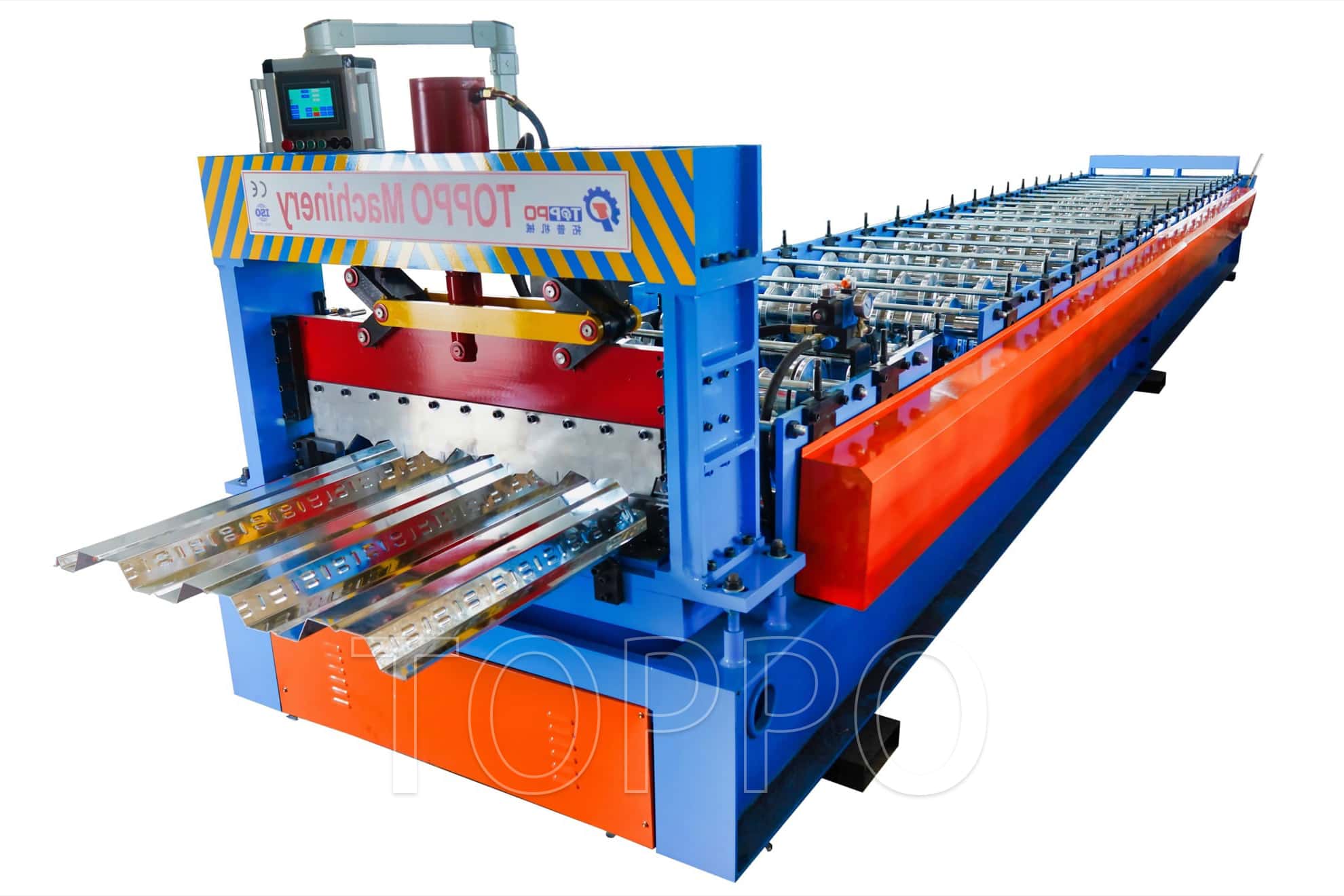
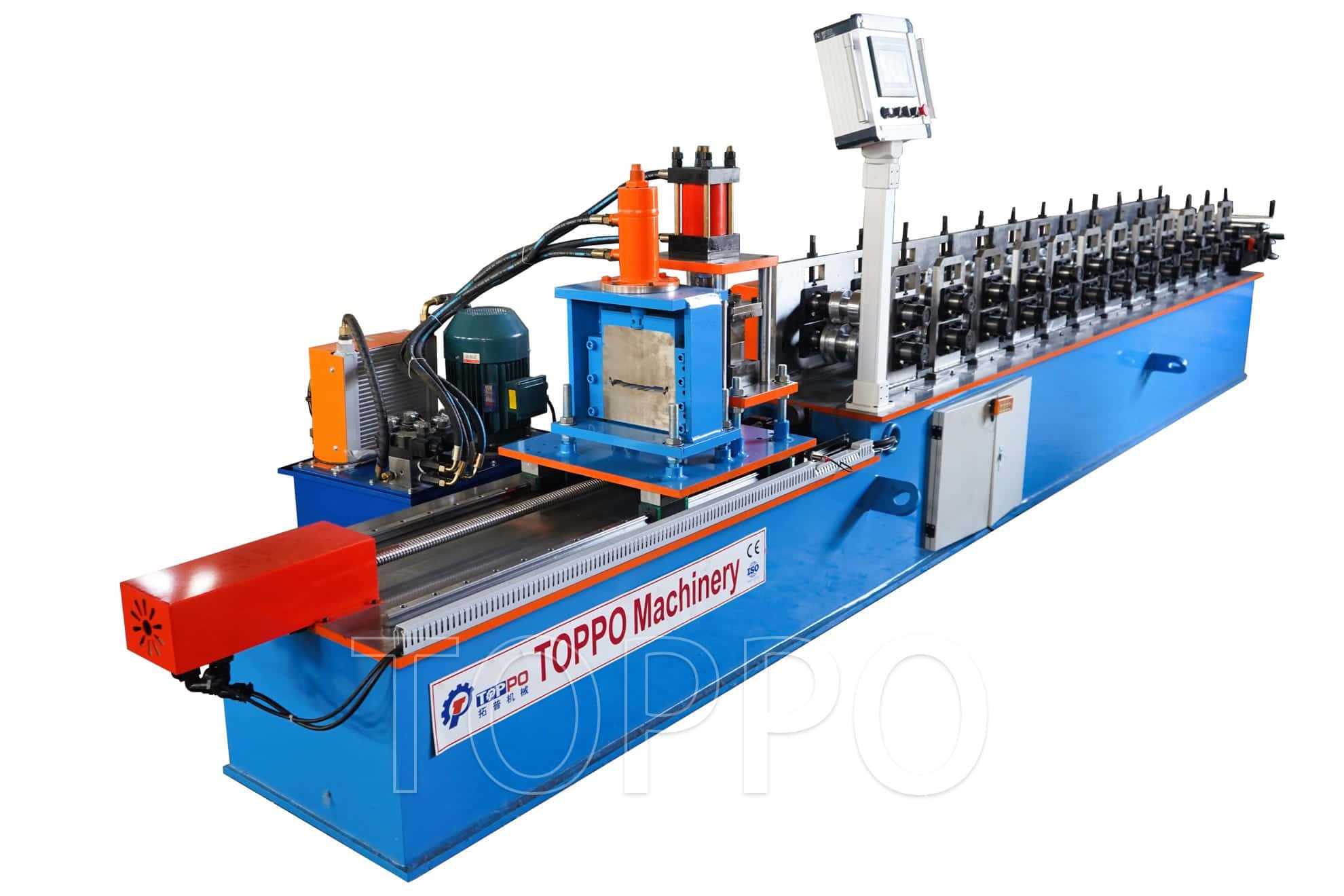
This automatic trapezoidal roof sheet roll forming machine converts coated or uncoated metal coil into durable roofing sheets and wall cladding panels through a continuous cold-forming process. The strip passes through a sequence of precision forming rollers, where it is gradually shaped into the required trapezoidal profile. An encoder measures the running length, and the hydraulic cutting unit cuts each finished panel according to the values entered on the PLC touch screen.
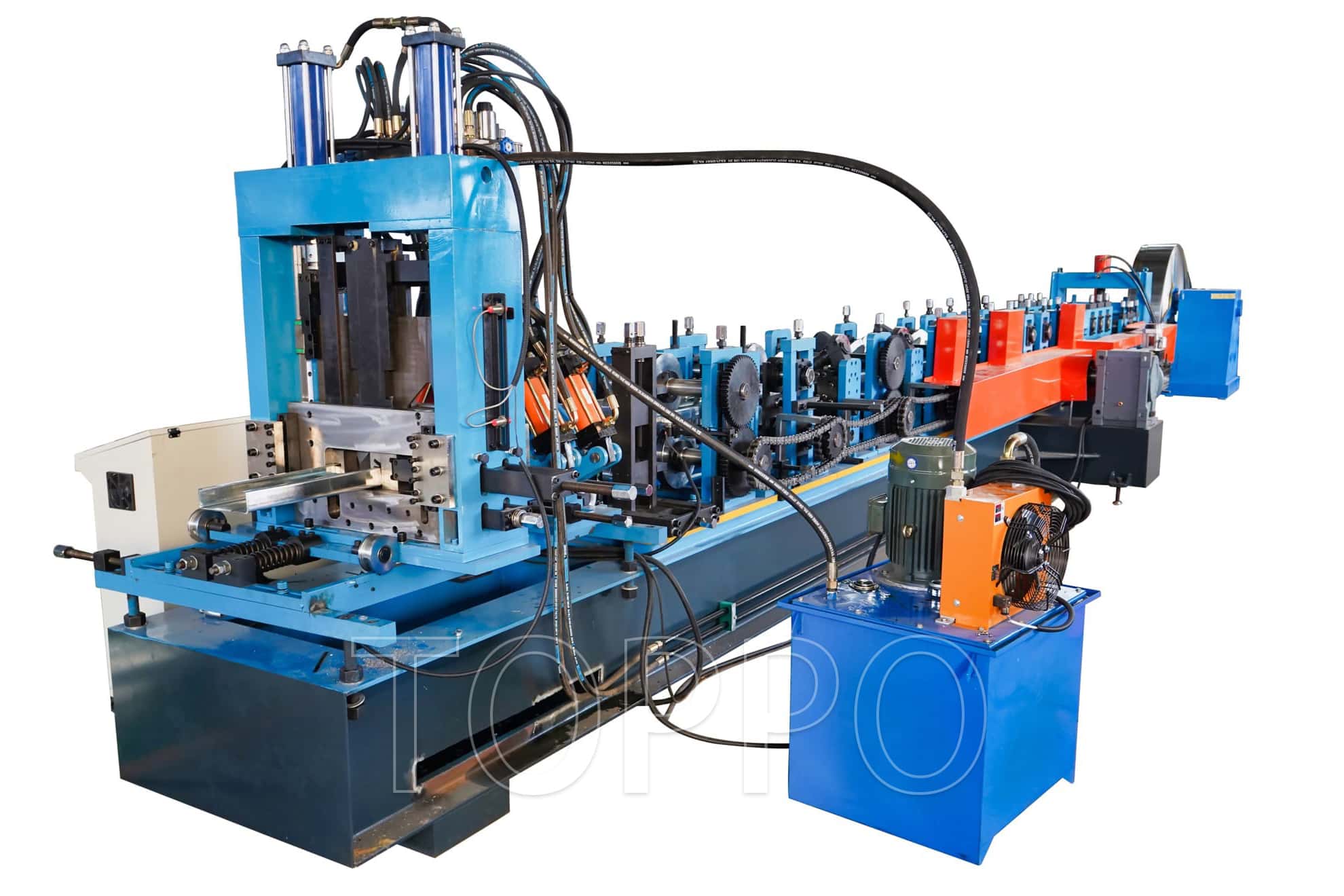
The machine shown is equipped with a reinforced welded base, multi-station forming bed, hydraulic post-cutting system, independent control console and hydraulic power unit. This configuration is suitable for roofing-sheet plants, steel-structure manufacturers, building-material suppliers and contractors that require repeatable panel quality and flexible production settings.
Core Benefits
Automatic coil-to-sheet production improves efficiency and reduces manual work.
PLC and touch-screen control simplify length, quantity and batch programming.
Progressive roll-forming stations help maintain stable ribs and smooth sheet surfaces.
Encoder measurement provides repeatable panel length control.
Hydraulic cutting delivers reliable shearing force and clean finished ends.
Heavy-duty welded structure improves rigidity and reduces vibration.
Adjustable feeding guides support accurate strip alignment.
Customized roller tooling can match regional roofing profiles and customer drawings.
Multiple decoiler, stacker and safety options are available for complete line solutions.
Suitable for galvanized, pre-painted, Galvalume and aluminum roofing materials.
Typical Technical Attributes and Customizable Specifications
Notice: The specifications below are common reference values. The final machine configuration is determined by the panel drawing, raw material, thickness range, steel strength, required speed and selected auxiliary equipment.
| No. | Attribute | Typical / Customizable Specification |
|---|---|---|
| 1 | Product Name | Trapezoidal roof sheet roll forming machine |
| 2 | Equipment Type | Automatic cold roll forming production line |
| 3 | Main Product | Trapezoidal roofing sheet and wall cladding panel |
| 4 | Production Method | Continuous multi-pass cold roll forming |
| 5 | Raw Material | GI, PPGI, PPGL, Galvalume and aluminum coil |
| 6 | Material Thickness | Normally 0.30-0.80 mm; customized ranges available |
| 7 | Material Yield Strength | Normally 230-550 MPa, profile dependent |
| 8 | Coil Feeding Width | Commonly 914, 1000, 1200, 1220 or 1250 mm |
| 9 | Finished Cover Width | Customized according to the panel drawing |
| 10 | Profile Rib Height | Customized according to roofing requirements |
| 11 | Profile Pitch | Customized for the requested trapezoidal geometry |
| 12 | Side Lap Design | Customized overlap edge and anti-capillary groove optional |
| 13 | Finished Sheet Length | PLC programmable according to project requirements |
| 14 | Standard Line Speed | Approximately 10-25 m/min, excluding stop cutting |
| 15 | High-Speed Option | Servo tracking cutter or flying shear available |
| 16 | Forming Stations | Typically 14-22 stations, profile dependent |
| 17 | Roller Layout | Progressive forming with precision station alignment |
| 18 | Roller Material | 45# steel or GCr15 bearing steel |
| 19 | Roller Heat Treatment | Quenching or hardening according to the application |
| 20 | Roller Surface Treatment | Hard chrome plating and polishing |
| 21 | Main Shaft Material | High-strength 45# steel |
| 22 | Main Shaft Diameter | Normally 70-90 mm depending on forming load |
| 23 | Forming Stand Structure | Wall-plate, guide-post or independent stand design |
| 24 | Main Frame | Heavy-duty welded steel construction |
| 25 | Base Structure | Reinforced structural steel or H-beam base |
| 26 | Main Drive Type | Motor with chain, gear or gearbox transmission |
| 27 | Main Motor Power | Normally 11-22 kW according to profile and speed |
| 28 | Hydraulic Motor Power | Normally 4-7.5 kW |
| 29 | Hydraulic Working Pressure | Normally 10-16 MPa |
| 30 | Hydraulic Cooling | Air cooling or oil cooling option |
| 31 | Standard Cutting Type | Hydraulic post-cutting |
| 32 | Optional Cutting Type | Pre-cutting or servo flying cutting |
| 33 | Cutting Blade Material | Cr12MoV or equivalent tool steel |
| 34 | Cutting Length Accuracy | Typically within ±1.5 mm after calibration |
| 35 | Length Measuring Device | Rotary encoder measuring system |
| 36 | Control System | PLC automatic control |
| 37 | Operator Interface | Industrial color touch screen |
| 38 | Operating Modes | Automatic, manual and commissioning modes |
| 39 | Length Setting | Digital touch-screen input |
| 40 | Quantity Setting | Preset piece and batch quantity |
| 41 | Production Counter | Automatic piece counting and batch recording |
| 42 | Automatic Stop Function | Stops the line after completing the programmed quantity |
| 43 | Fault Display | HMI alarm and operating-status indication |
| 44 | Standard Voltage | 380 V, 50 Hz, 3 phase |
| 45 | Customized Voltage | 220/380/400/415/440/480 V, 50 or 60 Hz |
| 46 | Electrical Components | Factory standard or buyer-specified international brands |
| 47 | HMI Language | English or customized multilingual interface |
| 48 | Feeding Guide | Adjustable left-right alignment guide |
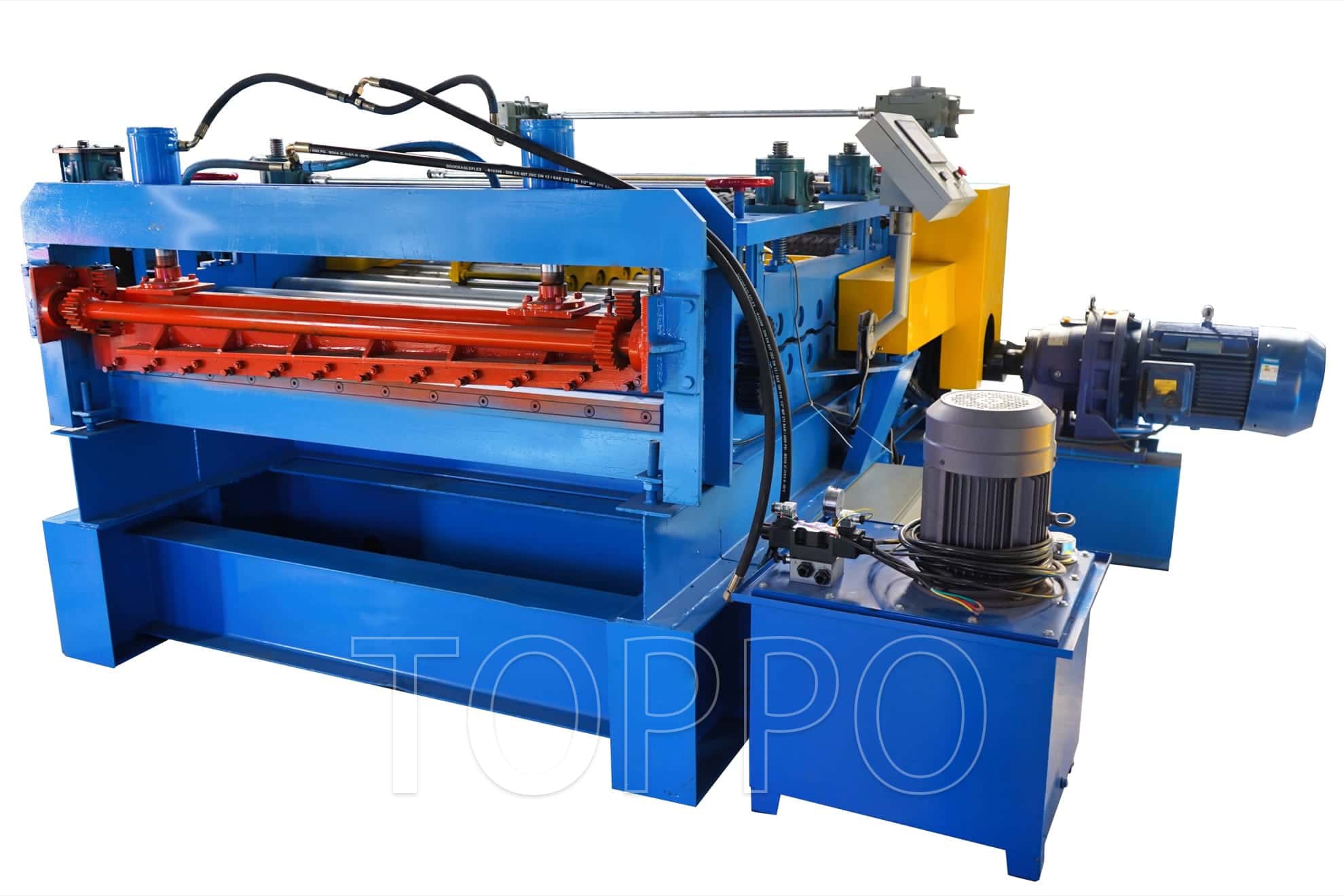
| 49 | Entry Leveling | Optional leveling or straightening device |
| 50 | Decoiler Type | Manual, electric or hydraulic decoiler |
| 51 | Decoiler Capacity | Normally 3, 5, 8 or 10 tons |
| 52 | Coil Inner Diameter | Normally 450-550 mm |
| 53 | Coil Expansion Method | Manual or hydraulic expansion |
| 54 | Coil Loading Car | Optional for heavy coil handling |
| 55 | Output Support | Manual run-out table or powered conveyor |
| 56 | Automatic Stacker | Optional pneumatic or servo stacking system |
| 57 | Sheet Protection | Film covering device optional |
| 58 | Lubrication System | Manual, centralized or automatic lubrication |
| 59 | Emergency Stop | Installed at main operating positions |
| 60 | Safety Guarding | Protective covers, fences and light curtains optional |
| 61 | Machine Color | Factory standard or customized RAL color |
| 62 | Approximate Line Length | Commonly 9-14 m depending on configuration |
| 63 | Approximate Machine Weight | Commonly 8-16 tons depending on structure |
| 64 | Operator Requirement | Usually 1-2 trained operators |
| 65 | Installation Surface | Level industrial concrete floor |
| 66 | Working Environment | Indoor or protected industrial workshop |
| 67 | Profile Customization | Based on drawing, sample panel or dimensional data |
| 68 | Quality Inspection | Trial forming, dimension checking and running test |
| 69 | Technical Documentation | Operation manual, electrical diagram and maintenance guide |
| 70 | After-Sales Support | Installation guidance, training and spare parts support |
| 71 | Export Packing | Protective film, anti-rust treatment and secured loading |
| 72 | Applicable Industries | Roofing, cladding, steel structures and prefabricated buildings |
Standard Production Line Composition
Decoiler: Holds the coil and feeds the metal strip into the forming line.
Feeding and Guiding Unit: Aligns the strip and controls its entry position.
Roll Forming Section: Gradually shapes the material through multiple roller stations.
Transmission System: Transfers motor power to the forming shafts through chains, gears or gearboxes.
Length Measuring System: Monitors material travel using an encoder.
Hydraulic Cutting Unit: Cuts the panel to the programmed length.
PLC Control Console: Controls length, quantity, operating mode and machine status.
Run-Out Table or Stacker: Receives and organizes completed roofing panels.
Working Process
Coil loading → decoiling → material feeding → strip alignment → progressive roll forming → encoder length measurement → hydraulic cutting → finished panel discharge → manual collection or automatic stacking.
Roofing and Cladding Applications
The finished trapezoidal panels are widely used for industrial workshops, warehouses, logistics centers, agricultural sheds, garages, commercial buildings, steel-structure enclosures, wall cladding, prefabricated houses, temporary buildings and roof-renovation projects.
Customization Options
Roofing profiles differ by region and construction standard. The forming rollers and cutting die can be developed according to a CAD drawing, dimensioned sketch or physical sample. Custom parameters include coil feeding width, effective panel width, rib height, rib pitch, overlap edge, anti-capillary groove, material thickness, steel grade and surface coating.
Optional line equipment includes a hydraulic decoiler, coil loading car, entry leveler, pre-cutting shear, protective film unit, punching station, servo flying cutter, automatic stacker, safety enclosure, light curtain and remote-monitoring package.
Panel Quality Features
Progressive roller design minimizes sudden deformation and helps protect coated surfaces.
Precision shaft and roller alignment supports consistent panel width and rib geometry.
Adjustable guides reduce strip deviation at the machine entrance.
Stable base construction helps reduce vibration during continuous production.
Correctly selected cutting dies help produce clean panel ends with limited distortion.
Operation and Maintenance Guidance
Inspect roller alignment, fasteners, chains, wiring and hydraulic connections before operation.
Keep the forming rollers clean to prevent marks on painted and coated materials.
Lubricate bearings, chains, gears and sliding components at the recommended intervals.
Calibrate the encoder after installation and whenever cut-length accuracy changes.
Inspect the cutting blades regularly and sharpen or replace them when necessary.
Keep the electrical cabinet and touch screen protected from dust, water and impact.
Factory Testing Before Shipment
The line is assembled and commissioned before delivery. Typical inspection items include frame level, shaft alignment, roller clearance, transmission operation, hydraulic pressure, electrical control, emergency stops, encoder measurement, panel dimensions, surface condition and cut quality. Trial production can be completed with suitable test material when available.
Information Required for a Precise Quotation
Panel profile drawing with all dimensions
Raw material type, grade and yield strength
Minimum and maximum material thickness
Coil feeding width and required cover width
Required production speed and daily output
Coil weight and inner diameter
Local voltage, frequency and phase
Required auxiliary equipment and safety options
Frequently Asked Questions
Can the machine be made for a local roofing profile?
Yes. The roller tooling and cutting die can be designed according to the customer's dimensioned drawing or sample panel.
Can it process high-strength steel?
Yes. Roller material, shaft size, motor power, station quantity and frame structure are selected according to the steel grade and thickness.
Can different sheet lengths be produced in one order?
Yes. Different lengths and quantities can be entered through the PLC touch screen for flexible batch production.
Is automatic stacking available?
Yes. Manual run-out tables, powered conveyors and automatic stacking systems can be selected according to the panel length and line speed.
- User name Member Level Quantity Specification Purchase Date
- Satisfaction :
-