- Trapezoidal Machine
- Corrugated Machine
- Glazed Tile Machine
- Double Layer Machine
- CZU Purlin Machine
- Ridge Cap Machine
- Floor Decking Machine
- Rolling Door Machine
- Fence Machine
- Embossing Machine
- Standing Seam Machine
- Cut To Length And Slitting Line
- Guard Rail Machine
- Decoiler And Stacker
- Stud And Track Machine
- Gutter And DownPipe
- Curving Machine
- Cladding Panel Machine
- Corollary Equipment
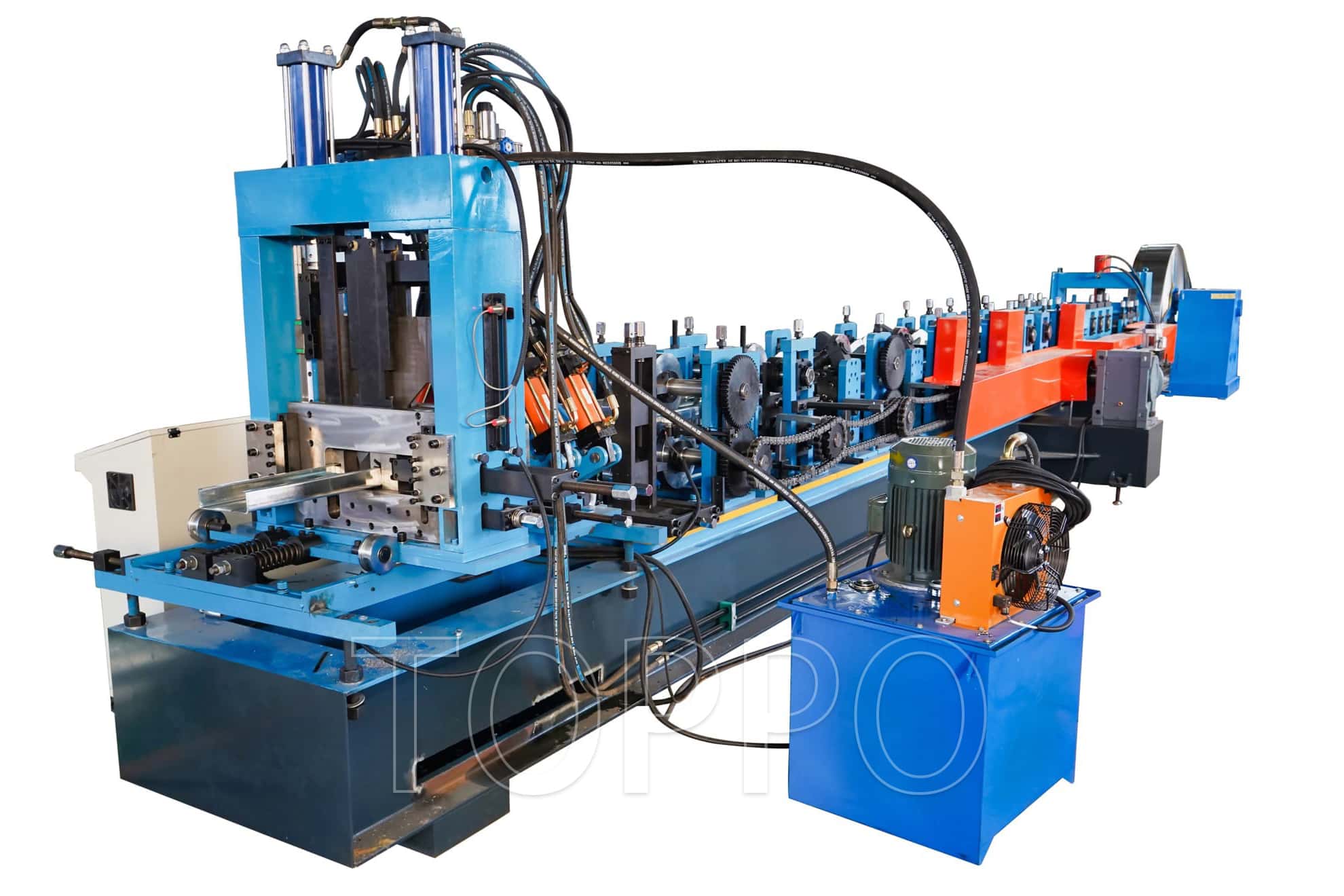



- Trapezoidal Machine
- Corrugated Machine
- Glazed Tile Machine
- Double Layer Machine
- CZU Purlin Machine
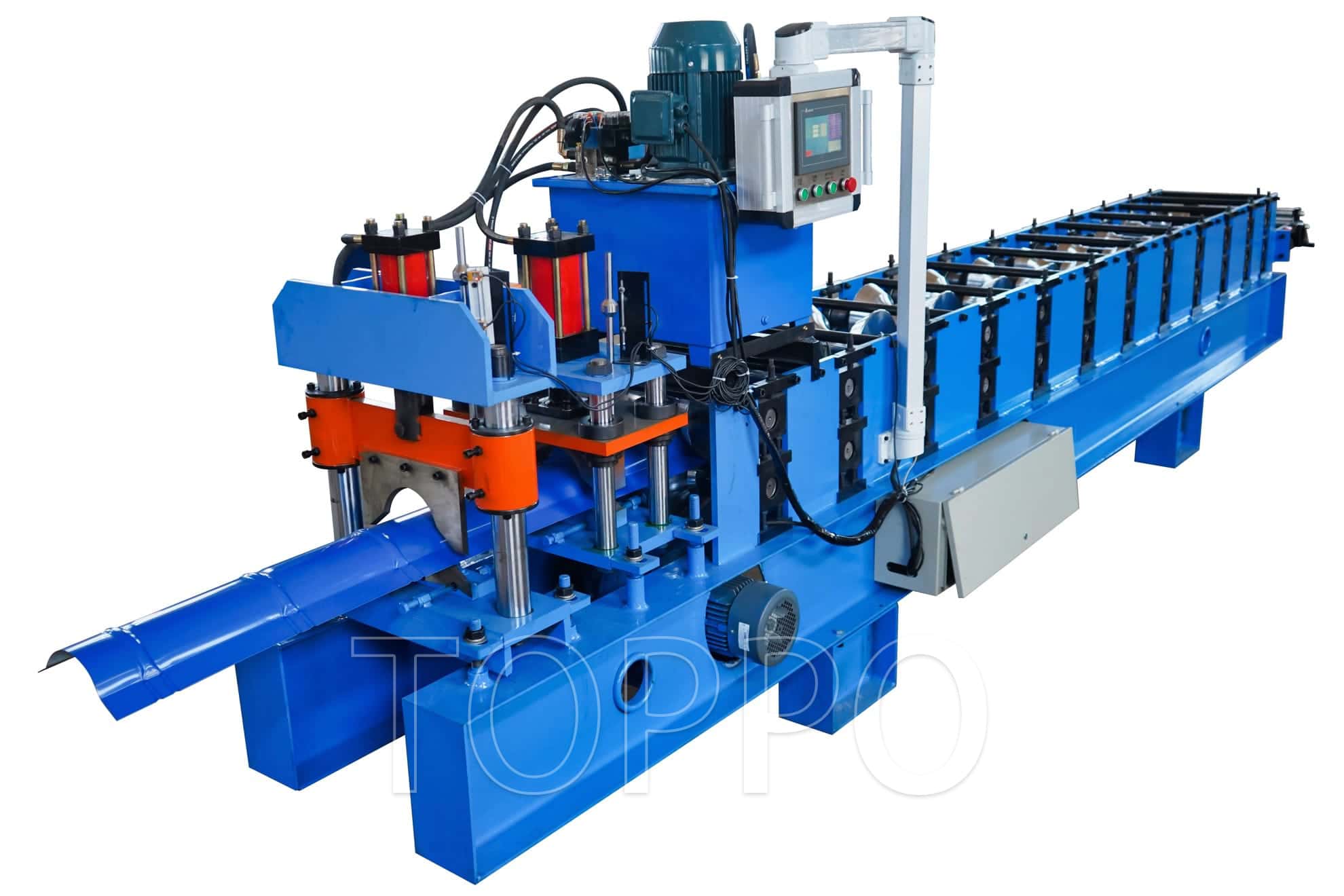
- Ridge Cap Machine
- Floor Decking Machine
- Rolling Shutter Door Machine
- Palisade Fence Machine
- Embossing Machine
- Standing Seam Machine
- Cut To Length And Slitting Line
- Guard Rail Machine
- Decoiler And Stacker
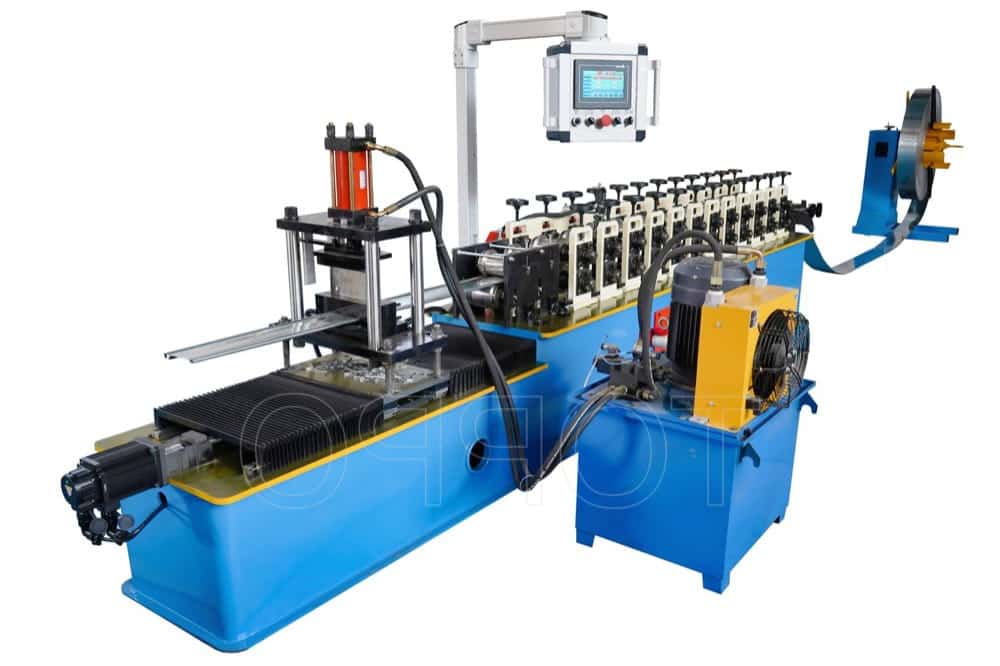
- Stud And Track Machine
- Gutter And DownPipe
- Curving Machine
- Cladding Panel Machine
- Corollary Equipment
- Other
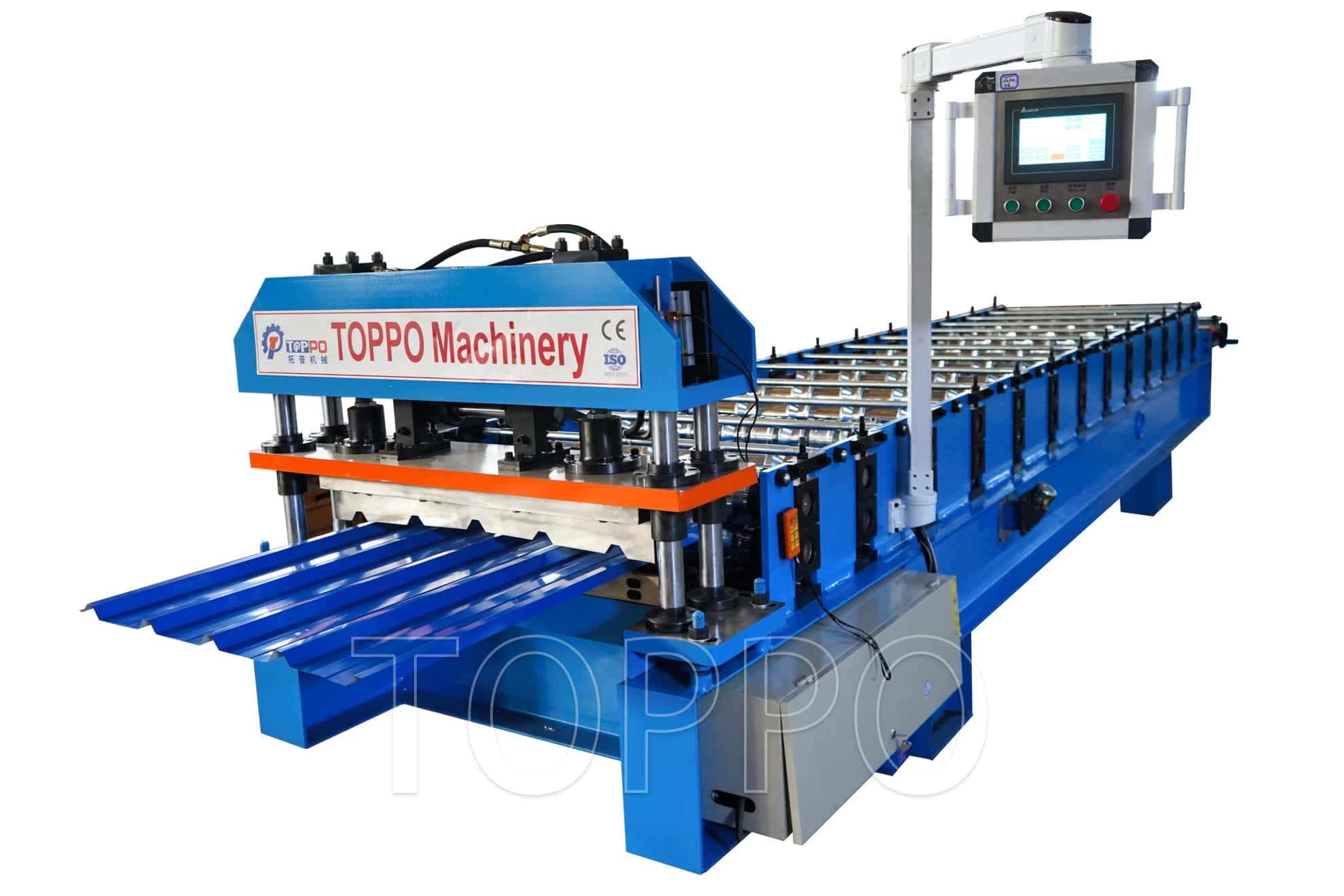
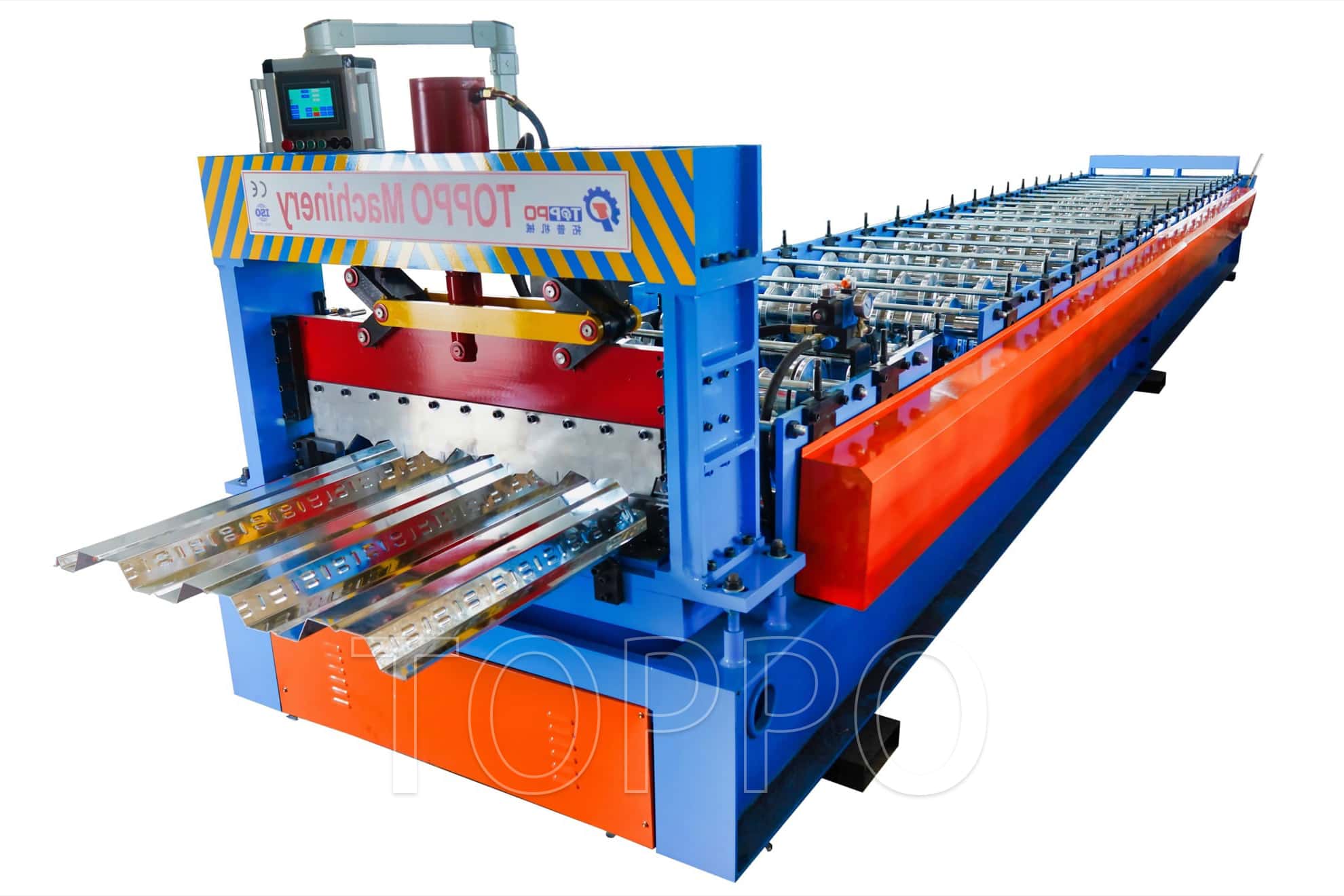
Heavy Duty Trapezoidal Roof Panel Roll Forming Machine
The trapezoidal roof panel roll forming machine is designed to convert flat metal coil into strong, accurately shaped roofing and wall-cladding panels through continuous cold forming. A series of precision rollers gradually bends the strip into the required trapezoidal profile without damaging the coated surface. After the programmed length is reached, the hydraulic cutting unit produces finished sheets ready for stacking, transport or installation.
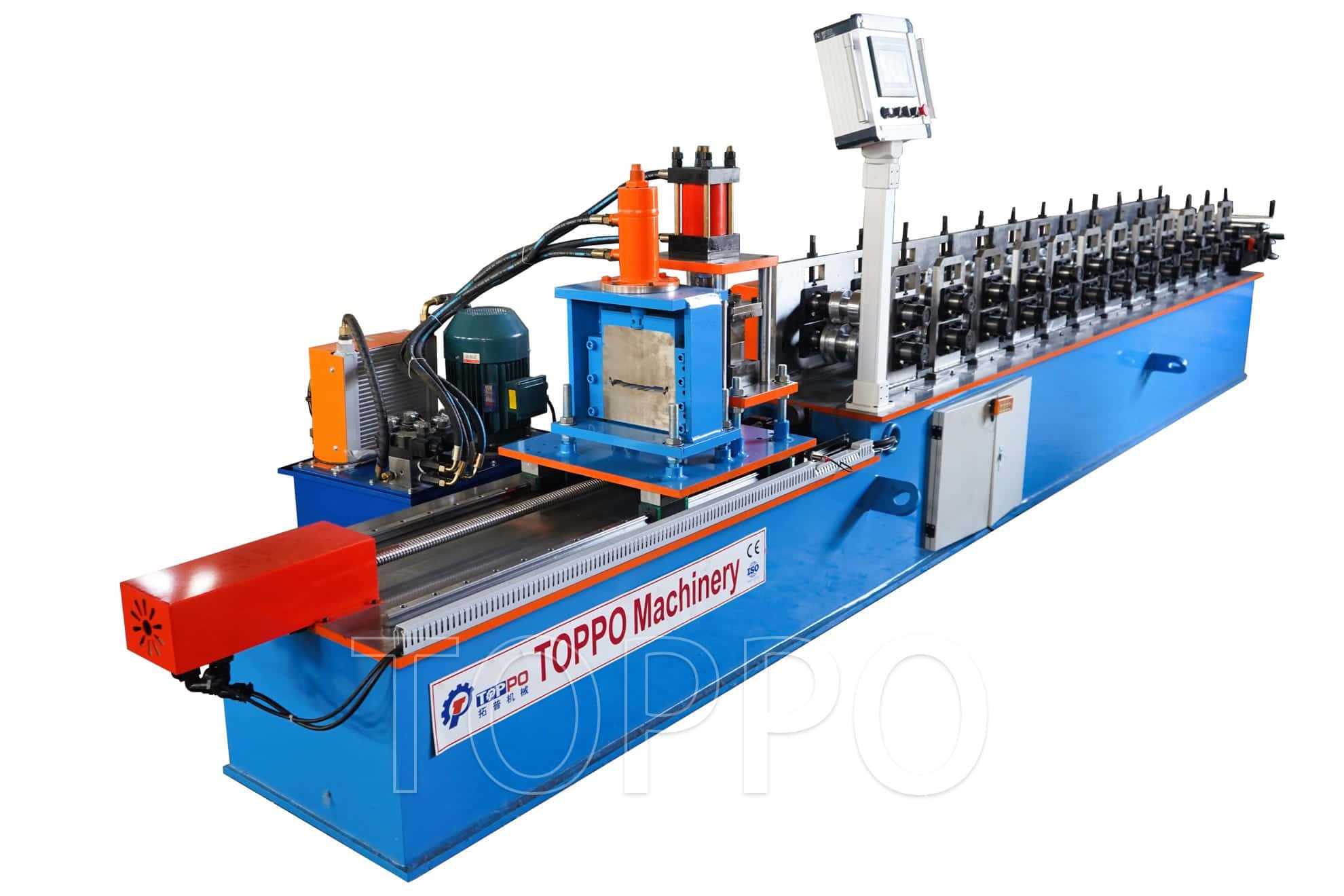
The machine shown features a reinforced welded frame, guide-post forming and cutting structure, independent hydraulic station, protected transmission section and a long forming bed for stable panel geometry. It is suitable for professional roofing-sheet manufacturers, steel-structure factories, building-material distributors and contractors that need reliable batch production.
Why Choose This Roofing Panel Line
Continuous and automatic production reduces manual handling and labor cost.
Progressive roller design helps maintain smooth sheet surfaces and accurate ribs.
PLC control allows operators to enter sheet length, quantity and batch data.
Encoder-based measurement supports consistent cut lengths during repeated production.
Heavy steel base and reinforced stands improve machine rigidity and forming stability.
Hydraulic cutting system provides dependable shearing force for common roofing materials.
Rollers and shafts can be engineered for different steel grades and coating types.
Profile tooling can be developed from a customer drawing, sample sheet or local standard.
Electrical voltage, operating language and machine color can be adapted for export markets.
Optional decoiling, stacking, safety and high-speed systems create a complete turnkey line.
Typical Technical Attributes
Important: The values below describe common industry configurations and are offered for reference. Final data depends on the requested panel drawing, raw-material strength, thickness range, production speed and selected accessories.
| No. | Attribute | Typical / Customizable Specification |
|---|---|---|
| 1 | Machine Name | Trapezoidal roof panel roll forming machine |
| 2 | Machine Category | Automatic cold roll forming production line |
| 3 | Finished Product | Trapezoidal roofing sheet and wall cladding panel |
| 4 | Primary Function | Continuous profiling and fixed-length cutting of metal coil |
| 5 | Suitable Material | Galvanized steel, PPGI, PPGL, Galvalume and aluminum |
| 6 | Recommended Thickness | Normally 0.30-0.80 mm; other ranges available |
| 7 | Material Yield Strength | Normally 230-550 MPa, subject to tooling design |
| 8 | Coil Feeding Width | Commonly 914-1250 mm or customized |
| 9 | Effective Panel Width | Produced according to customer profile drawing |
| 10 | Panel Rib Height | Customized for roofing load and market standard |
| 11 | Trapezoid Pitch | Customized according to panel geometry |
| 12 | Panel Length | Programmable; normally unlimited within handling conditions |
| 13 | Standard Forming Speed | Approximately 10-25 m/min excluding stop cutting |
| 14 | High-Speed Configuration | Available with servo tracking or flying shear |
| 15 | Forming Stations | Typically 14-22 stations depending on profile |
| 16 | Roller Design | Progressive multi-pass forming design |
| 17 | Roller Material | 45# steel or GCr15 bearing steel |
| 18 | Roller Surface | Hard chrome plated, polished or heat treated |
| 19 | Main Shaft Material | High-strength 45# steel |
| 20 | Main Shaft Diameter | Normally 70-90 mm according to load |
| 21 | Forming Stand Type | Guide-post, wall-plate or independent stand type |
| 22 | Main Frame | Heavy-duty welded steel structure |
| 23 | Machine Base | Reinforced structural steel or H-beam base |
| 24 | Main Drive | Motor with chain, gear or gearbox transmission |
| 25 | Main Motor Power | Normally 11-22 kW depending on configuration |
| 26 | Hydraulic Motor Power | Normally 4-7.5 kW |
| 27 | Hydraulic Pressure | Normally 10-16 MPa |
| 28 | Cutting Type | Hydraulic post-cutting |
| 29 | Alternative Cutting | Pre-cutting or servo flying shear optional |
| 30 | Cutting Blade Material | Cr12MoV or equivalent high-strength tool steel |
| 31 | Cutting Length Accuracy | Typically within ±1.5 mm after correct calibration |
| 32 | Length Measurement | Rotary encoder measurement system |
| 33 | Control System | PLC automatic control |
| 34 | Operator Interface | Color touch screen |
| 35 | Control Modes | Automatic, manual and commissioning modes |
| 36 | Length Programming | Digital input on touch screen |
| 37 | Quantity Programming | Preset piece quantity and batch quantity |
| 38 | Automatic Stop | Stops after the programmed production batch |
| 39 | Standard Voltage | 380 V, 50 Hz, 3 phase |
| 40 | Export Voltage Options | 220/380/400/415/440/480 V, 50 or 60 Hz |
| 41 | Electrical Brand | Standard factory brand or buyer-specified international brand |
| 42 | HMI Language | English or customized multilingual interface |
| 43 | Feeding Guide | Adjustable left-right alignment guide |
| 44 | Decoiler Type | Manual, electric or hydraulic decoiler |
| 45 | Decoiler Capacity | Normally 3, 5, 8 or 10 tons |
| 46 | Coil Inner Diameter | Normally 450-550 mm |
| 47 | Coil Expansion | Manual expansion or hydraulic expansion |
| 48 | Coil Loading Car | Optional for heavy coils |
| 49 | Run-Out Support | Manual support table or powered conveyor |
| 50 | Automatic Stacker | Optional pneumatic or servo stacking system |
| 51 | Lubrication System | Manual, centralized or automatic lubrication |
| 52 | Emergency Stop | Provided at primary operating positions |
| 53 | Safety Guarding | Protective covers, fences and light curtains optional |
| 54 | Machine Color | Factory standard or customized RAL color |
| 55 | Approximate Line Length | Commonly 9-14 m depending on profile and options |
| 56 | Approximate Machine Weight | Commonly 8-16 tons depending on structure |
| 57 | Operator Requirement | Usually 1-2 trained operators |
| 58 | Installation Area | Level industrial floor with suitable working clearance |
| 59 | Working Environment | Indoor factory or protected industrial workshop |
| 60 | Profile Development | Based on drawing, sample panel or dimensional data |
| 61 | Surface Protection | Designed to reduce scratches on coated sheet |
| 62 | Finished Sheet Flatness | Adjusted through roller alignment and exit support |
| 63 | Noise Control | Stable drive and correct lubrication reduce operating noise |
| 64 | Quality Inspection | Trial forming, dimensional check and running test before shipment |
| 65 | Technical Documents | Operation manual, electrical diagram and maintenance guide |
| 66 | Export Packing | Protective film, anti-rust treatment and secured container loading |
| 67 | Installation Support | Remote guidance or engineer service by agreement |
| 68 | Training Support | Operator and maintenance training available |
| 69 | Spare Parts | Consumable and critical spare parts package available |
| 70 | Application Fields | Roofing, cladding, steel buildings and prefabricated construction |
Standard Line Composition
Decoiler: Supports the coil and releases material into the production line.
Feeding Guide: Aligns the strip before forming and helps control side-to-side position.
Roll Forming Unit: Gradually creates ribs, valleys and trapezoidal geometry through multiple stations.
Drive System: Transfers motor power to the forming shafts through chains, gears or gearboxes.
Length Measuring Unit: Uses an encoder to monitor sheet travel and trigger cutting.
Hydraulic Cutting Unit: Cuts the formed panel to the programmed length.
PLC Control Cabinet: Manages operating parameters, quantity counting and fault indication.
Run-Out Table or Stacker: Receives and organizes completed panels.
Production Workflow
Coil loading → decoiling → strip feeding → alignment and guiding → progressive roll forming → length measurement → hydraulic or servo cutting → panel discharge → manual collection or automatic stacking.
Finished Panel Applications
Panels made by this line can be used for industrial workshop roofs, warehouse roofs, logistics buildings, agricultural sheds, garages, commercial buildings, wall cladding, steel-structure enclosures, prefabricated houses, temporary buildings and renovation projects.
Profile and Line Customization
Trapezoidal roofing profiles vary by country and project. The roller layout and cutting die can be designed from the buyer's CAD drawing, dimensioned sketch or physical sample. Customization may include feeding width, effective cover width, rib depth, rib spacing, anti-capillary groove, side-lap geometry, embossing requirement, material thickness, coil strength and surface coating.
The production line can also be configured with a hydraulic decoiler, loading car, leveling device, pre-cut shear, film covering unit, punching station, servo tracking cutter, automatic stacker, protective enclosure and remote-monitoring package.
Operation and Maintenance
Check roller alignment, fasteners, chains and hydraulic connections before production.
Keep forming rollers and guides clean to protect painted or coated sheet surfaces.
Lubricate bearings, chains and sliding components according to the maintenance schedule.
Calibrate encoder length measurement after installation or whenever material conditions change.
Inspect cutting blades regularly and sharpen or replace them when cut quality decreases.
Store the machine in a dry environment and protect electrical components from dust and moisture.
Quality Control Before Delivery
The production line is assembled and commissioned before shipment. Key inspections may include frame level, shaft alignment, roller clearance, transmission operation, hydraulic pressure, control functions, emergency-stop operation, panel dimensions, surface condition and cutting accuracy. A sample-production test can be performed with material close to the customer's specification when available.
Recommended Information for an Accurate Quotation
Dimensioned panel profile drawing or physical sample
Raw material type and yield strength
Minimum and maximum material thickness
Coil feeding width and desired effective cover width
Required production speed and daily output
Coil weight and inner diameter
Destination-country voltage, frequency and phase
Required options such as decoiler, stacker, safety guard or flying shear
Frequently Asked Questions
Can one machine produce different profiles?
One standard line is normally optimized for one main profile. Similar panels may be possible with shared stations, while widely different profiles usually require a double-layer machine, cassette-change system or separate line.
Can the machine process high-strength steel?
Yes. Roller material, shaft diameter, motor power, station quantity and frame structure are selected according to the steel grade and thickness.
Can the panel length and quantity be changed?
Yes. Operators can enter different lengths and quantities through the PLC touch screen for flexible batch production.
Is an automatic stacker available?
Yes. Manual run-out tables, powered conveyors and automatic stacking systems can be selected according to panel length and line speed.
- User name Member Level Quantity Specification Purchase Date
- Satisfaction :
-