- Trapezoidal Machine
- Corrugated Machine
- Glazed Tile Machine
- Double Layer Machine
- CZU Purlin Machine
- Ridge Cap Machine
- Floor Decking Machine
- Rolling Door Machine
- Fence Machine
- Embossing Machine
- Standing Seam Machine
- Cut To Length And Slitting Line
- Guard Rail Machine
- Decoiler And Stacker
- Stud And Track Machine
- Gutter And DownPipe
- Curving Machine
- Cladding Panel Machine
- Corollary Equipment
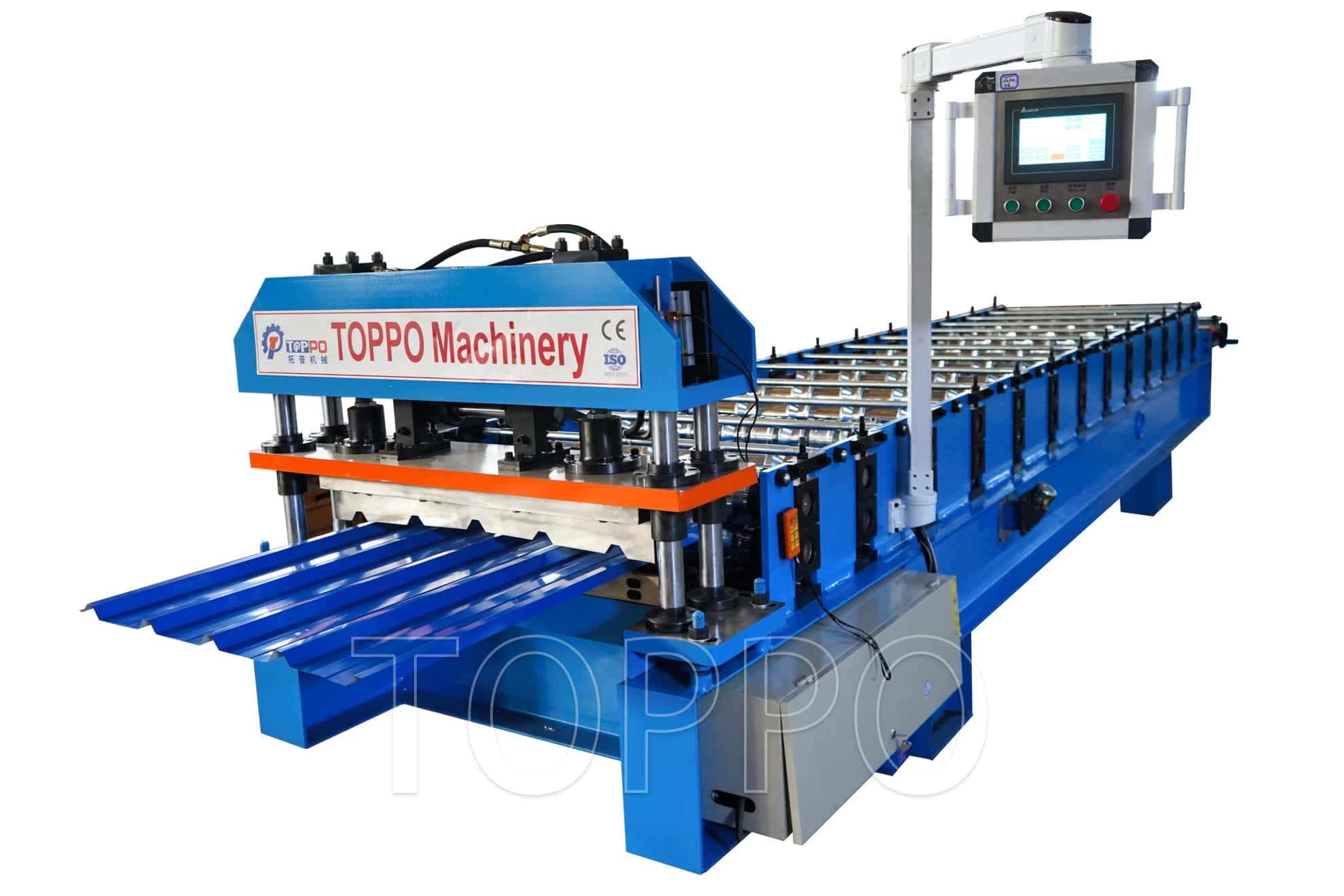



- Trapezoidal Machine
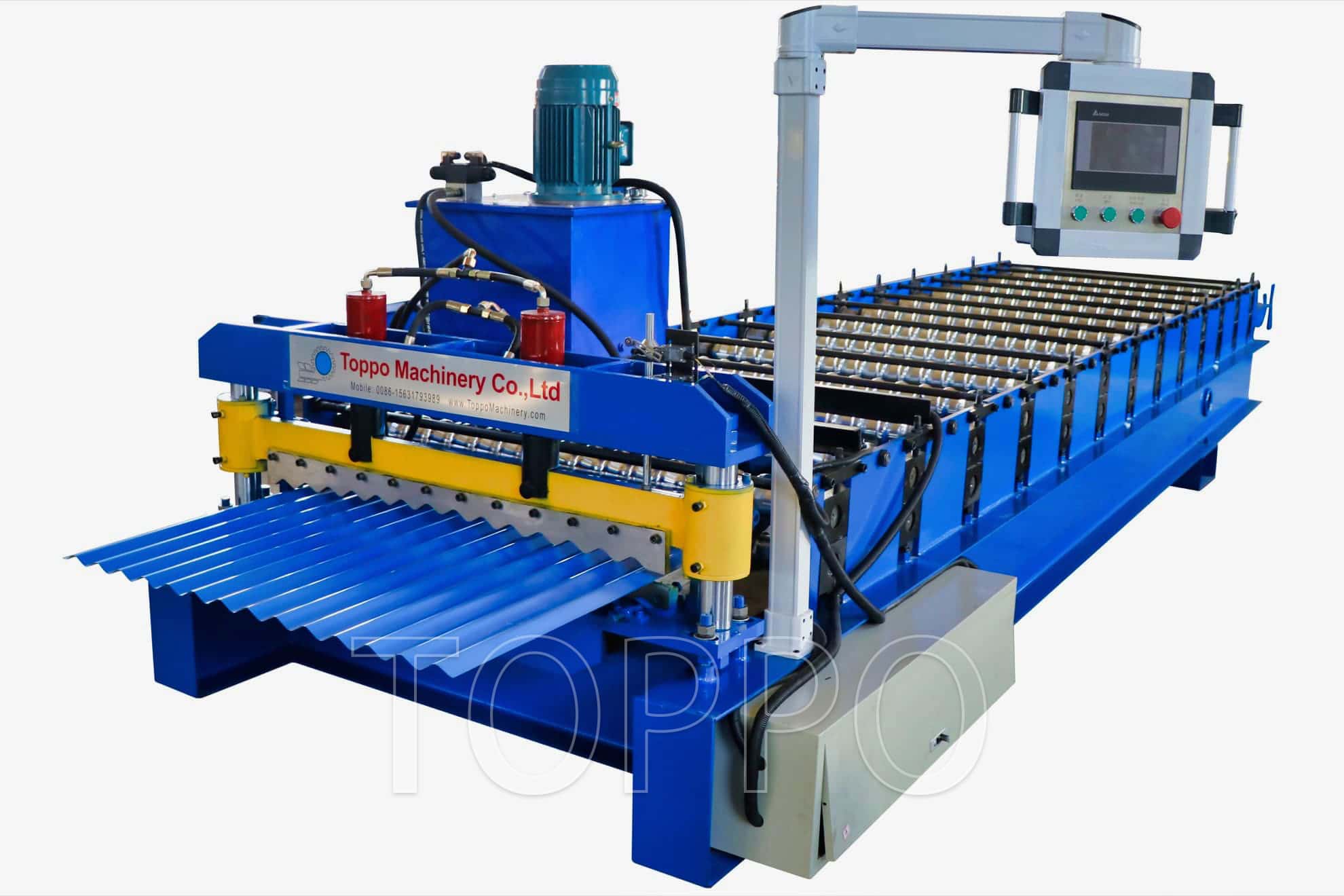
- Corrugated Machine
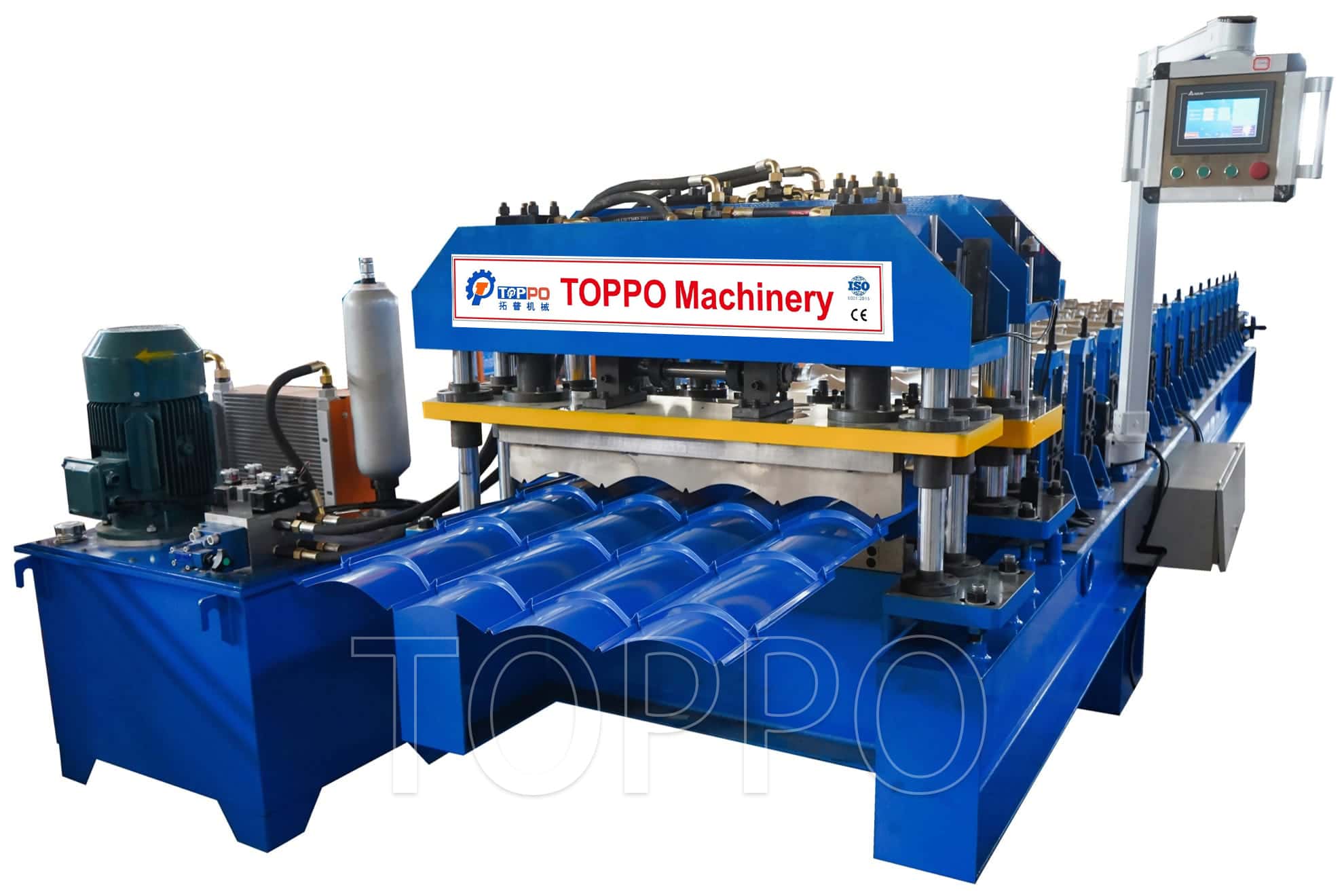
- Glazed Tile Machine
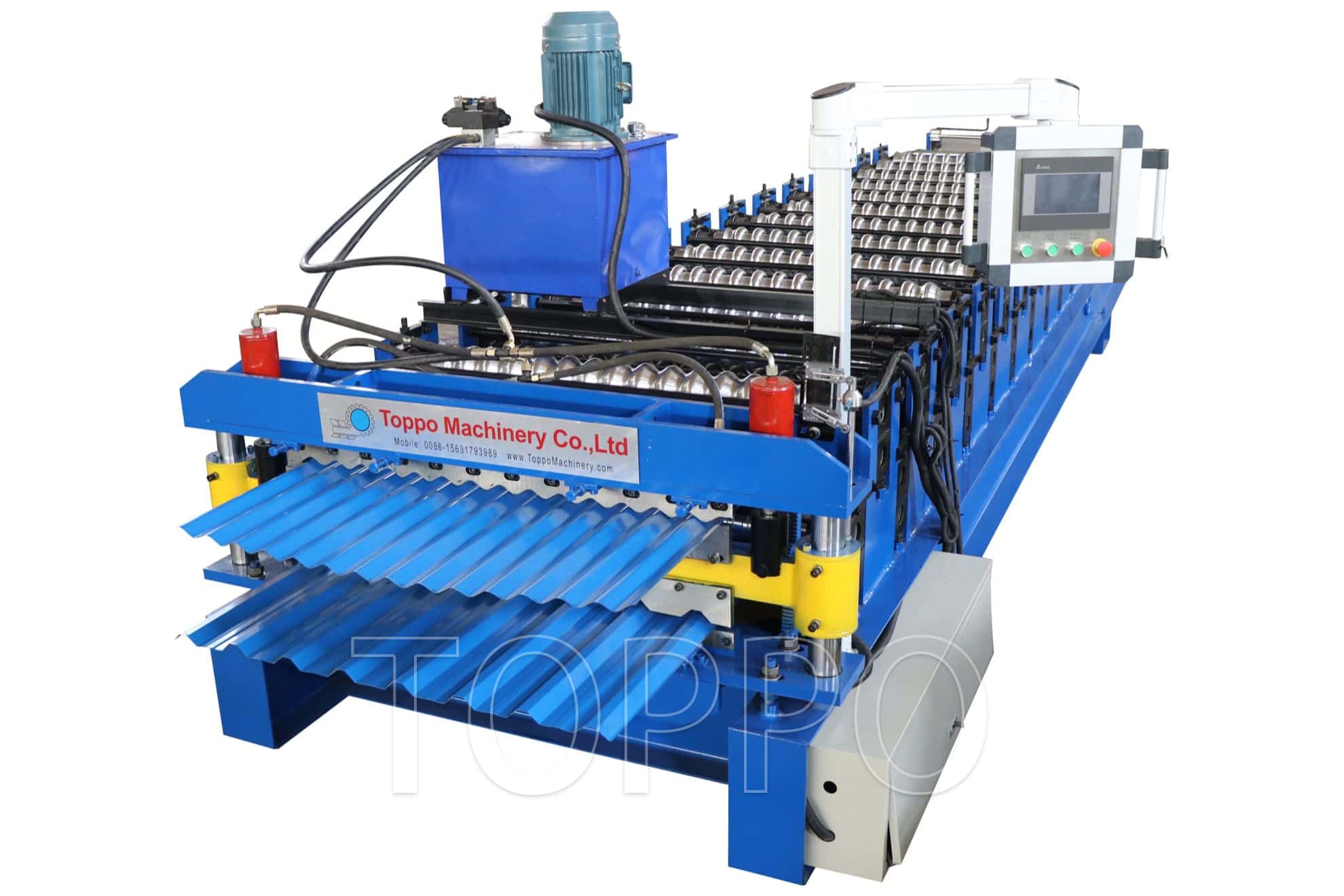
- Double Layer Machine
- CZU Purlin Machine
- Ridge Cap Machine
- Floor Decking Machine
- Rolling Shutter Door Machine
- Palisade Fence Machine
- Embossing Machine
- Standing Seam Machine
- Cut To Length And Slitting Line
- Guard Rail Machine
- Decoiler And Stacker
- Stud And Track Machine
- Gutter And DownPipe
- Curving Machine
- Cladding Panel Machine
- Corollary Equipment
- Other
Industrial Front-Discharge Glazed Tile Roofing Making Machine
This glazed tile roofing making machine converts flat metal coils into decorative stepped roof sheets that reproduce the elegant appearance of traditional roofing tiles while providing the light weight, strength, fast installation, and practical durability of coated metal panels. It is suitable for roofing sheet manufacturers, steel structure companies, building-material suppliers, and contractors serving residential, commercial, industrial, agricultural, and prefabricated construction projects.
The machine shown features a long multi-station forming section, a heavy welded steel base, a hydraulic step-pressing and profile-cutting assembly, a front discharge area, and a movable touch-screen operator panel. The formed blue sheet demonstrates the deep ribs and regularly spaced tile steps produced by the machine. Final specifications are engineered according to the approved profile drawing, raw-material properties, target capacity, and local electrical standard.
Key Advantages
Integrated roll forming, tile-step pressing, length measuring, counting, and cutting.
PLC and touch-screen control simplify product length, batch quantity, and operating parameter settings.
Hydraulic step forming creates a clear three-dimensional tile appearance with repeatable spacing.
Progressive multi-pass forming helps maintain sheet geometry and reduce coating damage.
Rigid machine construction supports stable alignment, lower vibration, and long service life.
Custom profile engineering supports different roof styles, materials, and market standards.
Standard Production Process
Coil loading → strip guiding → optional leveling → progressive roll forming → hydraulic tile-step pressing → encoder length measurement → hydraulic profile cutting → finished panel discharge, conveying, or stacking.
Product Attributes and Configurable Specifications
| Attribute | Typical Specification or Description |
|---|---|
| 1. Product Name | Glazed Tile Roofing Making Machine |
| 2. Machine Type | Automatic cold roll forming and hydraulic step-pressing line |
| 3. Main Function | Produces decorative stepped metal roofing sheets |
| 4. Finished Product | Color-coated glazed tile roof panels |
| 5. Suitable Materials | Pre-painted steel, galvanized steel, Galvalume steel, or aluminum |
| 6. Material Supply | Continuous metal coil |
| 7. Typical Sheet Thickness | Commonly configured around 0.3-0.8 mm, subject to profile and material strength |
| 8. Coil Feeding Width | Customized according to the required finished profile |
| 9. Effective Cover Width | Defined by the approved roof panel drawing |
| 10. Profile Options | Glazed tile, Roman tile, classic tile, or custom decorative roofing profile |
| 11. Tile Pitch | Configured or programmed according to customer requirements |
| 12. Tile Step Height | Customized through hydraulic pressing-die design |
| 13. Rib Height | Produced according to the confirmed cross-section drawing |
| 14. Forming Method | Continuous progressive cold roll forming |
| 15. Forming Stations | Selected according to profile complexity and sheet specification |
| 16. Roller Material | Precision-machined high-grade steel |
| 17. Roller Surface Treatment | Optional polishing, heat treatment, or hard chrome treatment |
| 18. Roller Processing | CNC machining for repeatable profile accuracy |
| 19. Main Shaft Material | Heat-treated high-strength steel |
| 20. Shaft Diameter | Designed according to forming load and machine configuration |
| 21. Main Machine Frame | Heavy-duty welded steel base |
| 22. Frame Processing | Stress-relieved and precision-machined for station alignment |
| 23. Side Support Structure | Guide-post, wall-panel, or modular support design |
| 24. Drive System | Electric motor with chain, gearbox, or combined transmission |
| 25. Main Motor Power | Matched to profile shape, material thickness, and production speed |
| 26. Speed Regulation | Variable-frequency drive available |
| 27. Line Speed | Project-specific and coordinated with the hydraulic step cycle |
| 28. Entry Guide | Adjustable guiding device for accurate coil alignment |
| 29. Pre-Leveling Unit | Optional for improving incoming strip flatness |
| 30. Tile Pressing System | Hydraulic step-forming press |
| 31. Pressing Die | Profile-specific die for consistent tile-step geometry |
| 32. Cutting System | Hydraulic profile-following cutting unit |
| 33. Cutting Mode | Stop-to-cut or synchronized configuration depending on project |
| 34. Cutting Blade Material | Hardened tool steel selected for the specified material |
| 35. Length Measurement | Encoder-based automatic measurement |
| 36. Length Setting | Entered through the touch-screen HMI |
| 37. Quantity Setting | Programmable batch production control |
| 38. Control System | Industrial PLC automatic control |
| 39. Operator Interface | Movable color touch-screen control panel |
| 40. Operating Modes | Automatic, manual, and jog modes |
| 41. Production Monitoring | Displays length, quantity, machine status, and alarms |
| 42. Emergency Stop | Dedicated emergency-stop circuit and push button |
| 43. Electrical Components | Industrial-grade components with preferred brands available |
| 44. Hydraulic Power Unit | Independent station for tile pressing and cutting |
| 45. Hydraulic Pressure | Configured according to step depth and cutting load |
| 46. Hydraulic Cooling | Optional oil-cooling solution for long production shifts |
| 47. Lubrication Method | Manual or centralized lubrication for key moving parts |
| 48. Power Supply | Customized voltage, phase, and frequency |
| 49. Machine Surface Finish | Industrial anti-corrosion coating |
| 50. Machine Color | Standard industrial finish or customized RAL color |
| 51. Decoiler Type | Manual, hydraulic, or motorized decoiler |
| 52. Coil Capacity | Selected according to coil weight and factory production plan |
| 53. Coil Loading Car | Optional hydraulic loading car for heavy coils |
| 54. Receiving Table | Simple support table or roller conveyor |
| 55. Automatic Stacker | Optional for reduced labor and improved panel handling |
| 56. Protective Film Device | Optional unit for protecting pre-painted sheet surfaces |
| 57. Pre-Punching Function | Optional hydraulic or servo punching system |
| 58. Embossing Function | Optional decorative or reinforcing embossing unit |
| 59. Servo Control Option | Available for enhanced pressing and cutting flexibility |
| 60. Automation Level | Semi-automatic or fully automatic configuration |
| 61. Surface Protection | Optimized rollers and guides help minimize scratching |
| 62. Noise and Vibration Control | Rigid base and aligned transmission support smoother running |
| 63. Installation Type | Floor-mounted with leveling and anchoring positions |
| 64. Operator Requirement | Normally one trained operator with material-handling support |
| 65. Profile Customization | Based on customer drawing, physical sample, or dimensional data |
| 66. Profile Change Option | Fixed-profile, cassette, or special quick-change design |
| 67. Suitable Industries | Roofing factories, steel structure plants, and building-material manufacturers |
| 68. Typical Buildings | Villas, houses, resorts, factories, warehouses, and commercial properties |
| 69. Maintenance Points | Rollers, bearings, chains, hydraulic oil, sensors, and fasteners |
| 70. Technical Documentation | Operation manual, electrical diagram, parts list, and foundation guidance |
| 71. Factory Testing | No-load inspection and trial production before shipment |
| 72. Quality Inspection | Checks for profile dimensions, tile pitch, cutting quality, and control accuracy |
| 73. Export Packaging | Protected main machine with separately packed electrical and loose parts |
| 74. Shipping Method | Containerized transport according to final machine dimensions |
| 75. Installation Support | Remote guidance or on-site service subject to agreement |
| 76. Operator Training | Operation and routine maintenance training available |
| 77. Spare Parts Supply | Consumable and replacement parts can be supplied |
| 78. HMI Language | Customizable according to user requirements |
| 79. Safety Options | Protective guards, warning lights, and safety switches available |
| 80. Remote Diagnostics | Optional remote technical support interface |
How the Machine Works
The coil strip enters through an adjustable feeding guide and passes through a sequence of precision forming rollers. Each station gradually bends the sheet until the target roofing profile is completed. The hydraulic press then creates the repeating tile steps at programmed positions. An encoder measures sheet length, while the PLC coordinates pressing, counting, and cutting. Finished panels exit from the front discharge area onto a support table, roller conveyor, or automatic stacking system.
Finished Roofing Panel Benefits
Classic glazed-tile appearance with reduced structural weight
Fast installation and efficient transportation
Custom panel lengths for different roof spans
Wide selection of coated steel colors and surface finishes
Good weather performance when produced from suitable coated material
Suitable for new construction and roofing renovation
Common Application Scenarios
The finished panels can be used for villas, residential developments, holiday resorts, garden buildings, pavilions, agricultural structures, prefabricated houses, factories, warehouses, commercial properties, and architectural renovation projects that require an attractive tile-style metal roof.
Customization Options
The line can be tailored for different feeding widths, effective cover widths, tile pitches, step heights, rib depths, material grades, sheet thicknesses, panel lengths, coil weights, and production capacities. Optional equipment includes a hydraulic decoiler, coil car, pre-leveler, protective-film applicator, punching unit, servo pressing system, synchronized cutter, run-out conveyor, automatic stacker, safety enclosure, voltage transformer, and remote diagnostics.
Quality Control Before Delivery
Before shipment, the production line can be checked for frame alignment, roller rotation, drive performance, hydraulic pressure, tile-step consistency, encoder accuracy, cutting action, electrical control, and finished-panel dimensions. Trial production may be performed with the agreed material to confirm profile shape and operating sequence.
Information Required for a Technical Proposal
Please provide the target roof tile drawing, raw material type, yield strength, thickness range, feeding width, effective cover width, tile pitch, panel length range, desired output, coil weight, local power supply, and preferred automation level. A physical sample can also be used as a design reference when a detailed drawing is unavailable.
Technical Note: All specifications are configurable. Final station quantity, motor powers, production speed, machine dimensions, weight, and component brands are subject to the approved profile drawing and signed technical agreement.
- User name Member Level Quantity Specification Purchase Date
- Satisfaction :
-