- Trapezoidal Machine
- Corrugated Machine
- Glazed Tile Machine
- Double Layer Machine
- CZU Purlin Machine
- Ridge Cap Machine
- Floor Decking Machine
- Rolling Door Machine
- Fence Machine
- Embossing Machine
- Standing Seam Machine
- Cut To Length And Slitting Line
- Guard Rail Machine
- Decoiler And Stacker
- Stud And Track Machine
- Gutter And DownPipe
- Curving Machine
- Cladding Panel Machine
- Corollary Equipment



- Trapezoidal Machine
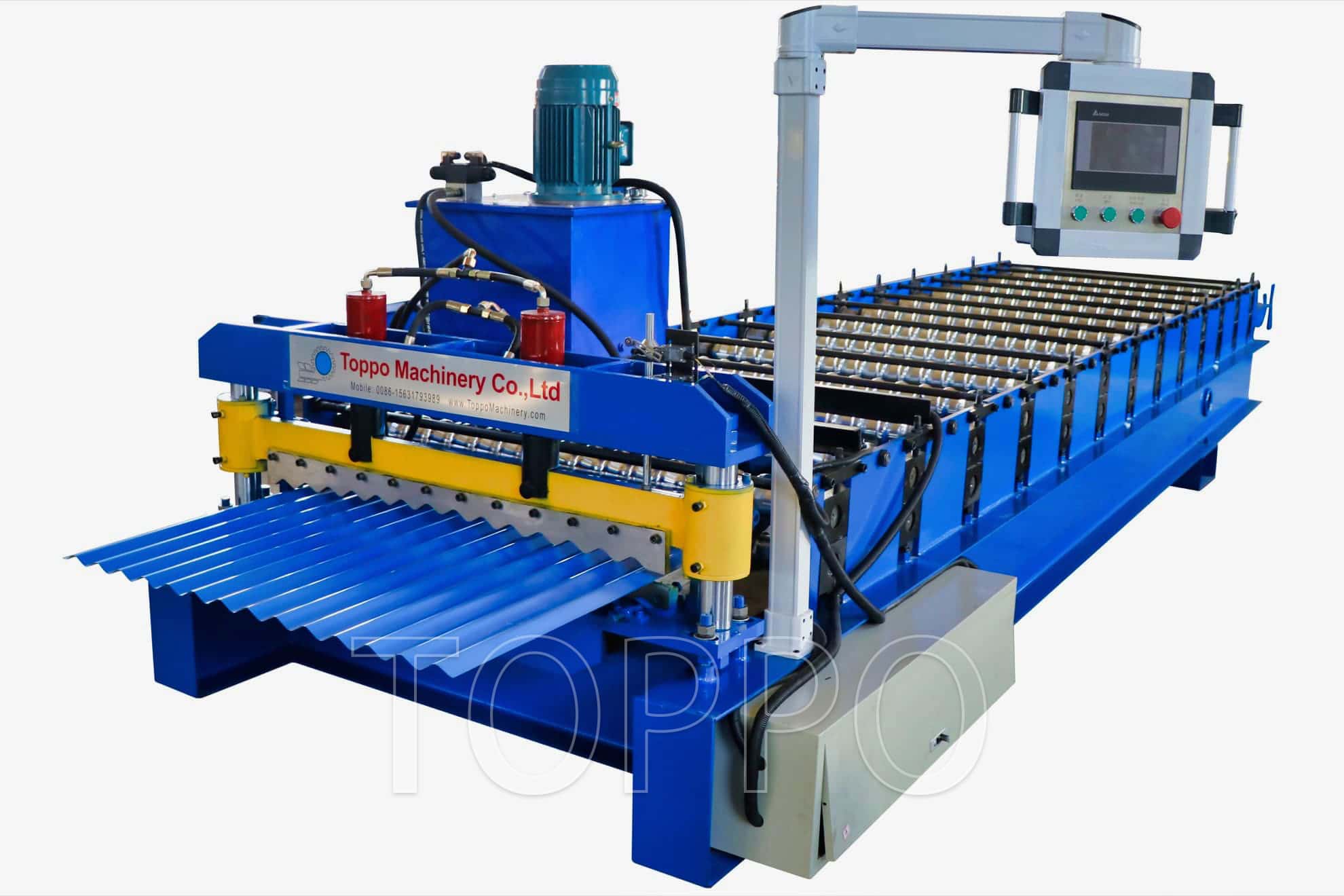
- Corrugated Machine
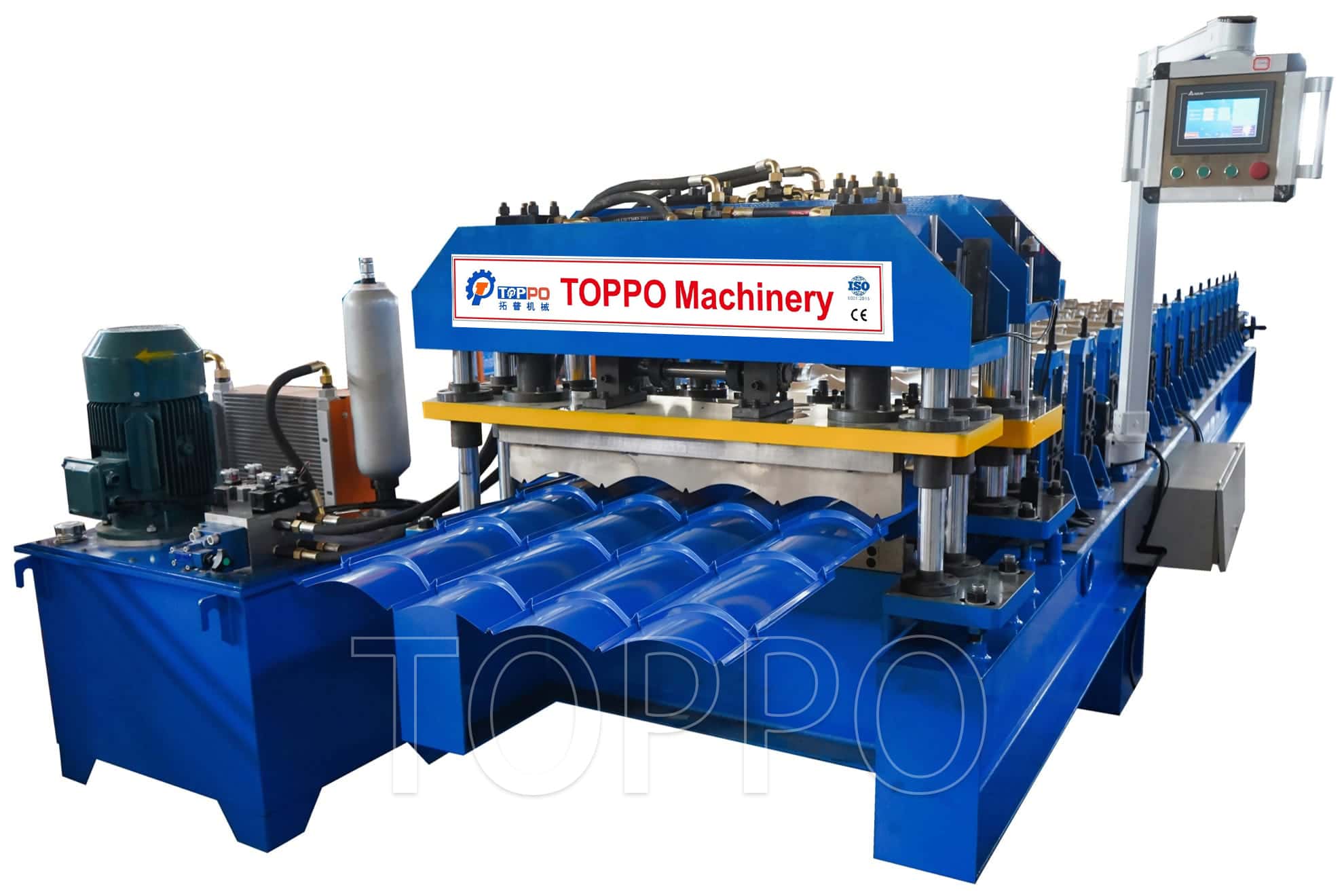
- Glazed Tile Machine
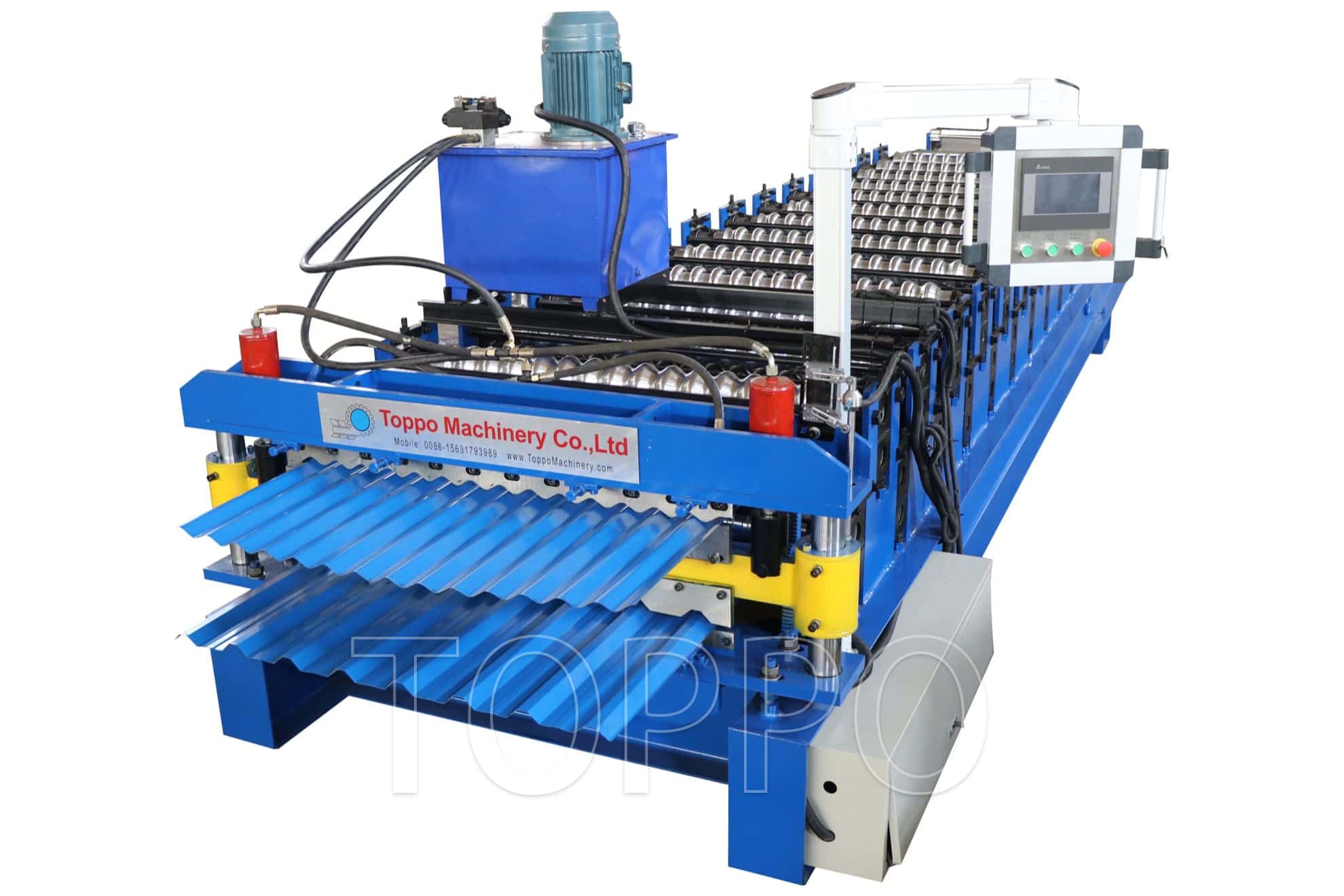
- Double Layer Machine
- CZU Purlin Machine
- Ridge Cap Machine
- Floor Decking Machine
- Rolling Shutter Door Machine
- Palisade Fence Machine
- Embossing Machine
- Standing Seam Machine
- Cut To Length And Slitting Line
- Guard Rail Machine
- Decoiler And Stacker
- Stud And Track Machine
- Gutter And DownPipe
- Curving Machine
- Cladding Panel Machine
- Corollary Equipment
- Other
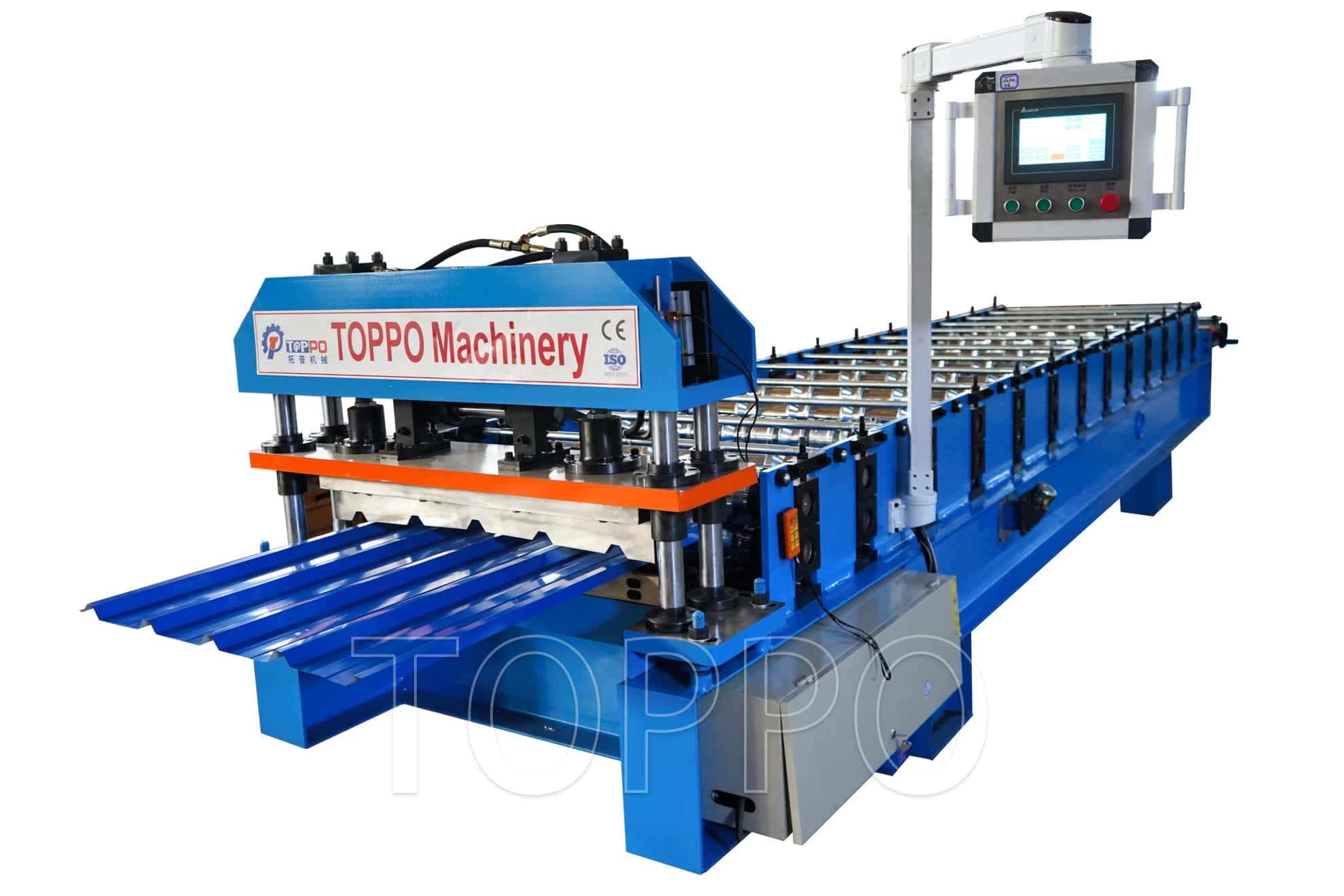
PLC Controlled Trapezoidal Roof Panel Roll Forming Machine
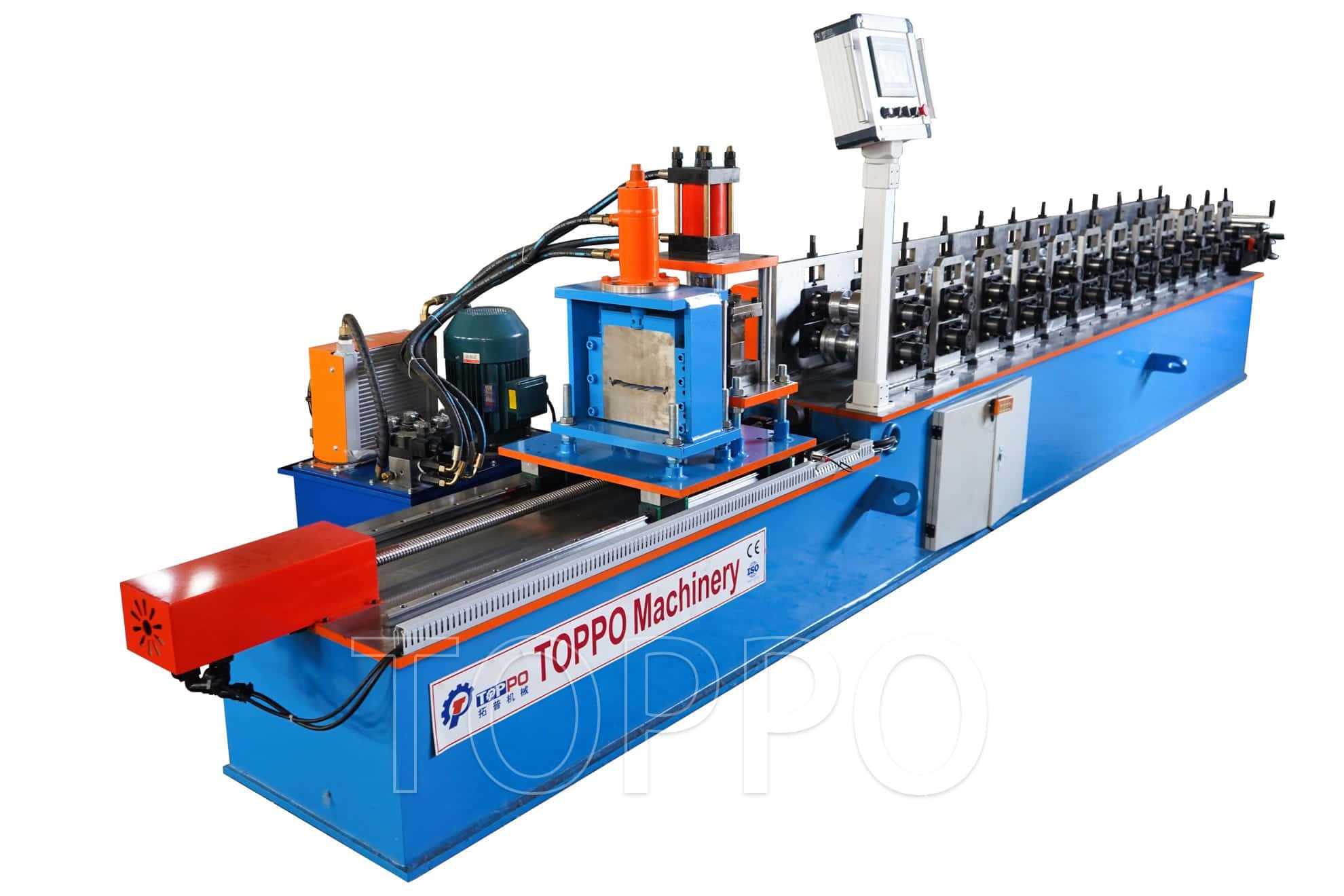
The TOPPO trapezoidal roof panel roll forming machine is a complete cold-forming solution for manufacturing ribbed metal roofing and wall cladding panels. It is suitable for factories that require efficient, repeatable and flexible production of trapezoidal steel sheets for industrial, commercial and agricultural building projects.
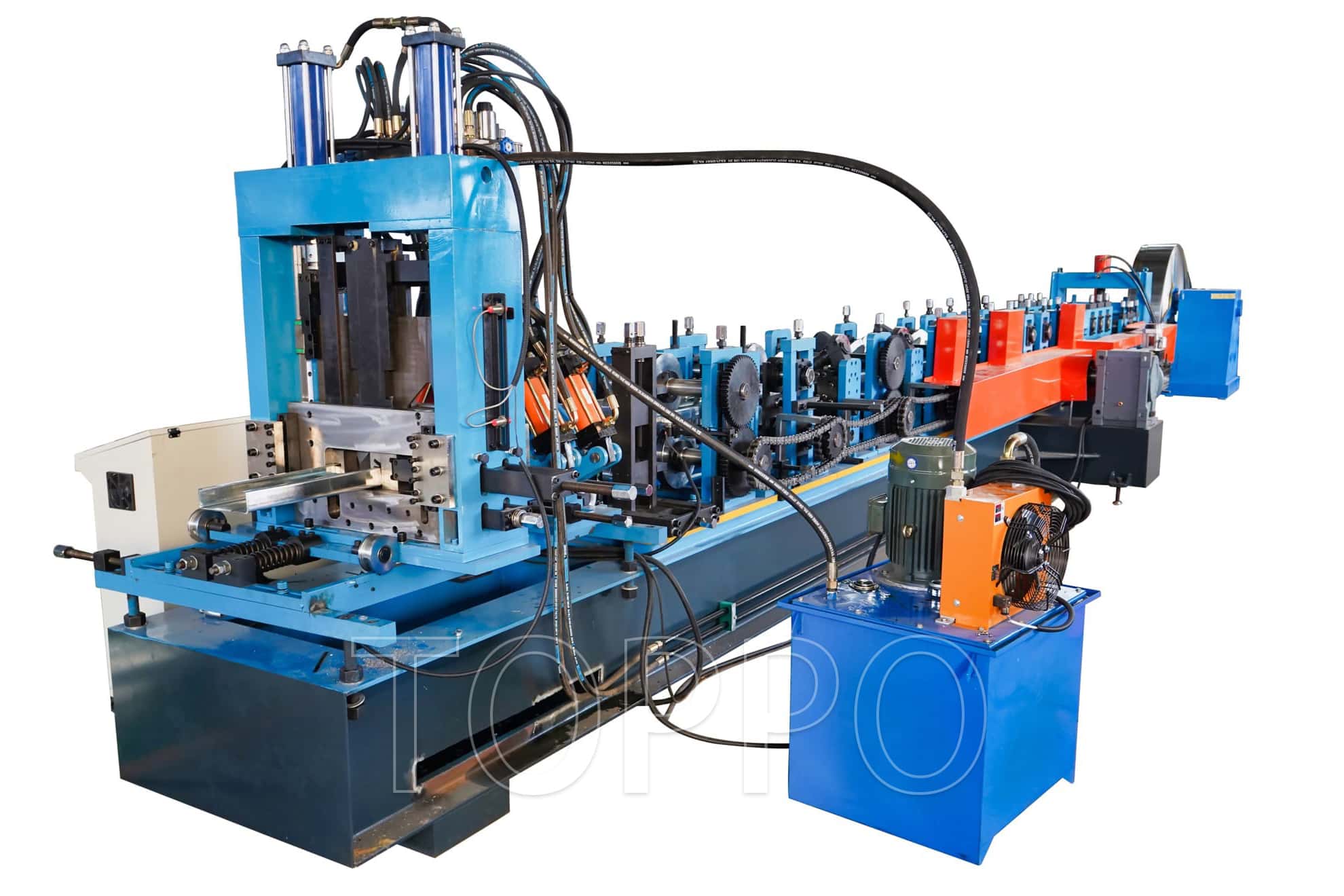
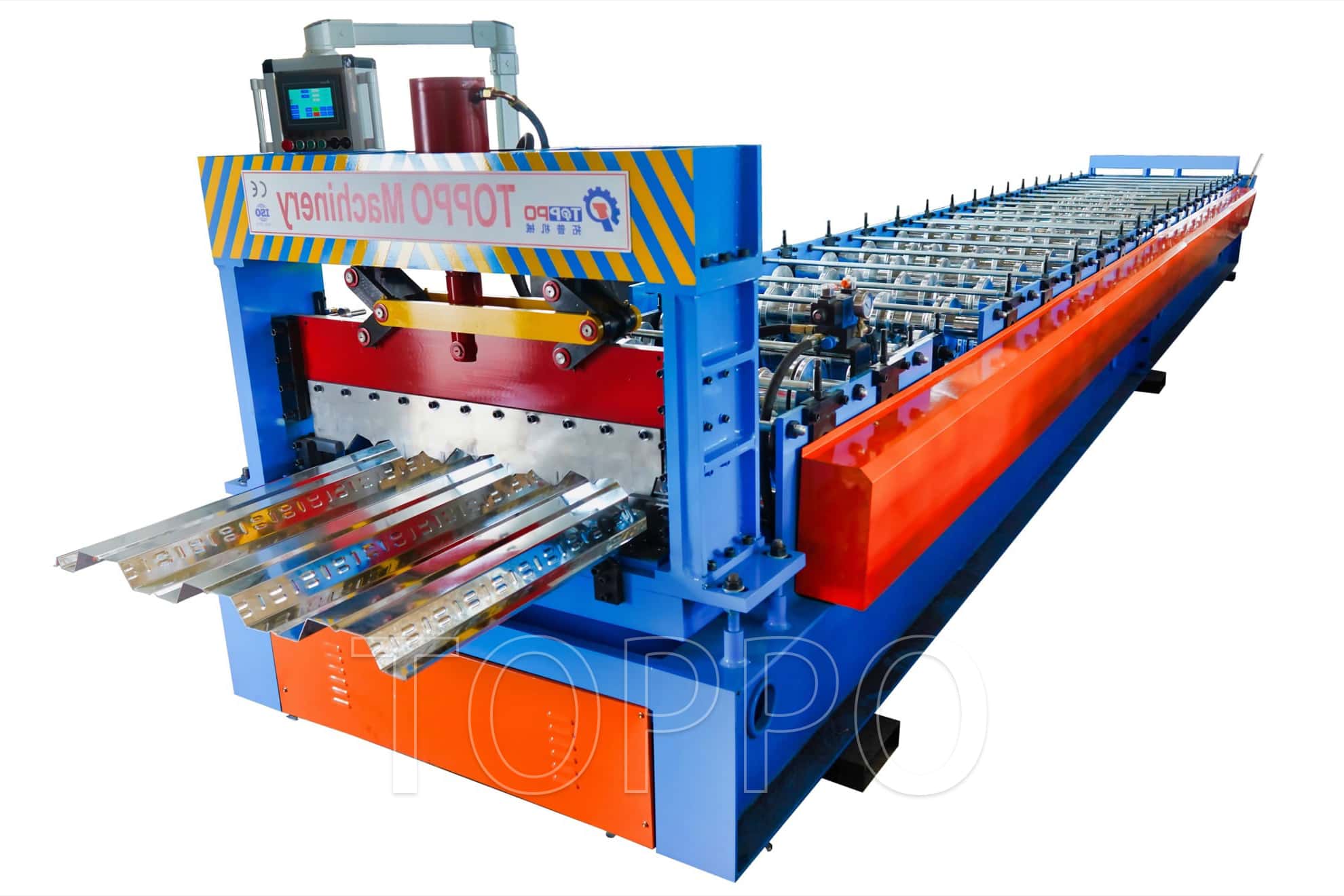
The machine shown features a heavy welded base, multiple forming stands, precision rollers, hydraulic cutting equipment and an independent touch-screen control unit. During operation, the metal coil is guided into the forming section, shaped gradually through successive roller stations, measured by an encoder and cut automatically to the programmed length.
Main Features
PLC and touch-screen control for automatic production
Programmable panel length, quantity and production batches
Stable multi-station forming process for consistent rib geometry
Hydraulic cutting system for accurate finished panel ends
Heavy-duty frame designed for continuous industrial use
Precision-machined rollers help reduce marks on coated steel
Adjustable feeding guides improve coil alignment
Manual, jog and automatic operation modes
Custom tooling available for different trapezoidal profiles
Optional decoiler, leveling, film laminating, punching and stacking units
Typical Technical Specifications
Important: Values below are typical reference data. Final parameters are determined by the customer's profile drawing, raw material, coil thickness, yield strength, target speed and local power supply.
| Attribute | Typical / Customizable Specification |
|---|---|
| 1. Product name | PLC Controlled Trapezoidal Roof Panel Roll Forming Machine |
| 2. Equipment type | Automatic cold roll forming production line |
| 3. Main application | Production of trapezoidal roofing and wall cladding sheets |
| 4. Forming principle | Continuous progressive cold roll forming |
| 5. Finished profile | Trapezoidal rib profile |
| 6. Profile customization | Designed according to customer drawing or sample |
| 7. Suitable raw materials | PPGI, PPGL, galvanized steel, Galvalume and aluminum coil |
| 8. Typical material thickness | 0.30-0.80 mm, customizable |
| 9. Typical coil width | 914-1250 mm or according to profile |
| 10. Material yield strength | Typically 230-550 MPa, subject to design confirmation |
| 11. Finished sheet width | Based on input width and panel geometry |
| 12. Effective cover width | Customized according to roofing system |
| 13. Rib height | Customized |
| 14. Rib pitch | Customized |
| 15. Panel length | Programmable through HMI |
| 16. Typical production speed | 10-20 m/min excluding cutting time |
| 17. High-speed configuration | Optional with upgraded drive and flying cut |
| 18. Forming station quantity | Typically 12-18 stations, profile dependent |
| 19. Roller material | 45# steel or suitable alloy steel |
| 20. Roller manufacturing | CNC precision machining |
| 21. Roller surface finish | Polished, hard chrome plated or heat treated |
| 22. Shaft material | 45# steel or equivalent |
| 23. Typical shaft diameter | Approximately 70-85 mm |
| 24. Main machine frame | Heavy welded steel structure |
| 25. Frame treatment | Stress relief and precision machining where required |
| 26. Forming stand structure | Plate-type or stand-type configuration |
| 27. Main drive system | Motor, gearbox and chain or gear transmission |
| 28. Typical main motor power | 5.5-11 kW, depending on profile and speed |
| 29. Transmission method | Chain drive, gear drive or gearbox drive |
| 30. Feeding guide | Adjustable side guides |
| 31. Entry leveling unit | Optional |
| 32. Cutting method | Hydraulic post-cut or pre-cut |
| 33. Cutting blade material | Cr12MoV, D2 or equivalent tool steel |
| 34. Hydraulic system | Independent hydraulic power station |
| 35. Typical hydraulic power | 4-7.5 kW |
| 36. Length measuring device | Rotary encoder |
| 37. Typical cutting tolerance | Approximately ±1.5 mm under normal conditions |
| 38. Control system | PLC automatic control |
| 39. Human-machine interface | Touch-screen HMI |
| 40. Control language | English; additional languages optional |
| 41. Operating modes | Automatic, manual and jog |
| 42. Quantity setting | Preset production quantity and batch control |
| 43. Length setting | Digital entry through touch screen |
| 44. Electrical control cabinet | Independent cabinet or integrated layout |
| 45. Electrical component brands | International or customer-specified brands available |
| 46. Inverter control | Available for stable speed adjustment |
| 47. Standard power supply | 380 V, 50 Hz, 3 phase |
| 48. Customized voltage | Available for different countries |
| 49. Emergency stop | Accessible emergency stop buttons |
| 50. Safety guarding | Optional protective covers and interlocks |
| 51. Decoiler type | Manual, hydraulic or automatic |
| 52. Typical decoiler capacity | 3-10 tons, customizable |
| 53. Coil inner diameter | Commonly 450-610 mm, adjustable |
| 54. Coil outer diameter | Configured according to coil size and workshop layout |
| 55. Run-out system | Manual support table or powered conveyor |
| 56. Automatic stacker | Optional |
| 57. Online punching unit | Optional hydraulic or servo punching |
| 58. Protective film device | Optional film laminating system |
| 59. Embossing function | Optional depending on panel design |
| 60. Lubrication system | Manual or centralized lubrication |
| 61. Machine color | Factory standard or custom RAL color |
| 62. Overall dimensions | Depend on profile, stations and selected accessories |
| 63. Machine weight | Depends on final configuration |
| 64. Installation environment | Indoor industrial workshop |
| 65. Surface protection | Roller finish designed to minimize scratching |
| 66. Product applications | Roofing, wall cladding, warehouses, workshops and sheds |
| 67. Documentation | Operation manual, electrical diagram and layout drawing |
| 68. Operator training | Available online or on site by agreement |
| 69. Installation support | Remote guidance or engineer service by agreement |
| 70. Spare parts | Recommended spare-parts package available |
| 71. Warranty | Manufacturer warranty according to contract |
| 72. Customization scope | Profile, speed, voltage, brands, color and automation level |
Production Process
Coil loading → decoiling → feeding and alignment → optional leveling → progressive roll forming → encoder measurement → hydraulic cutting → panel discharge → optional automatic stacking.
How the Machine Works
The coil strip enters the machine through adjustable guides. Each roller station makes a small, controlled deformation until the required trapezoidal shape is completed. Progressive forming distributes stress evenly across the sheet and helps maintain panel straightness. The encoder continuously measures travel distance, while the PLC activates the hydraulic cutter when the programmed length is reached.
Typical Applications
Finished trapezoidal sheets can be used in industrial warehouses, steel structure workshops, logistics buildings, agricultural sheds, garages, commercial properties, modular structures, temporary buildings and general wall cladding or roofing projects. Dedicated roller tooling can be designed for various rib heights, pitches and effective cover widths.
Available Customization
Single-layer, double-layer or cassette-type forming line
Manual, hydraulic or automatic coil decoiler
Pre-cutting, post-cutting or servo flying cutting
Entry leveling and high-precision feeding system
Automatic protective film application
Online hole punching or embossing
Automatic discharge conveyor and stacker
Customer-selected PLC, inverter and electrical brands
Remote diagnostics and production data connection
Customized voltage, frequency, control language and paint color
Quality Inspection Before Delivery
The complete line is assembled and tested before shipment. Inspection covers frame alignment, roller rotation, shaft installation, transmission stability, hydraulic pressure, cutter movement, electrical controls, encoder measurement and automatic production logic. Trial forming is performed with suitable material to check profile dimensions, panel appearance, cutting tolerance and continuous operation.
Operation and Maintenance
For reliable operation, the coil centerline should be aligned with the forming line, chains and fasteners should be checked regularly, hydraulic oil should be maintained at the specified level, and moving parts should be lubricated according to the maintenance schedule. Forming rollers must be kept clean to prevent surface marks. Electrical and hydraulic maintenance should be carried out only by trained personnel after power isolation.
Packing and Shipment
The main machine is fixed securely for container transport. Exposed steel surfaces receive anti-rust treatment, electrical parts are protected against moisture, and loose accessories are packed separately. Installation drawings, operating documentation and a loading plan can be prepared before shipment.
Frequently Asked Questions
Can one machine produce different trapezoidal profiles?
A conventional roller set normally produces one dedicated profile. For multiple products, a double-layer or cassette-type system can be designed.
What information is needed for a quotation?
Please provide the panel drawing, material type, thickness range, coil width, yield strength, target production speed, power supply and preferred auxiliary equipment.
Can the machine process high-strength steel?
Yes. The shaft diameter, roller stations, motor power and frame structure are selected according to the material strength and profile geometry.
Is the line tested before shipment?
Yes. The machine is assembled, programmed and trial-run before dispatch according to the agreed technical specification and acceptance procedure.
- User name Member Level Quantity Specification Purchase Date
- Satisfaction :
-