- Trapezoidal Machine
- Corrugated Machine
- Glazed Tile Machine
- Double Layer Machine
- CZU Purlin Machine
- Ridge Cap Machine
- Floor Decking Machine
- Rolling Door Machine
- Fence Machine
- Embossing Machine
- Standing Seam Machine
- Cut To Length And Slitting Line
- Guard Rail Machine
- Decoiler And Stacker
- Stud And Track Machine
- Gutter And DownPipe
- Curving Machine
- Cladding Panel Machine
- Corollary Equipment



- Trapezoidal Machine
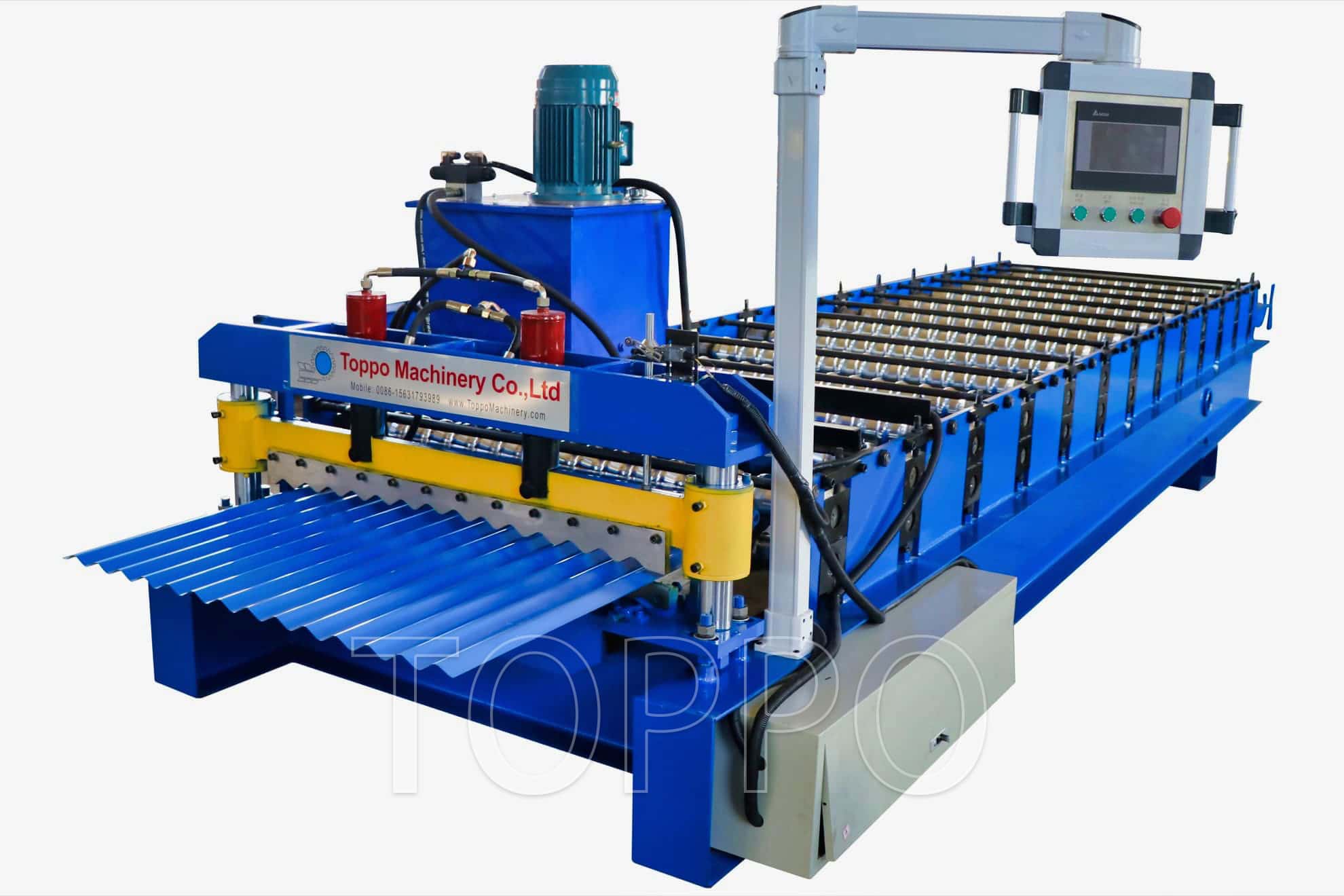
- Corrugated Machine
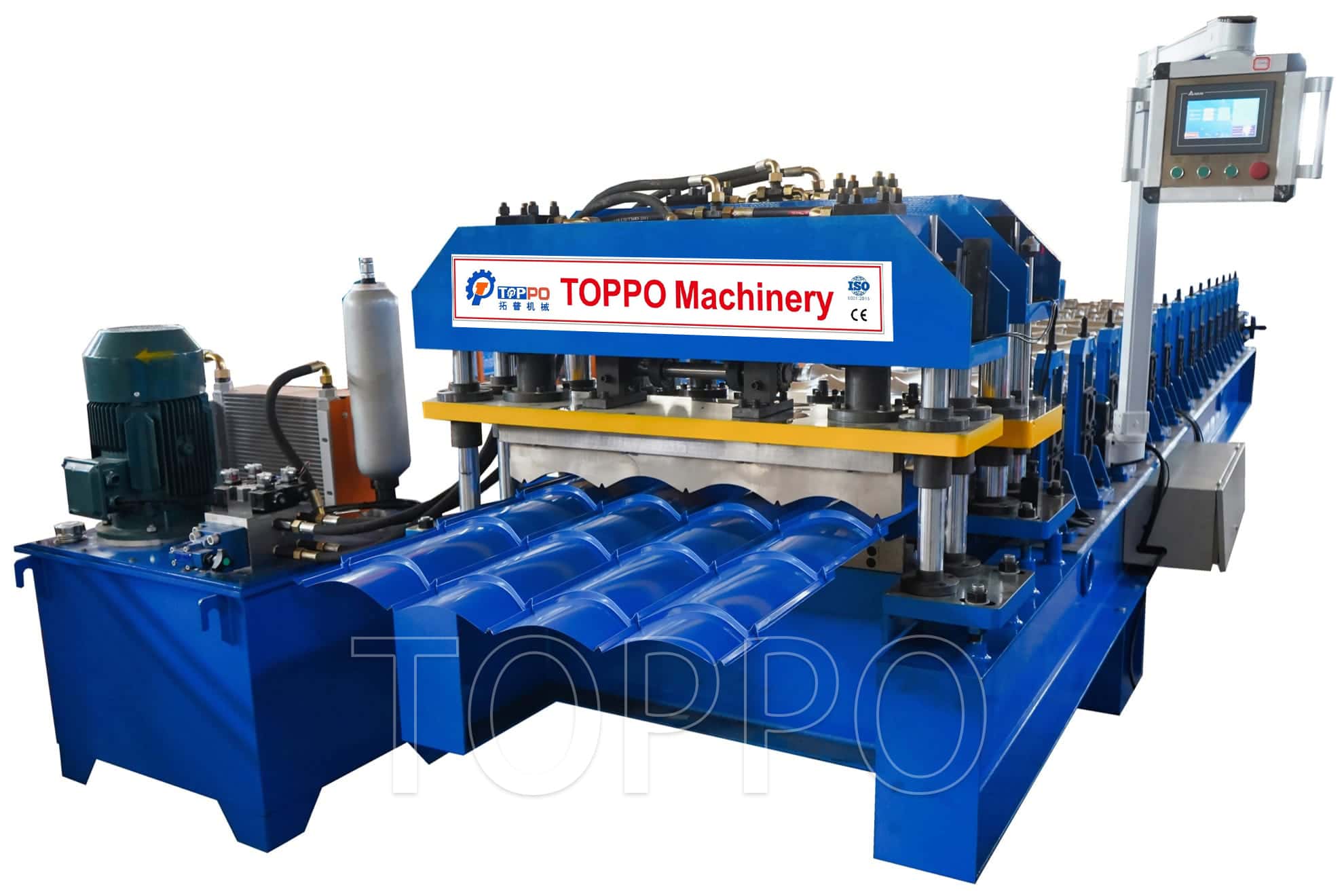
- Glazed Tile Machine
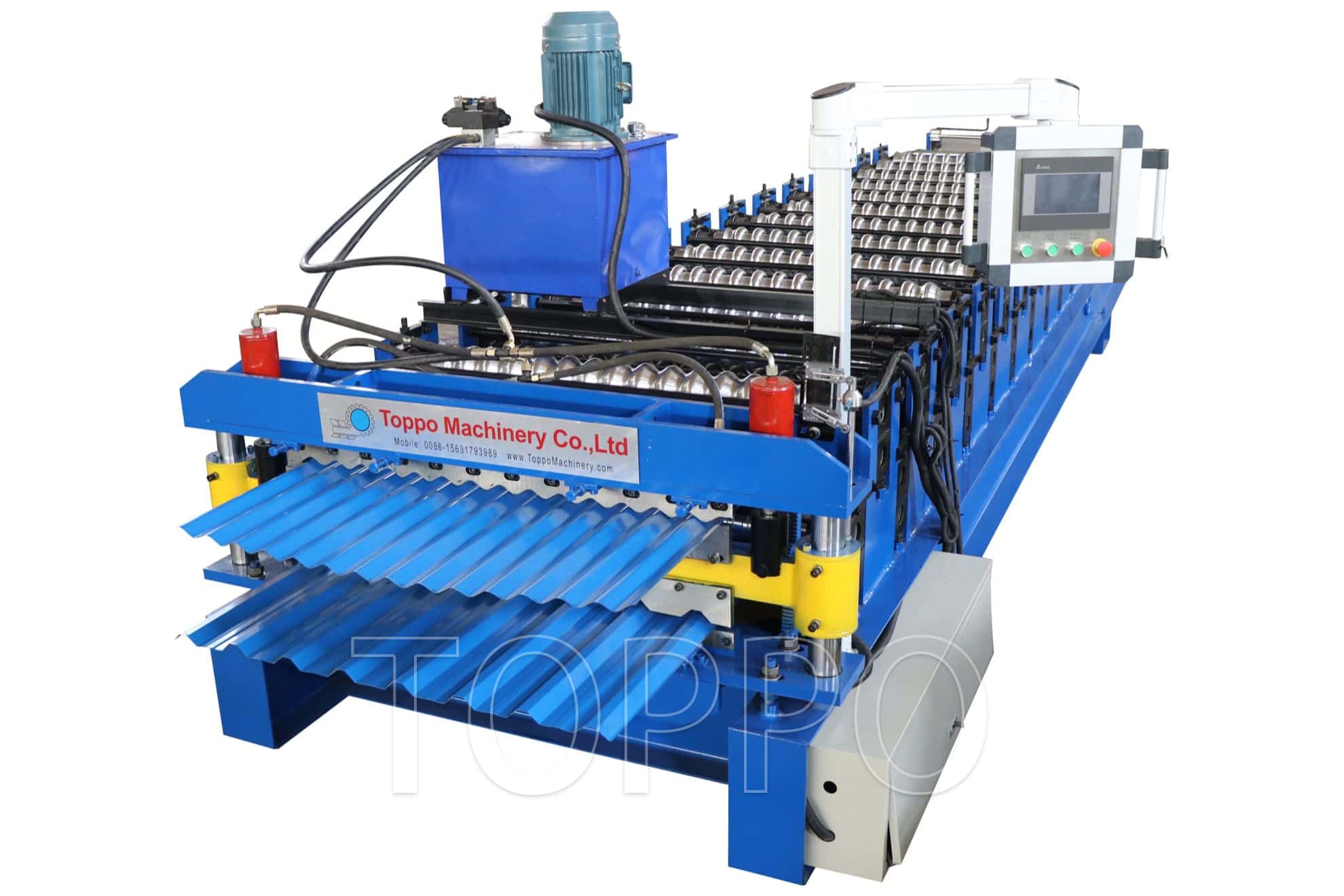
- Double Layer Machine
- CZU Purlin Machine
- Ridge Cap Machine
- Floor Decking Machine
- Rolling Shutter Door Machine
- Palisade Fence Machine
- Embossing Machine
- Standing Seam Machine
- Cut To Length And Slitting Line
- Guard Rail Machine
- Decoiler And Stacker
- Stud And Track Machine
- Gutter And DownPipe
- Curving Machine
- Cladding Panel Machine
- Corollary Equipment
- Other
High-Speed Automatic Trapezoidal Roof Panel Roll Forming Machine
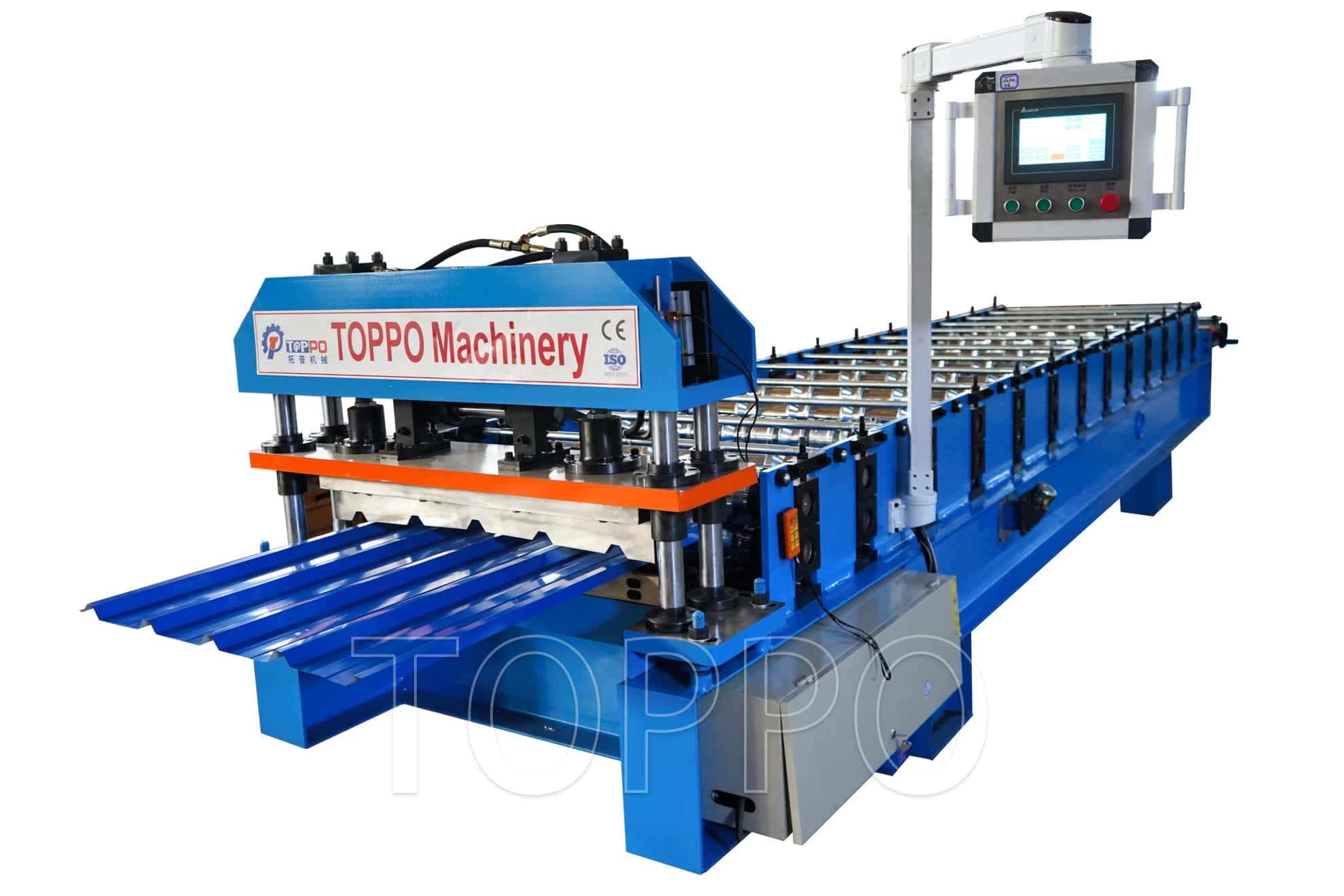
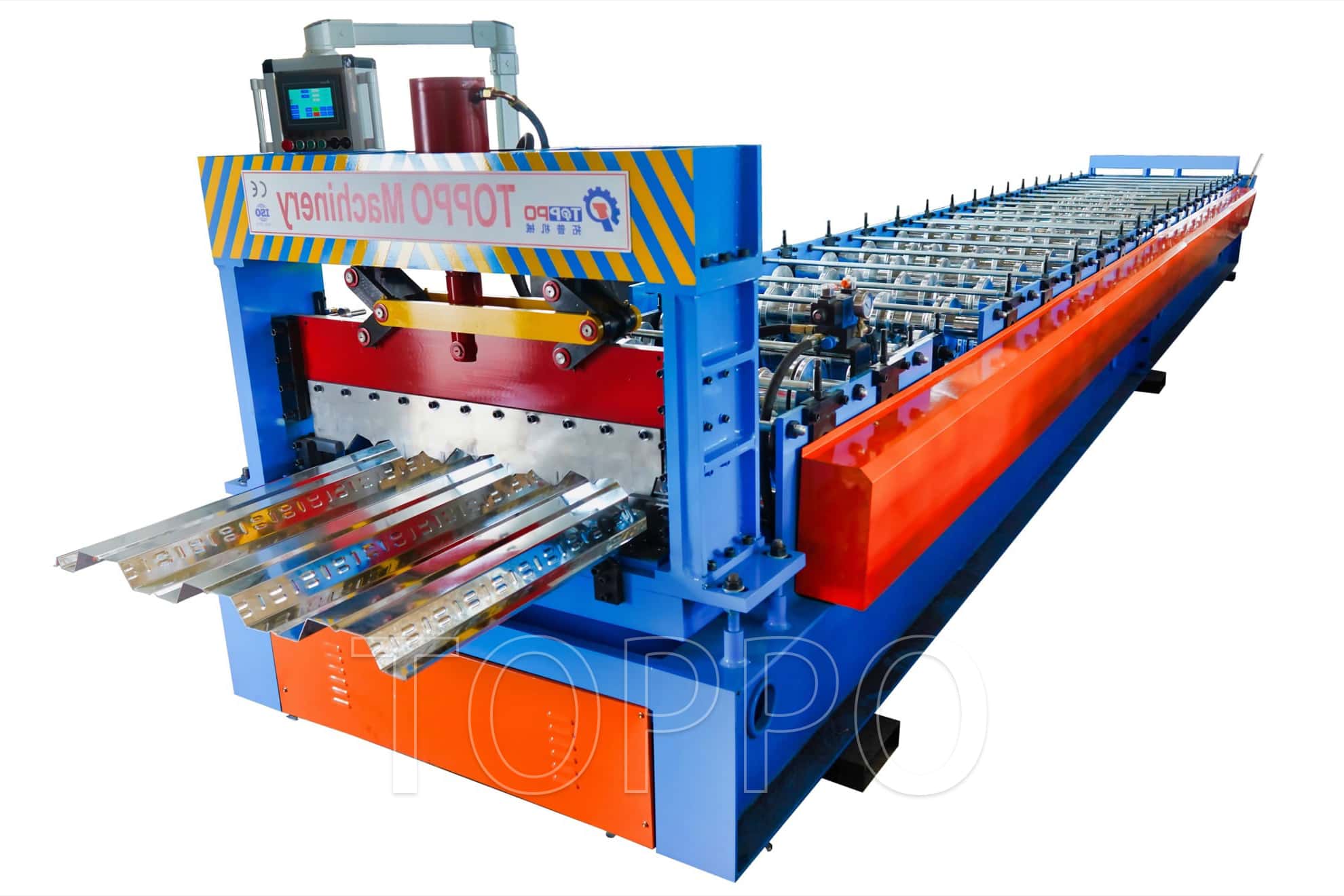
The TOPPO trapezoidal roof panel roll forming machine is a complete production solution for manufacturing high-strength ribbed metal sheets used in roofing, wall cladding and steel-structure building systems. The line progressively forms flat metal coil into a stable trapezoidal profile while maintaining consistent rib geometry, panel width and cut length.
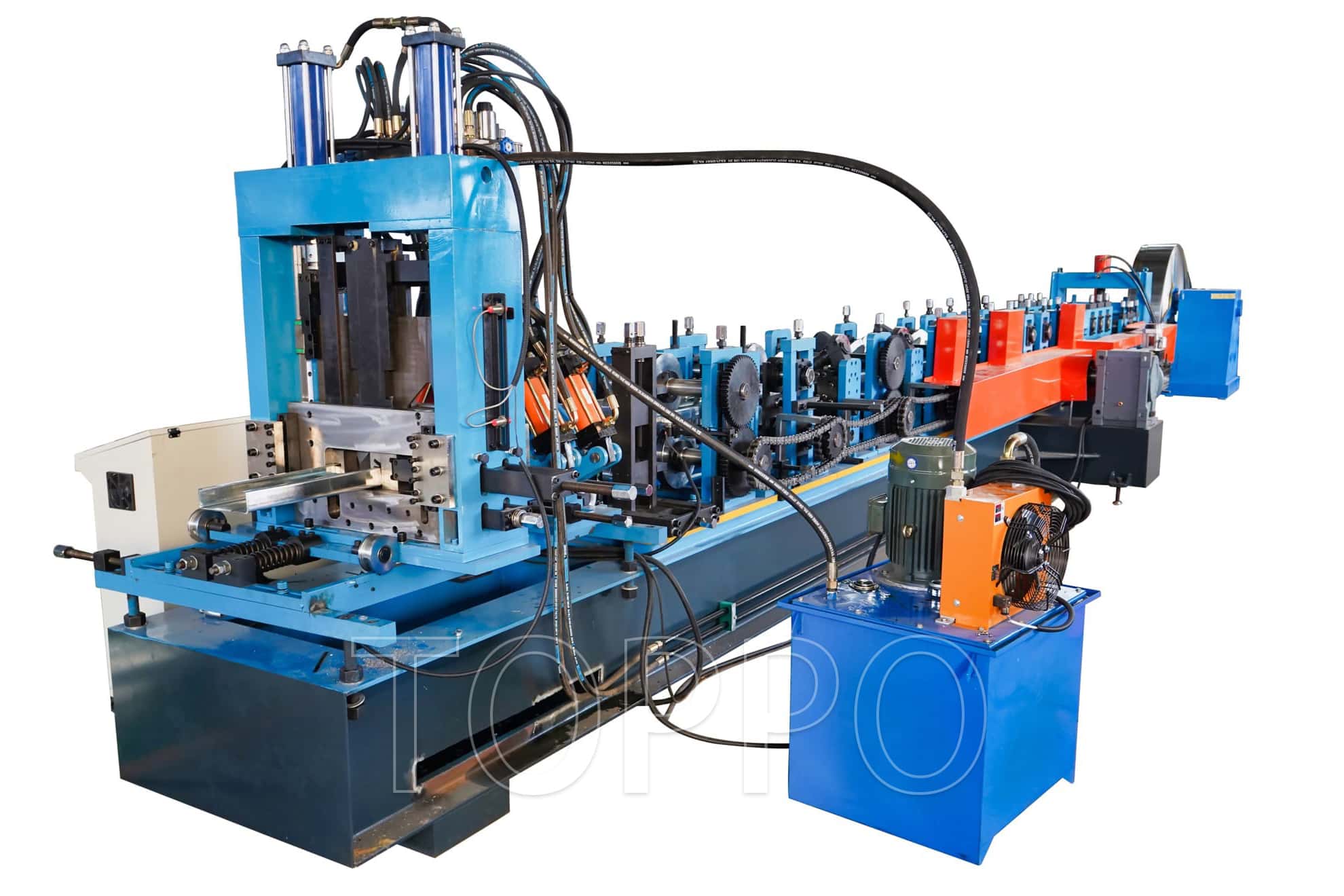
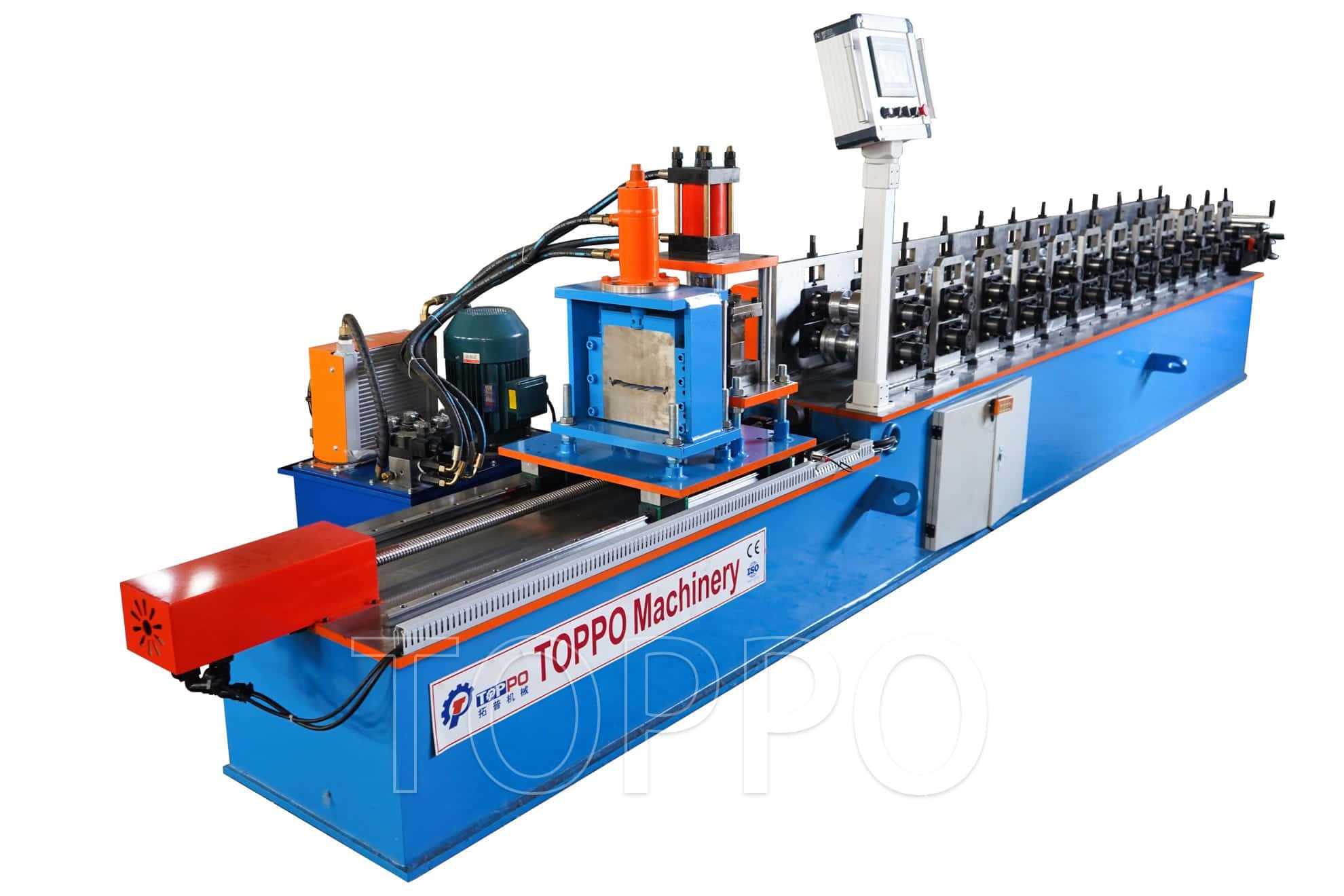
The machine shown features a heavy welded base, precision forming stations, a hydraulic cutting assembly, independent hydraulic power unit and operator control cabinet. Its modular configuration allows the production line to be designed around the buyer's finished panel drawing, raw-material properties, target output and factory layout.
Why Choose This Trapezoidal Roofing Sheet Machine?
Automatic operation from coil feeding to finished panel cutting
Stable trapezoidal rib formation with repeatable panel dimensions
PLC and touchscreen control for length, quantity and production settings
Heavy-duty machine frame designed for continuous industrial use
Hydraulic cutting system for clean, accurate panel ends
Custom roller design for regional roof panel profiles and cover widths
Compatible with common coated steel and light-metal coil materials
Expandable with decoiling, leveling, punching, stacking and packaging equipment
Product Attributes and Typical Technical Configuration
Note: The following values are common reference configurations. Final specifications are customized according to the approved profile drawing, coil material, thickness range, production speed and electrical standard.
| Attribute | Typical Specification / Description |
|---|---|
| 1. Product name | High-speed automatic trapezoidal roof panel roll forming machine |
| 2. Machine function | Cold forming of metal coils into trapezoidal roofing and cladding sheets |
| 3. Production method | Continuous multi-pass roll forming |
| 4. Finished profile | Trapezoidal ribbed roof and wall panel |
| 5. Main applications | Roofing sheets, wall panels, facade cladding and steel-building envelopes |
| 6. Suitable materials | GI, GL, PPGI, PPGL and aluminum coil |
| 7. Typical sheet thickness | Approximately 0.30-0.80 mm; customized ranges available |
| 8. Material yield strength | Machine design matched to the specified coil grade and tensile properties |
| 9. Input coil width | Customized according to finished profile and effective cover width |
| 10. Effective cover width | Produced according to the approved panel drawing |
| 11. Rib height | Customized for required drainage, stiffness and architectural appearance |
| 12. Rib pitch | Customized according to the required trapezoidal panel geometry |
| 13. Edge shape | Side-lap edges designed for panel overlap and installation requirements |
| 14. Standard forming speed | Typically 10-25 m/min depending on profile and cut system |
| 15. High-speed configuration | Available with optimized drive, control and flying-cut solution |
| 16. Forming stations | Usually 12-20 stations, selected by profile complexity |
| 17. Roller material | Precision-machined 45# steel or optional bearing-grade alloy steel |
| 18. Roller surface treatment | Hard chrome plating, polishing and anti-corrosion protection |
| 19. Roller machining | CNC-profiled for controlled forming progression |
| 20. Main shaft material | Heat-treated high-strength steel |
| 21. Typical shaft diameter | Approximately 70-95 mm, engineered for forming load |
| 22. Bearing arrangement | Industrial bearings selected for radial load and long service life |
| 23. Main frame | Heavy-duty welded steel structure |
| 24. Frame treatment | Stress-relieved, machined and aligned before assembly |
| 25. Side-wall structure | Steel plate or cast-iron arch configuration |
| 26. Transmission system | Chain, gear or gearbox drive according to speed and torque requirements |
| 27. Main drive power | Typically 5.5-11 kW, matched to material and line speed |
| 28. Hydraulic power | Typically 4-7.5 kW for cutting and auxiliary functions |
| 29. Hydraulic station | Independent oil tank, motor, pump, valve block, gauge and cooling option |
| 30. Control system | PLC-based automatic control |
| 31. Operator interface | Touchscreen HMI or digital operator panel |
| 32. Speed regulation | Variable-frequency inverter control |
| 33. Length measurement | Electronic encoder measuring system |
| 34. Batch setting | Automatic piece quantity and production batch programming |
| 35. Operating modes | Automatic, manual and jog operation |
| 36. Cutting method | Hydraulic post-cut, pre-cut or optional servo flying cut |
| 37. Cutting blade material | Cr12, Cr12MoV or equivalent heat-treated tool steel |
| 38. Typical cut-length accuracy | Approximately +/-1.5 mm under normal production conditions |
| 39. Cutting burr control | Blade clearance adjusted to material grade and thickness |
| 40. Feeding guide | Adjustable side guides for accurate coil alignment |
| 41. Entry leveling | Optional leveling rollers for improved strip flatness |
| 42. Decoiler type | Manual, hydraulic or automatic loading decoiler |
| 43. Standard decoiler capacity | Commonly 3-5 tons; higher capacities available |
| 44. Coil inner diameter | Typically 450-550 mm or customized |
| 45. Coil outer diameter | Configured according to coil weight and factory layout |
| 46. Output table | Manual run-out table or roller conveyor |
| 47. Automatic stacking | Optional pneumatic, servo or vacuum stacking system |
| 48. Punching option | Optional pre-punching or inline hydraulic punching |
| 49. Marking option | Optional inkjet printing, laser marking or embossing device |
| 50. Electrical voltage | 220 V, 380 V, 400 V, 415 V, 440 V or local standard |
| 51. Frequency | 50 Hz or 60 Hz |
| 52. Electrical phase | Three-phase industrial power supply |
| 53. Electrical components | International or customer-specified component brands available |
| 54. Safety equipment | Emergency stops, overload protection, guards and safety warning labels |
| 55. Lubrication system | Accessible lubrication points with optional centralized lubrication |
| 56. Noise and vibration control | Aligned shafts, balanced transmission and rigid frame reduce operating vibration |
| 57. Machine color | TOPPO standard colors or customer-selected industrial coating |
| 58. Production direction | Left-to-right or right-to-left layout available |
| 59. Machine dimensions | Determined by profile, station quantity and auxiliary equipment |
| 60. Machine weight | Determined by frame thickness and final configuration |
| 61. Profile development | Designed from buyer drawing, sample sheet or required cover width |
| 62. Material utilization | Continuous forming helps reduce scrap and improve coil yield |
| 63. Changeover option | Spacer, cassette or double-layer solutions available for selected profiles |
| 64. Quality inspection | Assembly inspection, no-load testing and sample-panel trial before shipment |
| 65. Documentation | Operation manual, electrical diagram, foundation drawing and maintenance guide |
| 66. Standard accessories | Tool kit, control cabinet, hydraulic station and receiving tables as contracted |
| 67. Spare parts | Recommended wearing parts supplied according to the order |
| 68. Installation support | Remote commissioning guidance or optional on-site service |
| 69. Operator training | Operation, profile adjustment, maintenance and safety training available |
| 70. Custom manufacturing | OEM and ODM configurations supported |
Production Process
Coil loading: The raw-material coil is placed on the decoiler and aligned with the forming line.
Feeding and guiding: Adjustable entry guides center the strip before it enters the first forming station.
Progressive forming: Multiple roller stations gradually shape the strip into the required trapezoidal profile without abrupt deformation.
Length control: An encoder measures the formed sheet while the PLC compares the actual length with the programmed value.
Hydraulic cutting: The panel is cut to the required length using a profile-matched blade.
Receiving and stacking: Finished sheets are supported on run-out tables or transferred to an optional automatic stacker.
Finished Panel Applications
The produced panels are widely used for industrial workshops, warehouses, logistics centers, agricultural buildings, commercial facilities, prefabricated houses, steel-structure plants, carports, garages, temporary buildings and architectural wall-cladding projects.
Available Line Configurations
Manual decoiler + roll former + hydraulic cut + receiving tables
Hydraulic decoiler + leveling + roll former + automatic stacking
High-speed line with servo tracking or flying-cut system
Pre-punching or inline punching production line
Double-layer machine for two profiles within one compact frame
Automatic loading, stacking, strapping and packaging integration
Information Required for Custom Design
To prepare an accurate machine proposal, please provide the finished panel drawing, raw-material type, steel grade, thickness range, input coil width, effective cover width, rib height, rib pitch, required forming speed, preferred cutting method, local voltage and desired auxiliary equipment.
Quality Control and Testing
Before shipment, the machine is assembled, aligned and tested. The forming roller sequence, transmission operation, hydraulic cutting action, PLC program, encoder measurement and sample-panel dimensions are checked against the approved technical requirements. Trial material can be used to verify the finished profile before packing.
Installation, Training and After-Sales Support
TOPPO provides installation guidance, remote technical support, commissioning instructions, operator training and spare-parts service. Optional on-site engineering support can be arranged according to the project location and contract terms.
Maintenance Recommendations
Inspect roller surfaces and remove metal debris regularly.
Lubricate bearings, chains, gears and guide components on schedule.
Check hydraulic oil level, hose connections and filter condition.
Verify cutting-blade clearance when changing material thickness.
Keep the electrical cabinet clean, dry and properly ventilated.
Check fasteners and transmission alignment after initial production.
Packaging and Delivery
The main machine is protected with moisture-resistant wrapping and securely fixed for transport. Electrical cabinets, hydraulic components, tooling and accessories are packed according to export requirements. Container loading plans can be prepared for efficient sea or land transportation.
- User name Member Level Quantity Specification Purchase Date
- Satisfaction :
-